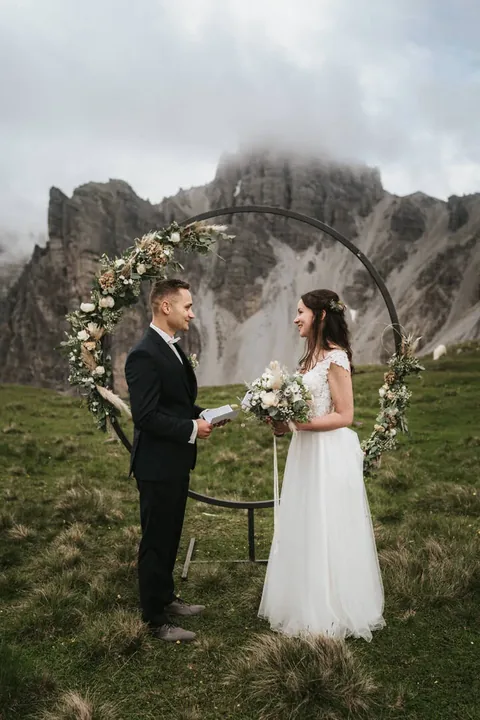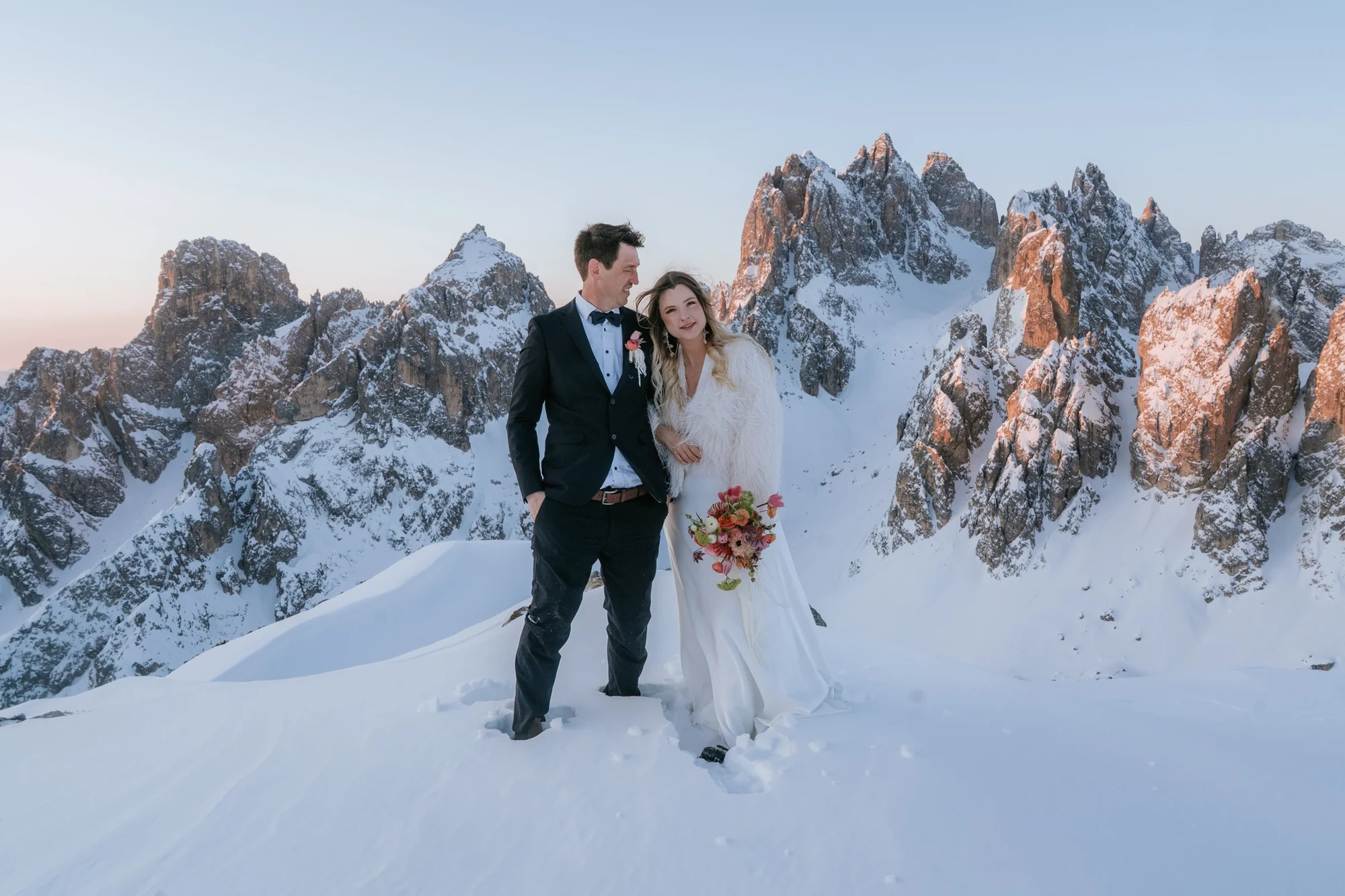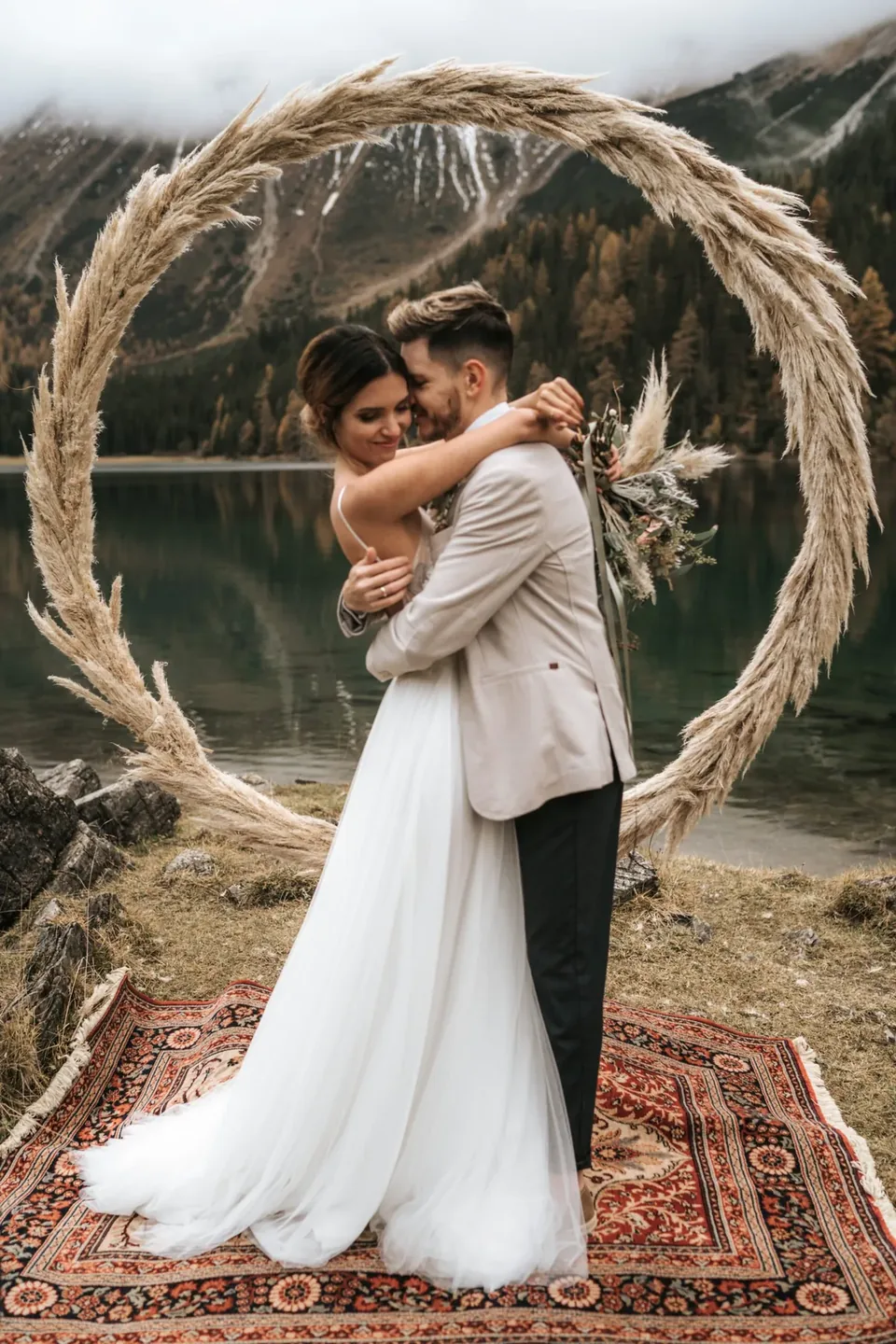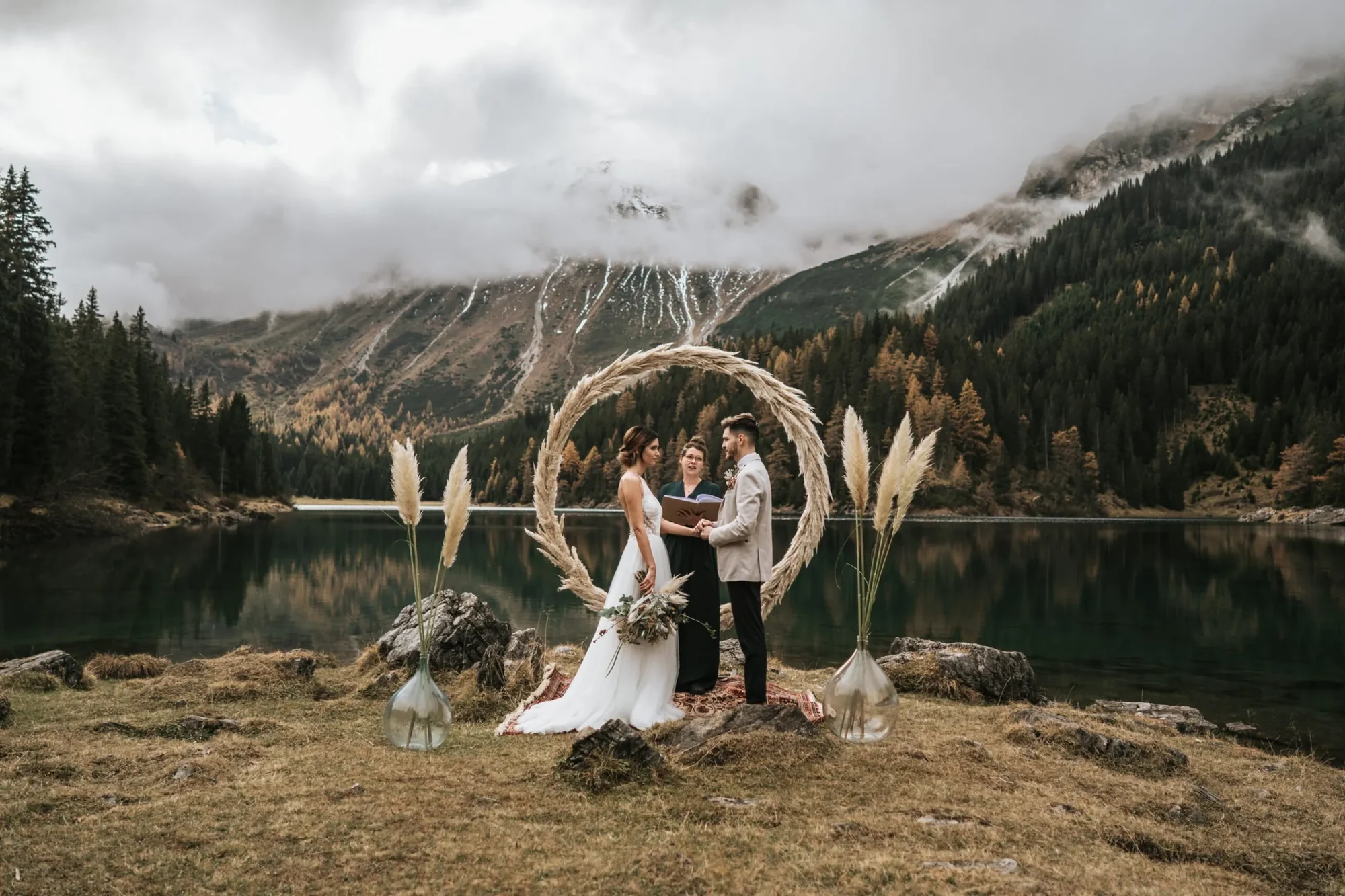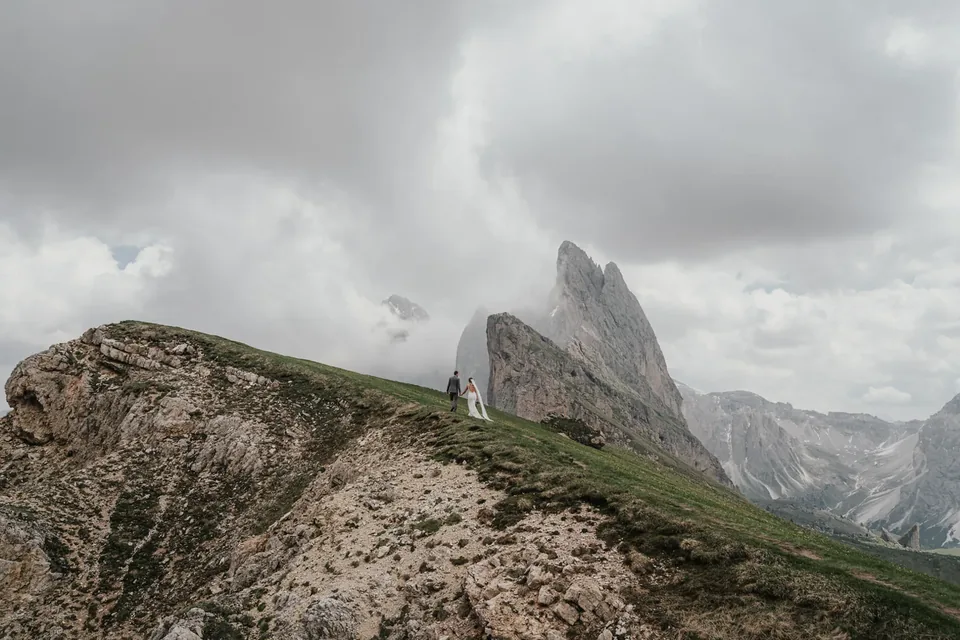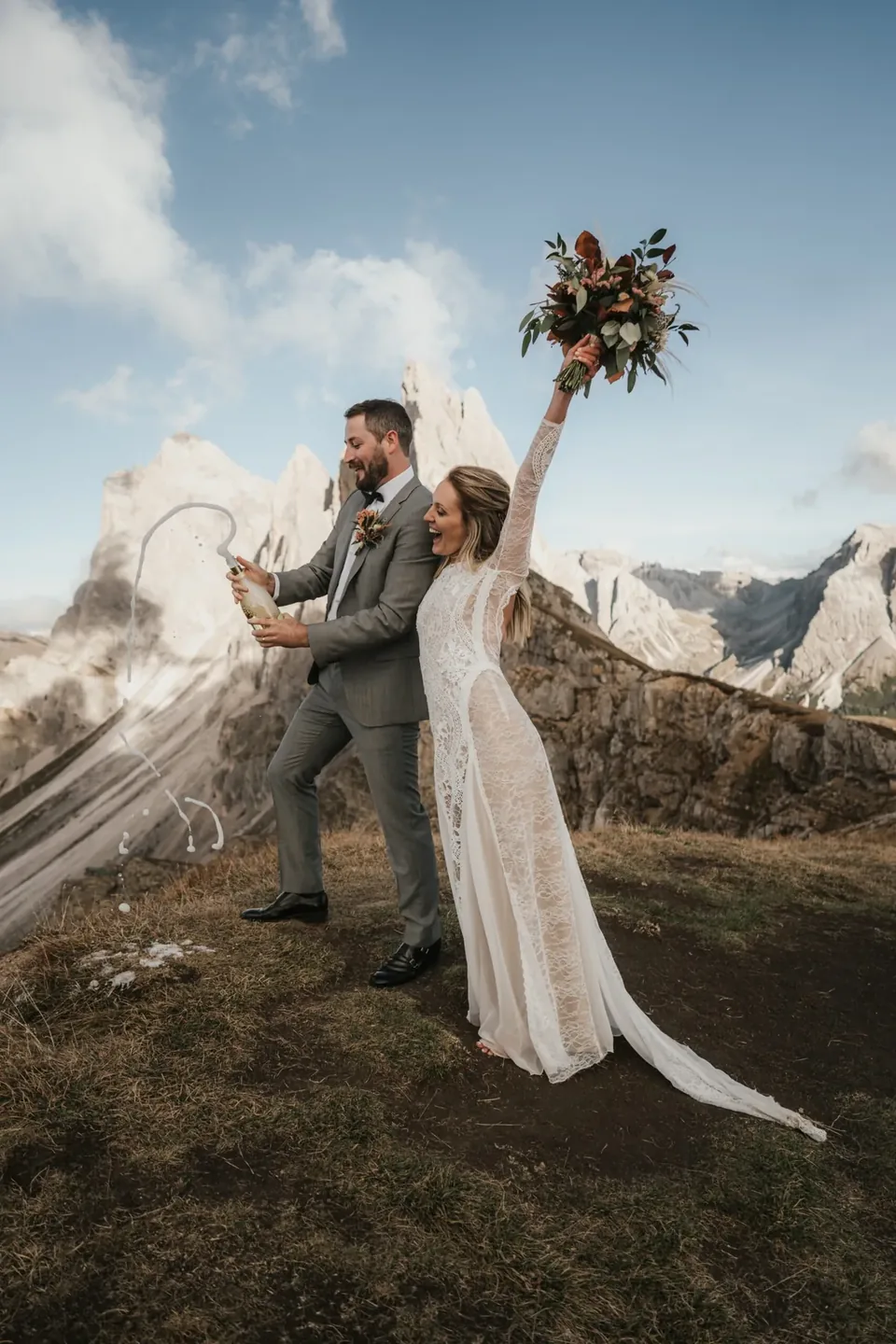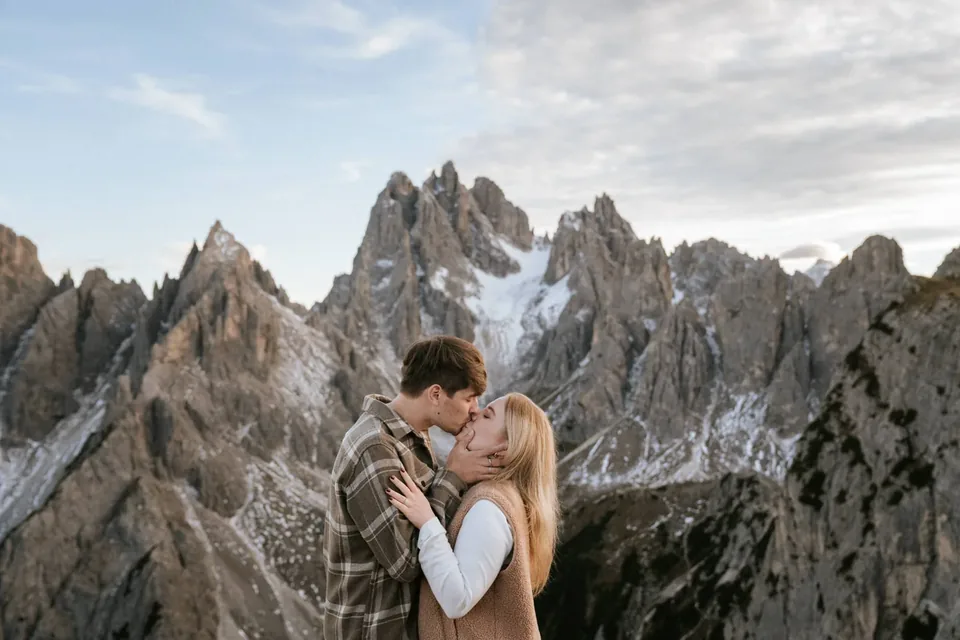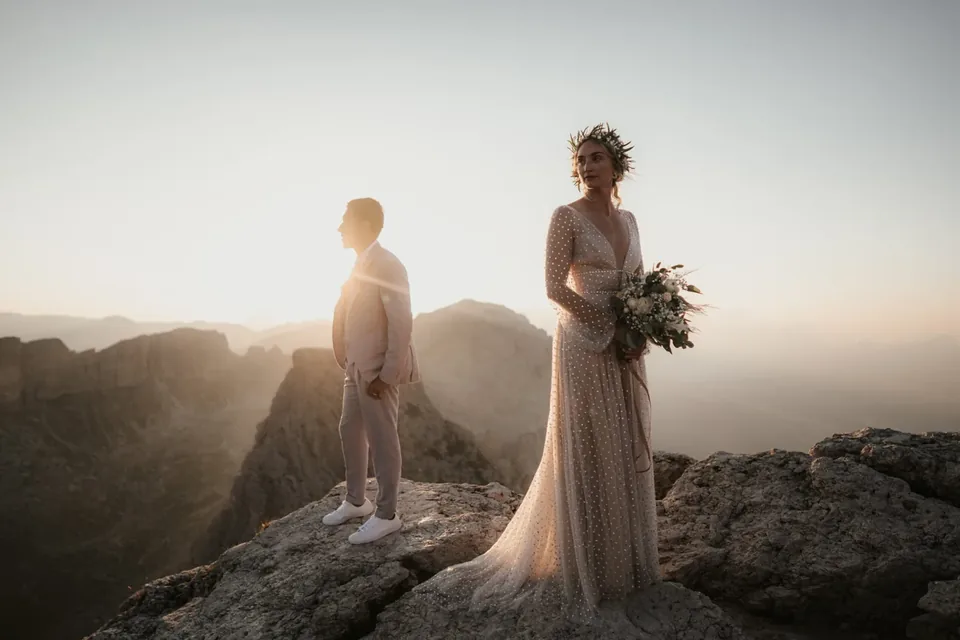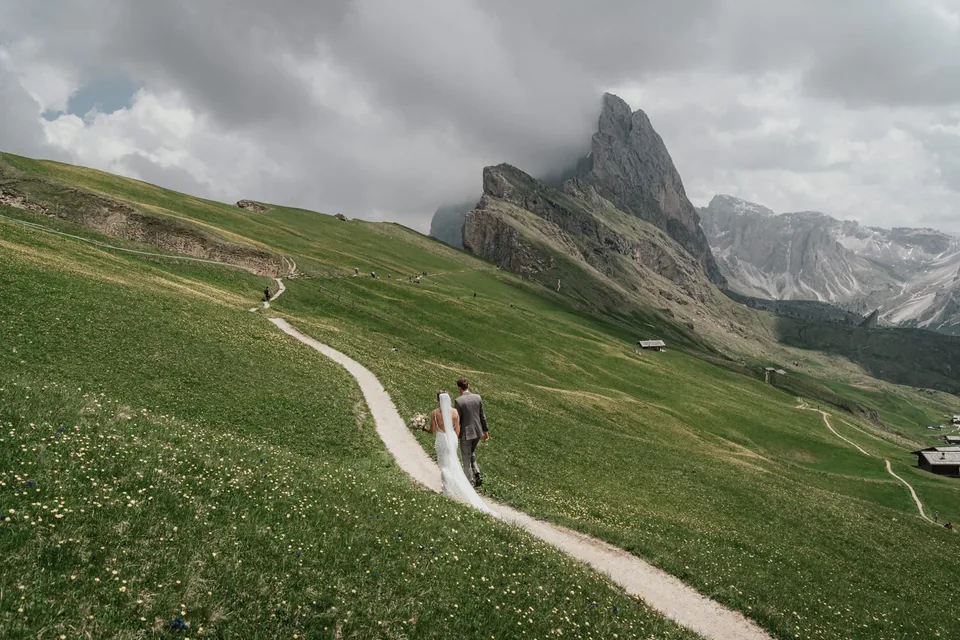
Tyrol is our home. We grew up under these ridges, we know which lake is still glass at six in the morning and which registry office will marry you with a mountain behind you — and that local knowledge is the whole difference between a good day and a flawless one. Austria makes eloping simple in the way that matters most: it is one of the few places in the Alps where the wedding can be both breathtaking and legally binding on the same mountain. This is our honest guide to doing it here.
Every photographer says they know their region. We were born into this one. Andreas is Tyrolean, at home between Innsbruck and the Dolomites, and that means we are not arriving with a map and a rented plan — we are taking you to the meadow we hiked as teenagers and the ridge we watched the sun set from a hundred times. When the weather turns, we already know the sheltered alternative twenty minutes away. When a lake is mobbed, we know the quiet twin over the pass. That is what local really buys you: not just pretty spots, but the right one, at the right hour, whatever the day throws at you.
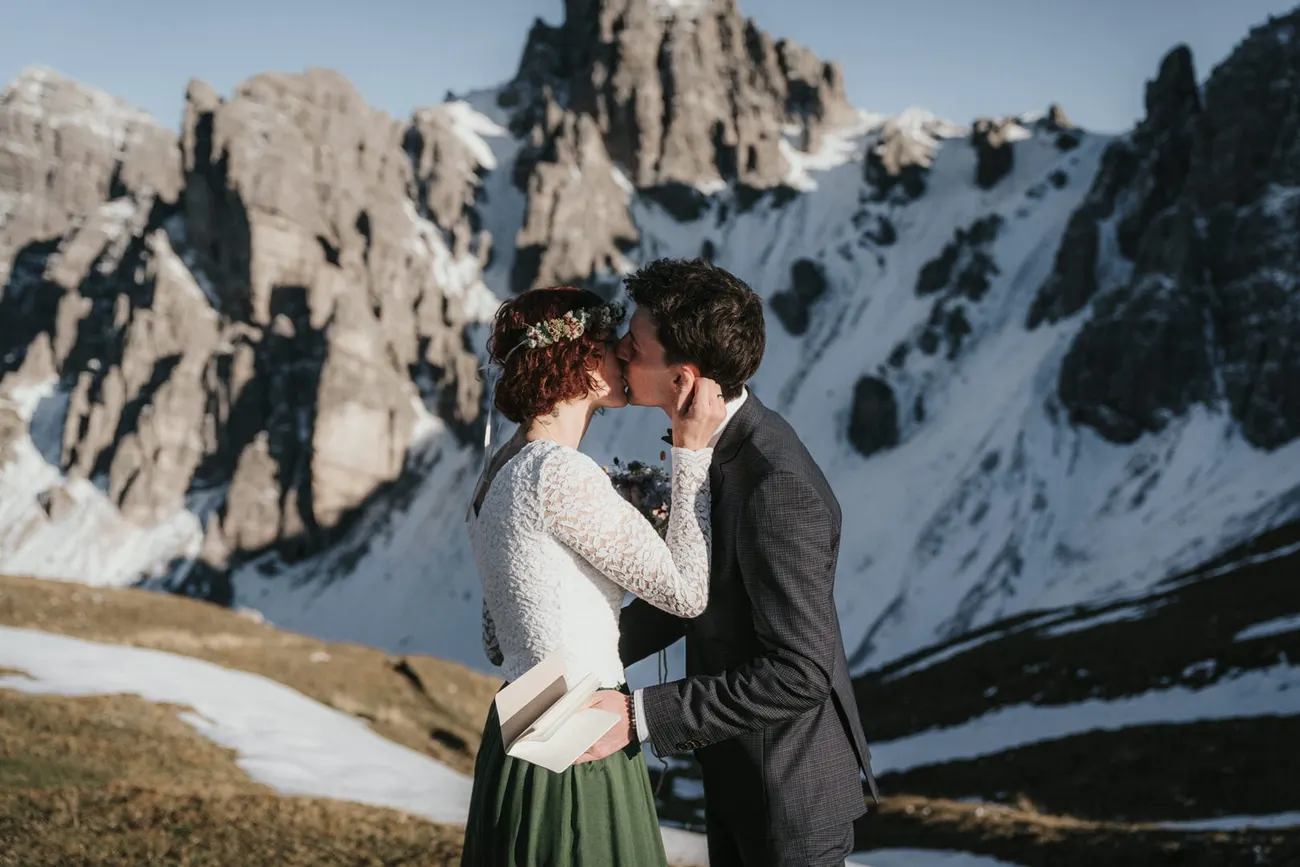
Here is the single biggest reason to elope in Austria rather than over the border in Italy: you can be legally married in the mountains. In Italy a binding wedding can only take place inside a town hall, so every Dolomite ceremony is symbolic. Austria is different. A civil marriage is straightforward for foreign couples, and a number of Tyrolean registry offices will conduct the legal ceremony at an approved outdoor location — a lakeshore, a viewpoint, a mountain terrace — not only inside four walls. The act that actually changes your legal status can happen with the peaks right there.
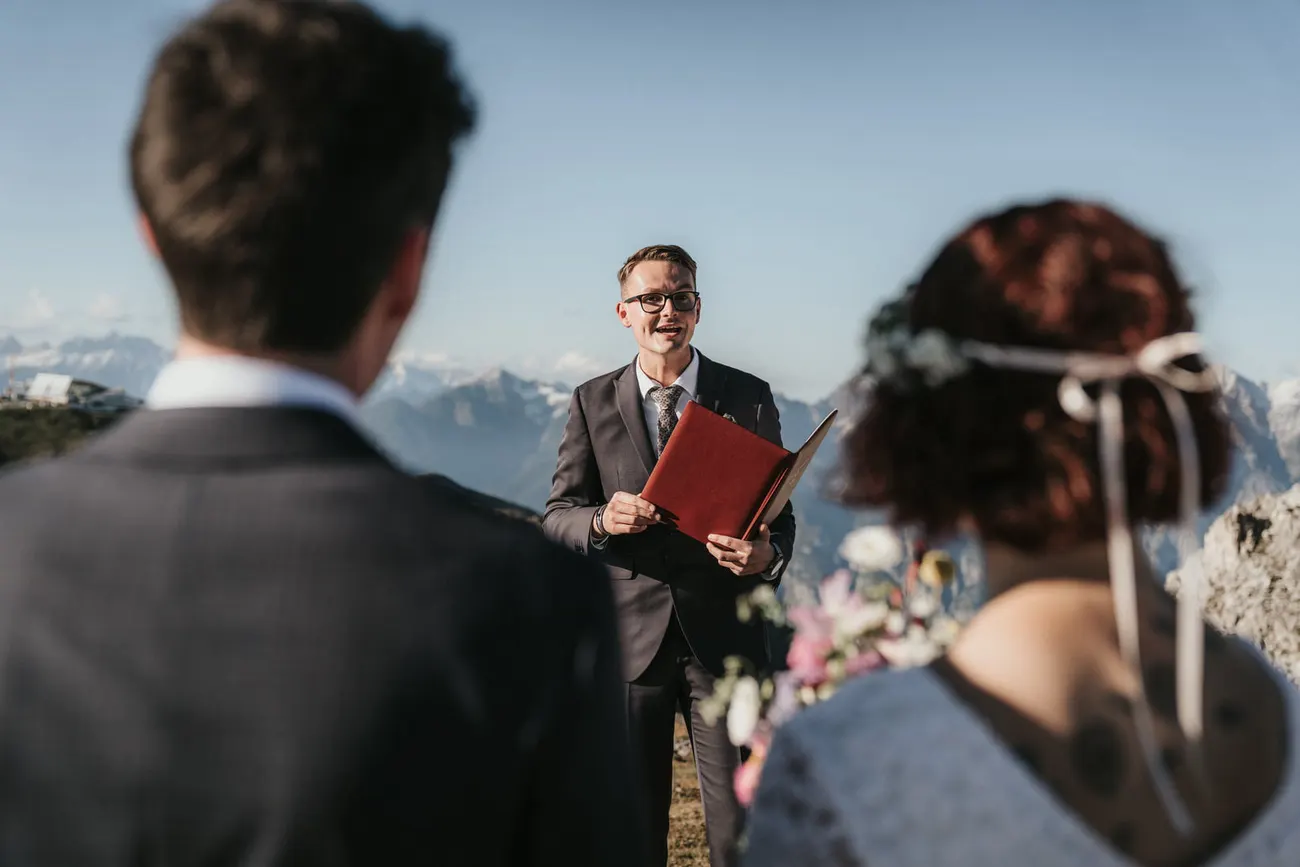
It is not automatic everywhere — each office sets its own rules, dates and lead times, and the popular summer slots go early. But the point stands: in Tyrol you do not have to choose between a real wedding and a mountain wedding. We know which offices say yes to the outdoors, we handle the appointment and the documents, and we build the day so the legal minutes and the meaningful ones sit side by side rather than in two different countries.
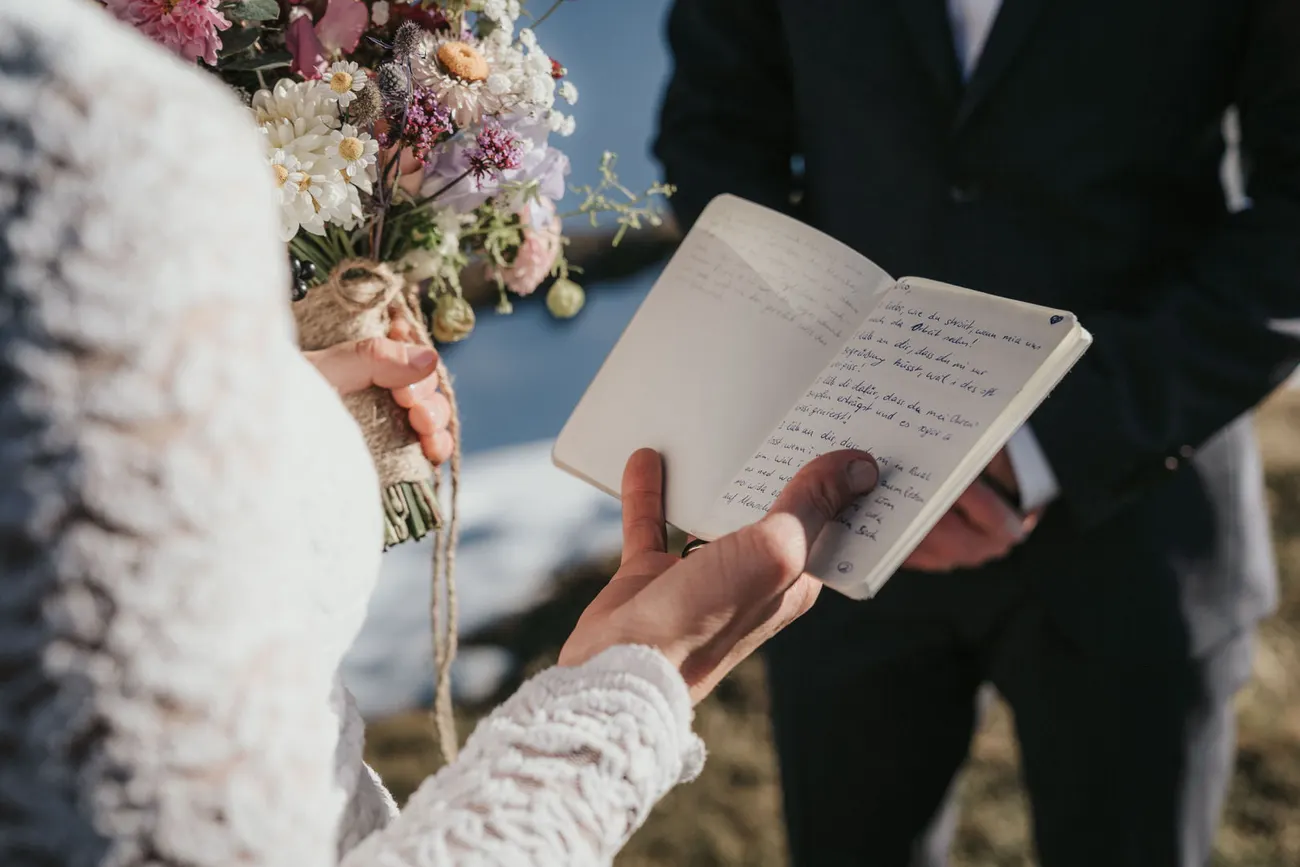
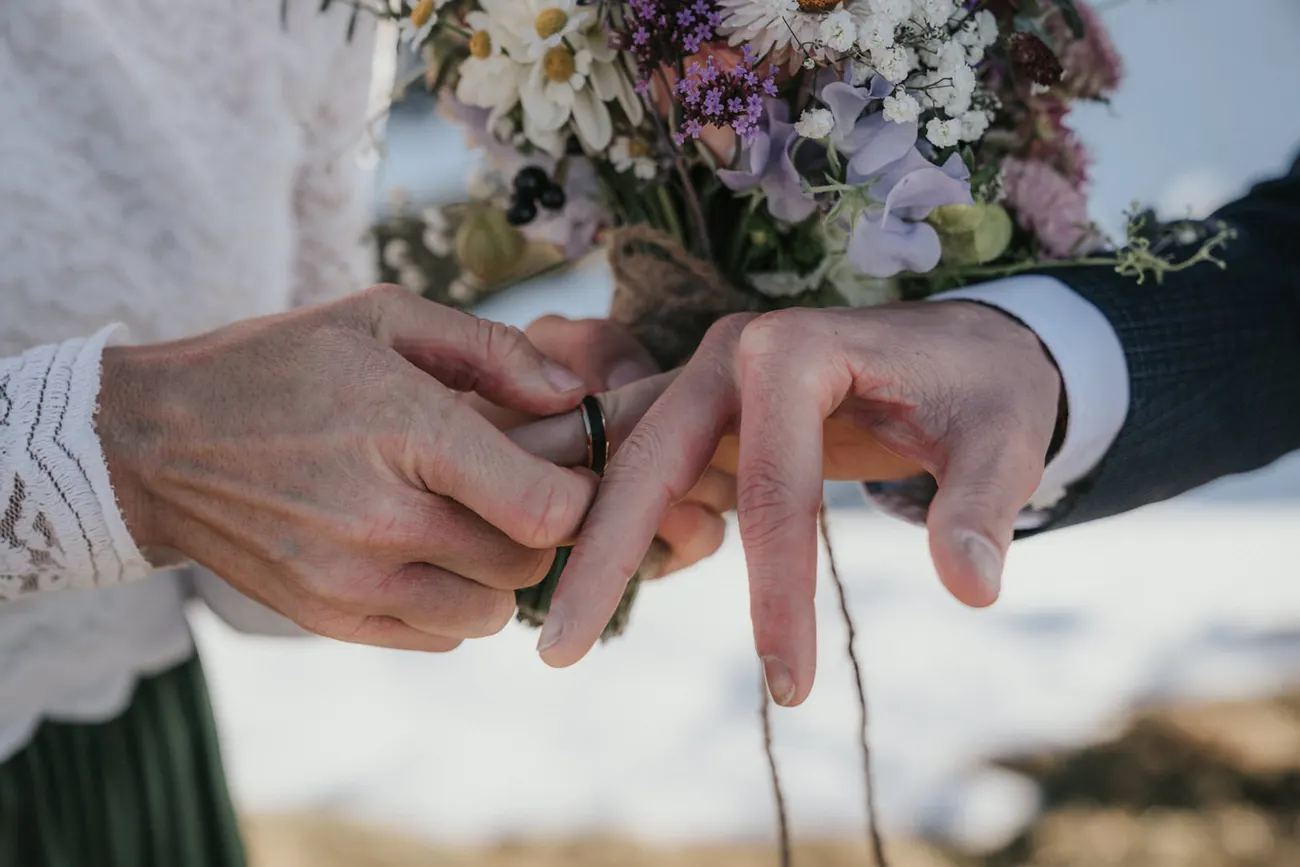
There are two honest paths, and neither is more romantic than the other. The first: complete the legal marriage in Austria, at the registry or an approved outdoor spot, so the day on the mountain is also the day it counts. The second, which many couples still choose for simplicity: sign the short legal act at your registry office at home, and give the mountain the ceremony that actually matters — your words, your vows, no clerk, no queue. Both carry all of the feeling. We will tell you plainly which one fits your timeline and your paperwork.
Innsbruck is the only city in the Alps with a high mountain on its doorstep, and it is the reason so many of our Tyrolean days begin here. From the old town, the Hungerburg funicular and the Nordkette cable cars lift you to Hafelekar at 2,256 m in about twenty minutes — coffee under the arcades, and not long after, a ridge with the whole Inn valley laid out below and the Stubai glaciers on the far horizon. It is genuine high-alpine exposure reached in the time it takes to drive across a city, which makes it perfect for couples who want scale without a climb, or a dramatic finish to a day that started at a lake.
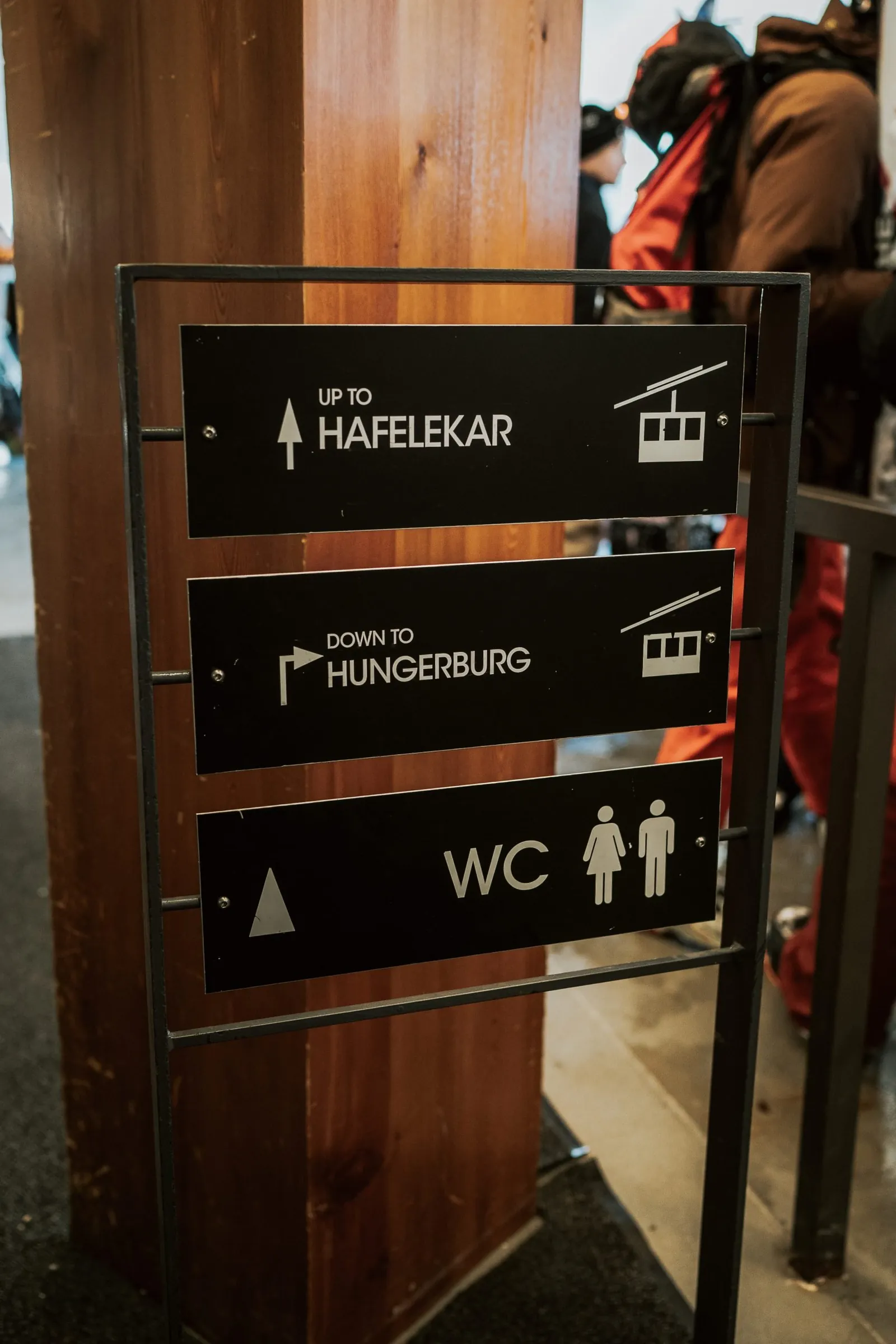
A word of honesty about the light: the first cable car up the Nordkette runs well after sunrise, so a true dawn ceremony on the ridge is not on the menu unless you hike up in the dark. That is fine — the Nordkette is at its best in the clear morning after the first cabin and again in the long golden evening, and we plan around those windows so the ridge is quiet and the light is soft. For actual sunrise we take you to a lake or a valley spot instead, and save the high ridge for the hours it wears best.
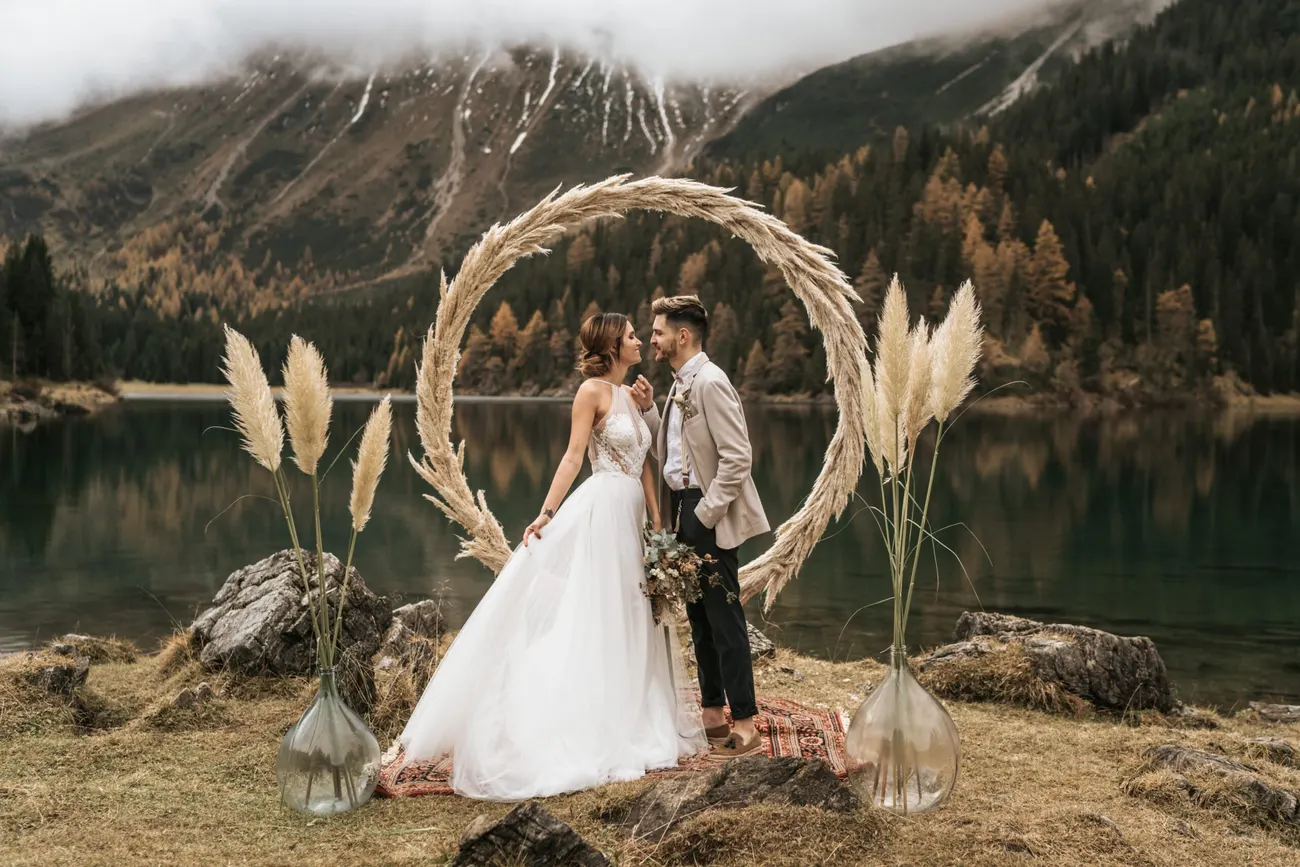
Tyrol keeps its lakes quieter than the famous Dolomite icons, and that is exactly their gift. Our shortlist starts with the protected Obernberger See near the Brenner, a shallow turquoise bowl ringed by larch and reachable by a gentle walk; the emerald Schlegeisspeicher deep in the Zillertal, milk-blue against grey rock; and the small, still high tarns above Kühtai that most maps do not name. All of them sit close to Innsbruck yet feel a world away, and every one is calmest at first light, before the day arrives — which is precisely when we plan to be there.
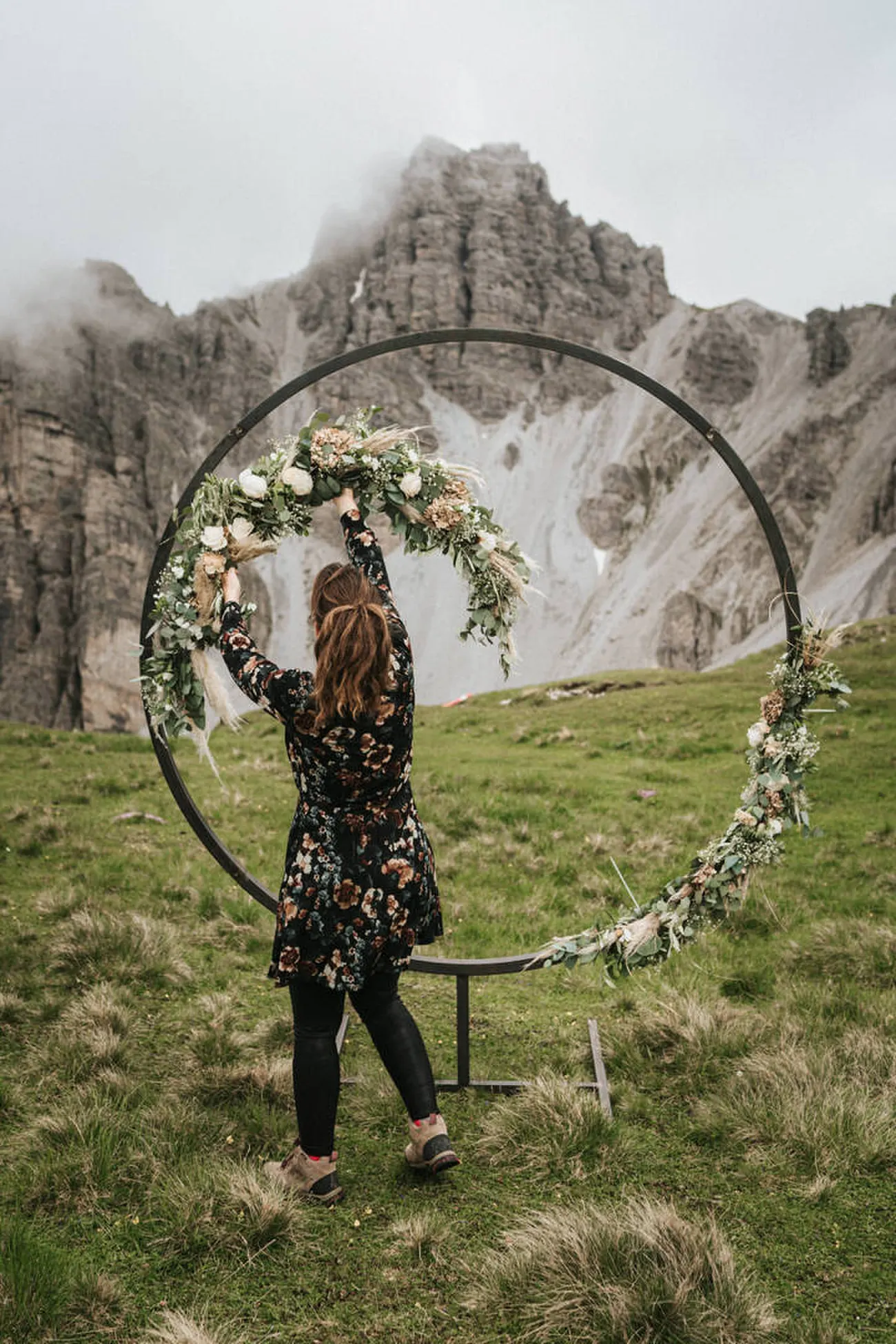
Some of Tyrol’s most cinematic places are reached almost entirely by car, which is a quiet blessing on a wedding day. Two alpine toll roads open turquoise water without a hike: the Schlegeis Alpine Road in the Zillertal, roughly €13 per car, climbs to the milk-blue Schlegeis reservoir; and the high roads over Kühtai and the Timmelsjoch lift you well past the treeline into bare rock and long views. You step out of the car already at altitude, in a dress or a suit, with the big scenery right there — and we build the timing so you arrive as the light turns rather than when the car parks fill.
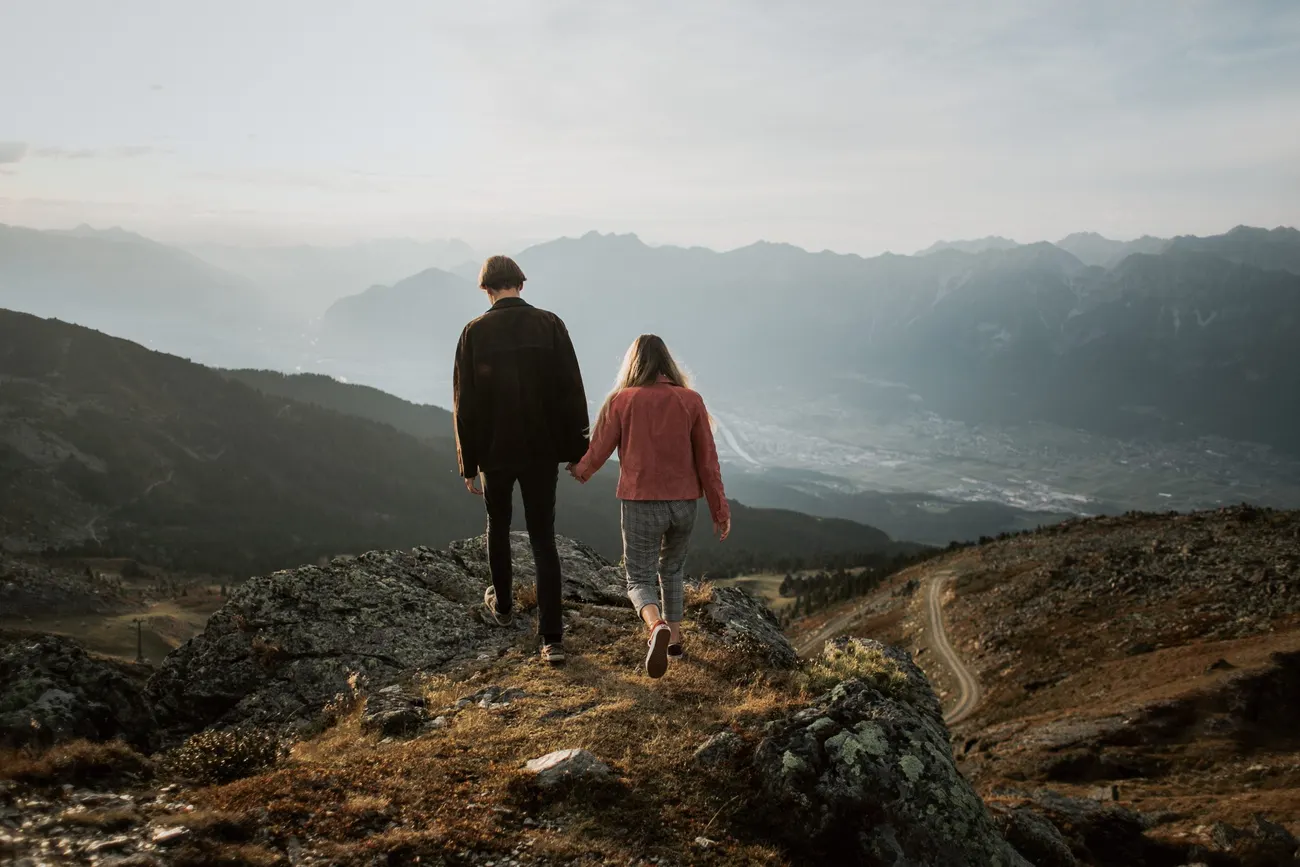
If you want more than a viewpoint — if you want the day to feel earned — Tyrol has ridges that reward a short, honest climb with something you will never forget. A walk up from a lift or a trailhead like the Birgitzköpfl puts you on exposed ground with a 360-degree horizon and the two of you tiny against it, the boldest and most private frames we make. None of it needs ropes or a guide; it needs good boots, an early start and someone who has walked the route before. We scout every path in advance, carry the plan and the spare layers, and pace it so the climb is part of the adventure, not a chore.
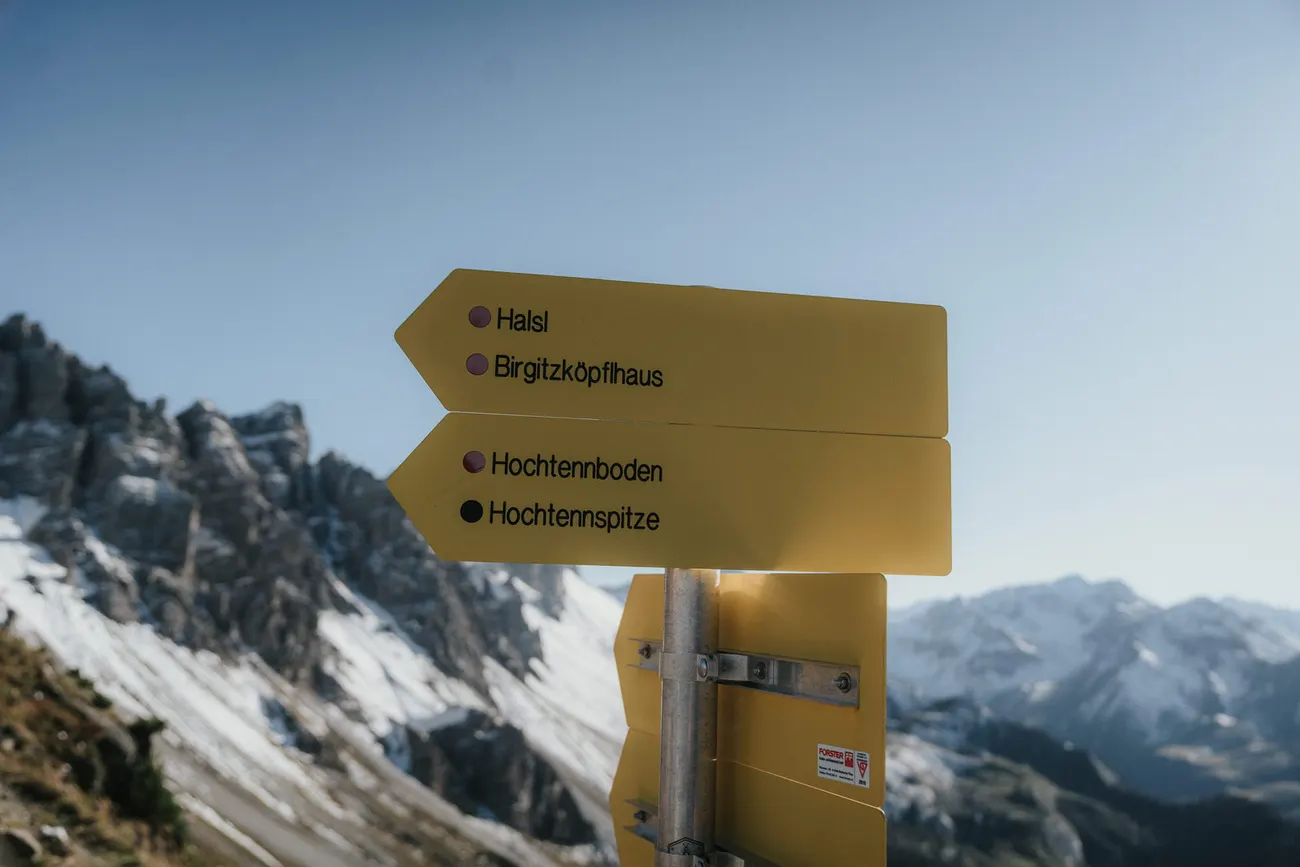
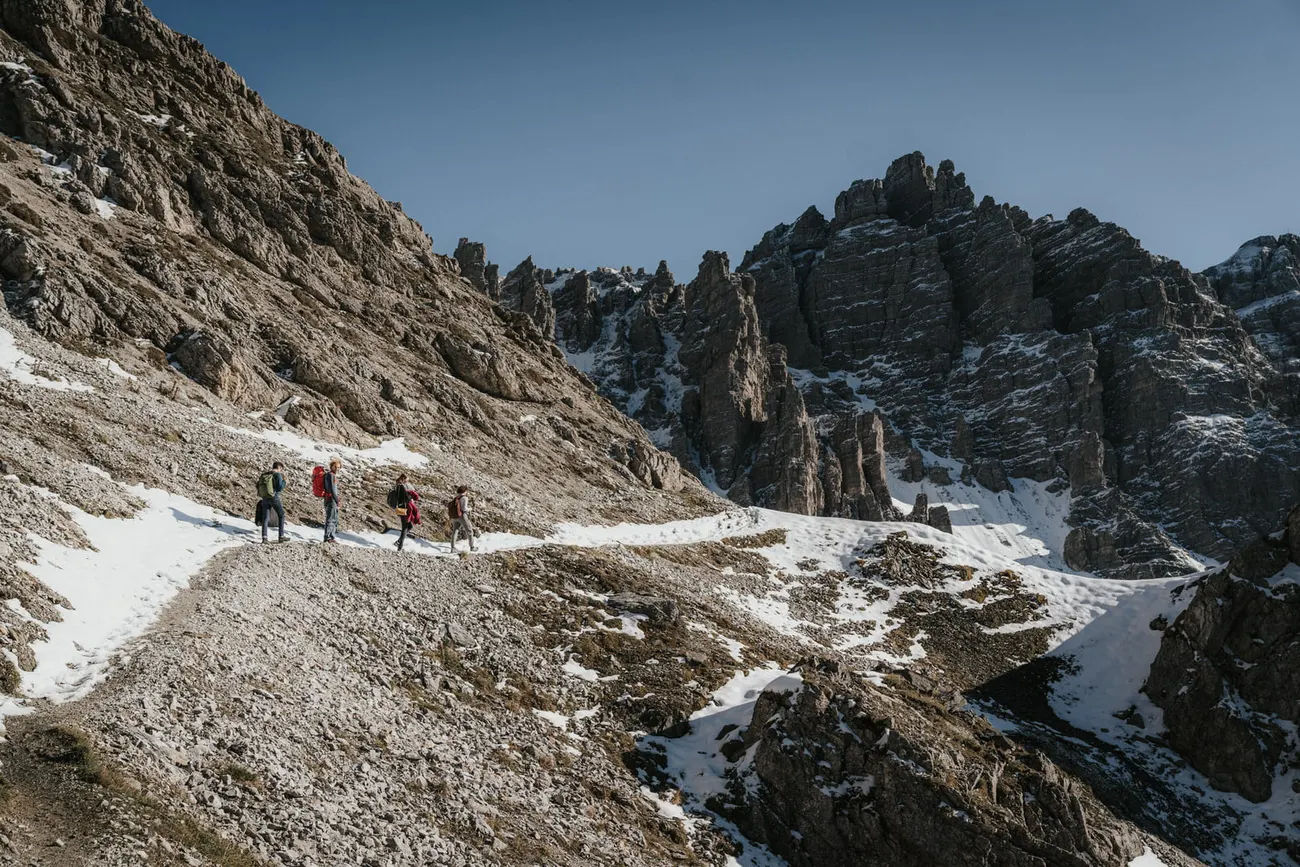
May through October is the dependable season: the lifts run, the high roads are open, and the meadows are green. July and August bring the warmest, most settled weather and the most people; late September is our quiet favourite, with the larches turning gold and the crowds thinning out. The shoulder weeks are a gamble worth taking — you can get fresh snow on the peaks and empty trails in a single morning, and those are often the best pictures of the year. Winter turns Tyrol spectacular and silent, but it needs a close eye on which roads and lifts stay open.
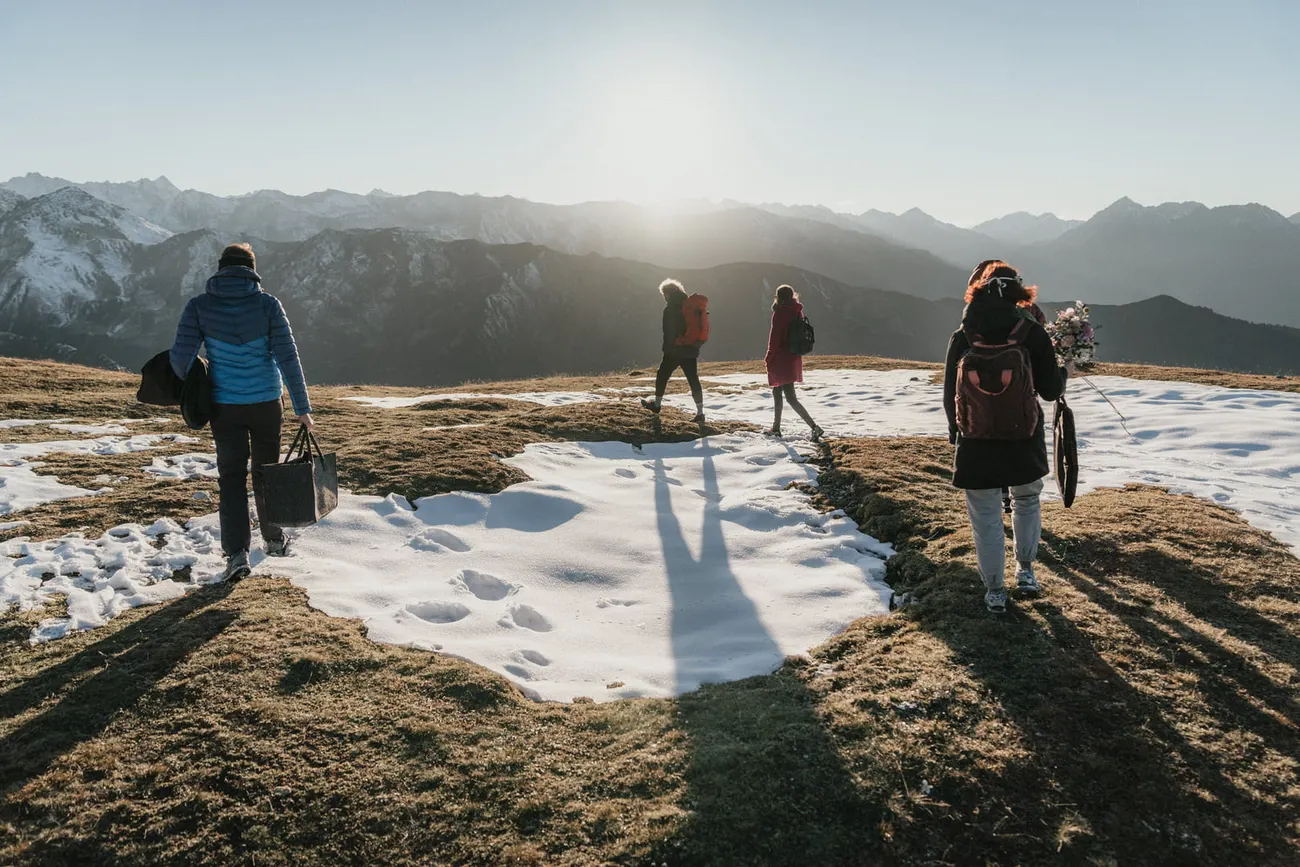
Tyrol is one of the easiest Alpine regions to reach. Innsbruck has its own airport just minutes from the old town, and Munich and Venice are each a simple drive or train ride away, so most couples are under a mountain within an hour or two of landing. Innsbruck itself makes the ideal base — the Nordkette above you, the Zillertal and its lakes a short drive east, the high roads west, and the Dolomites two to three hours south for couples who want to fold both countries into one trip. We help you choose the base that keeps your chosen spots within an easy dawn drive and hand you a simple plan for the day.
The day is not over when the vows are said. Tyrol’s evenings are long and generous — the low sun rakes across the ridges and the whole valley goes gold, then rose, then the cool blue hour that most people miss by packing up too early. We never do. And then the celebration to match: a picnic on a warm slab of rock, a toast with the peaks going pink, a slow descent in the last light. A mountain wedding is not one perfect frame at noon; it is a whole day that keeps giving, right down to the walk home.
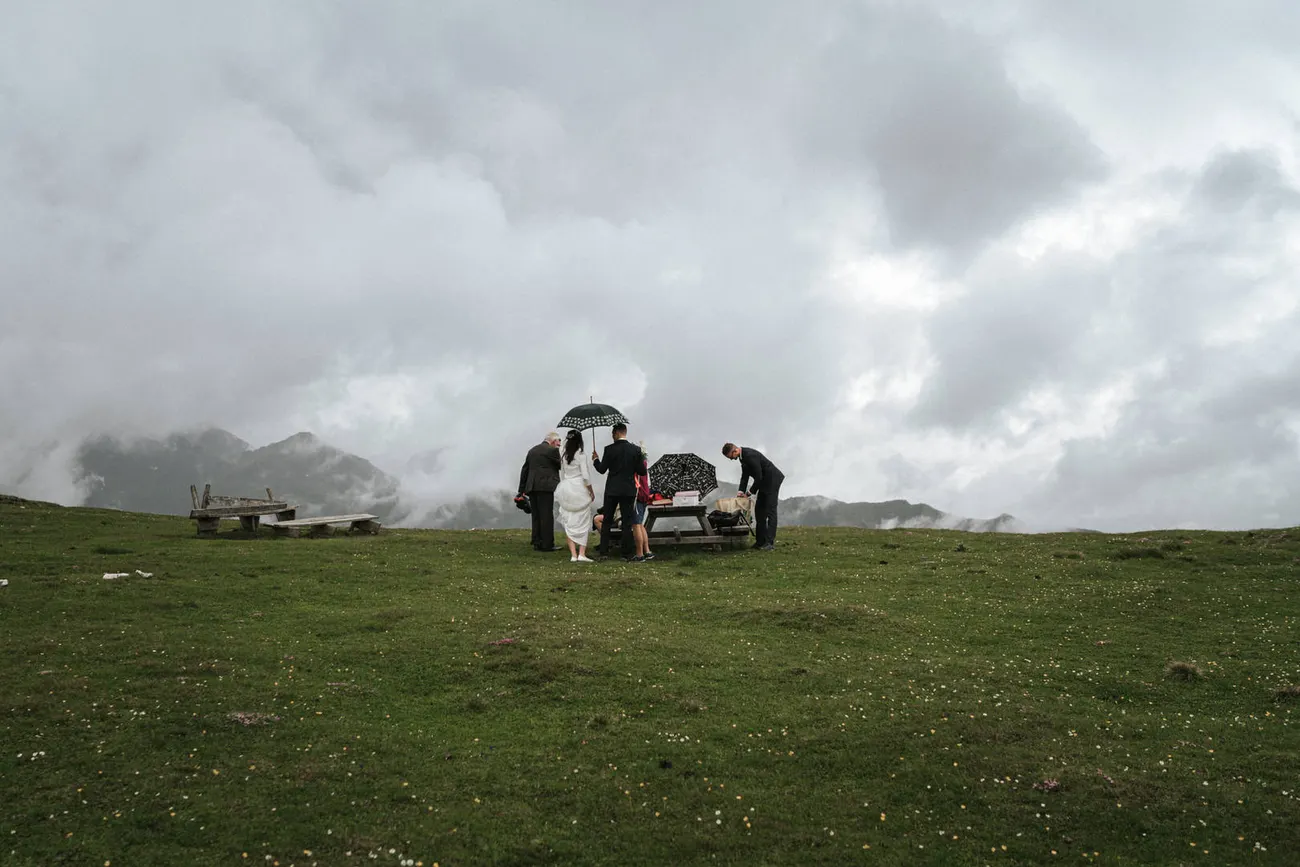
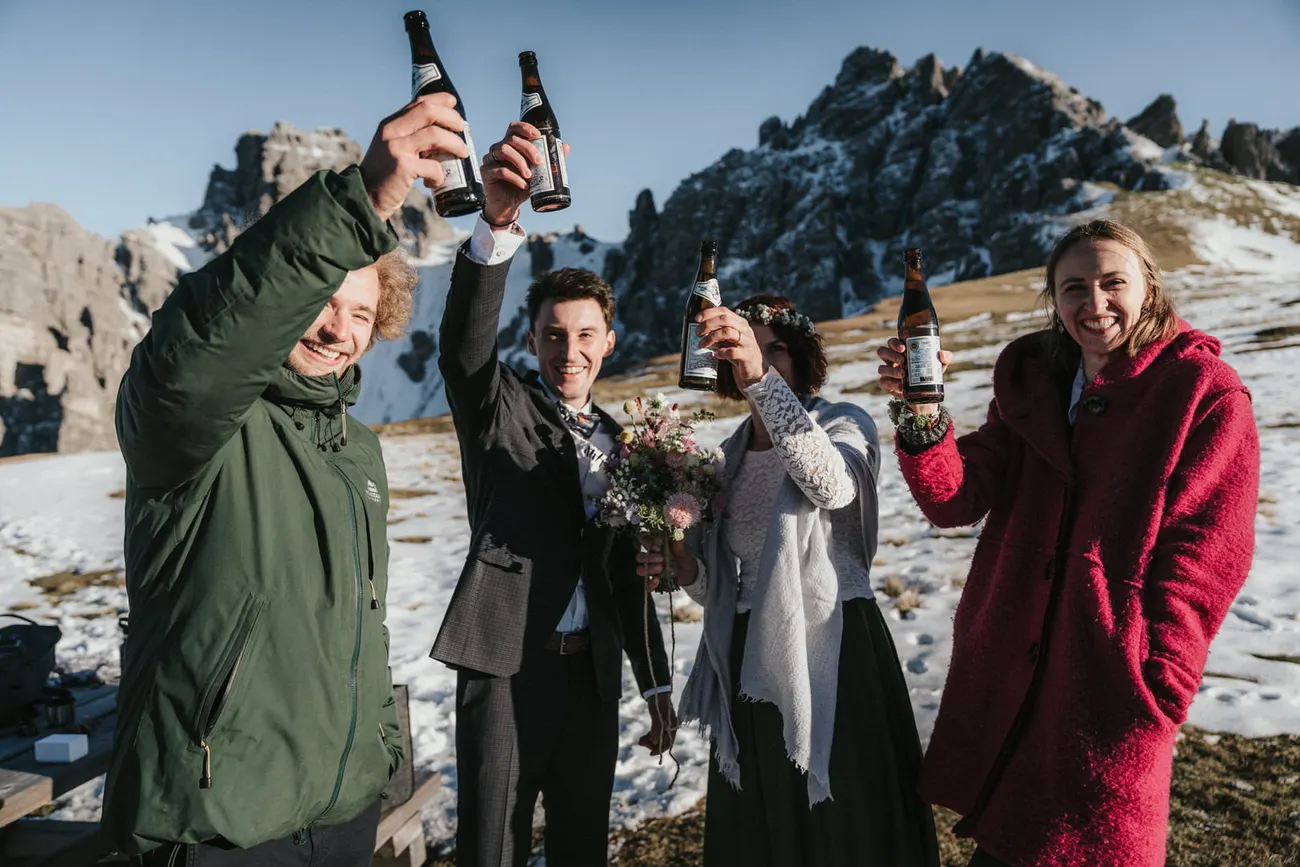
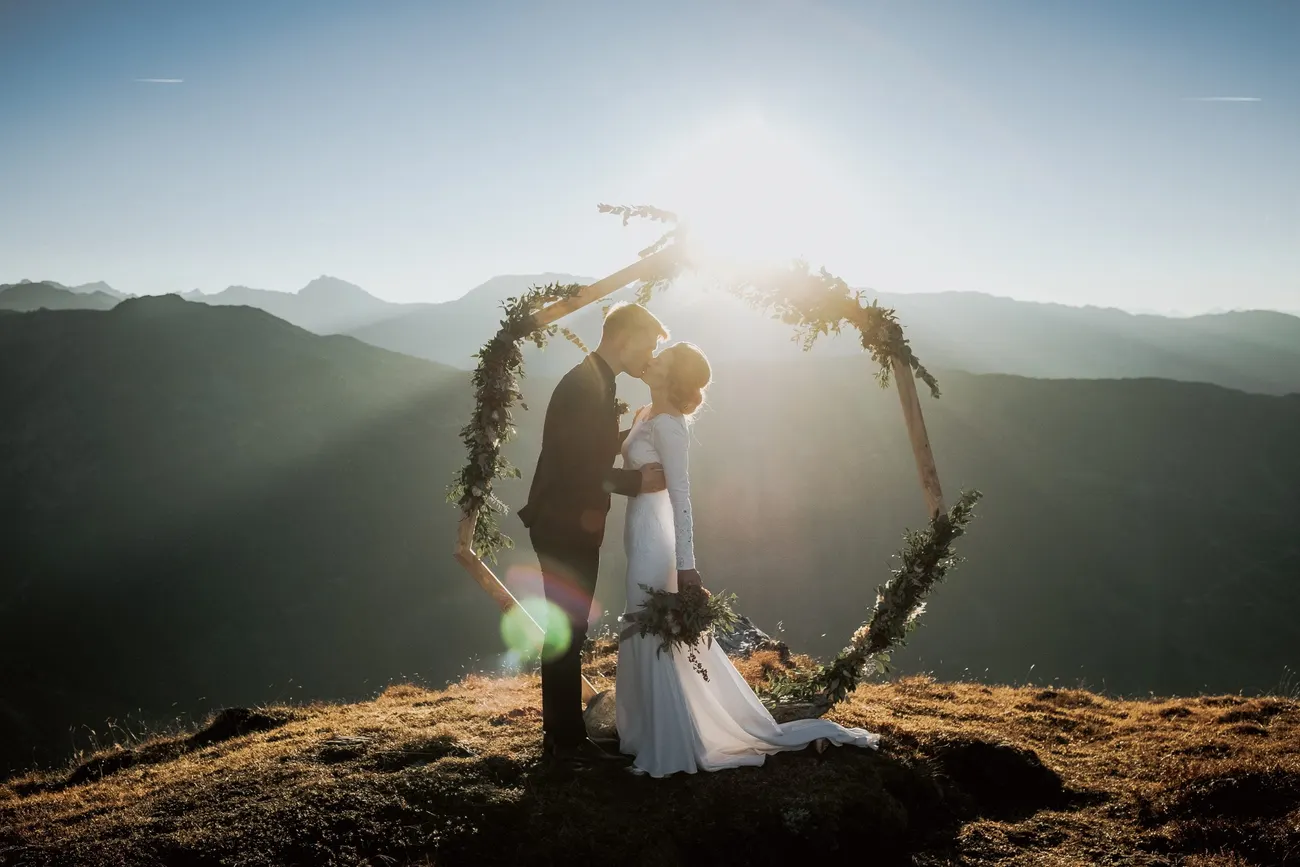
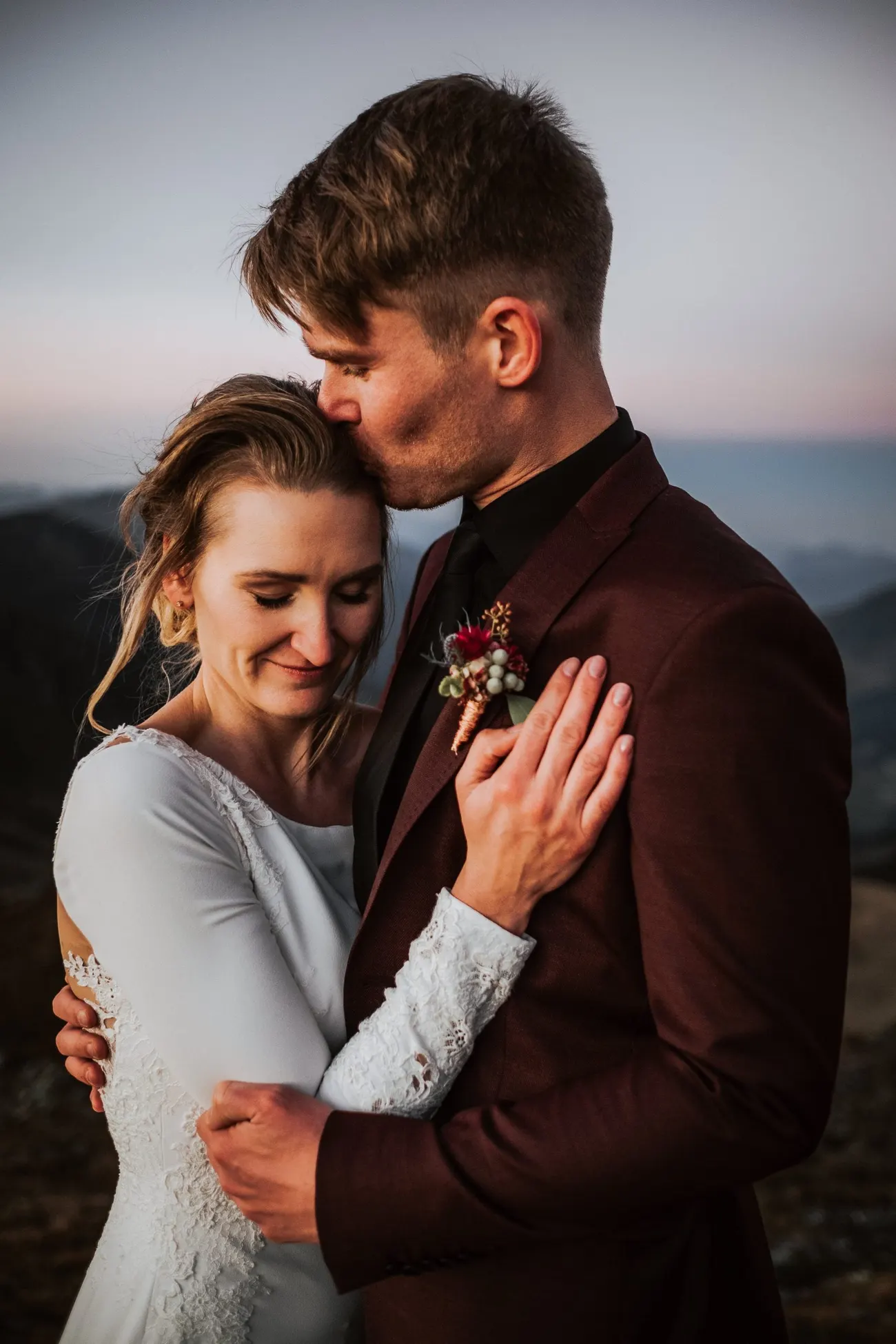
Yes — and this is the real reason couples choose Tyrol over Italy. Austria allows a legally binding civil ceremony, and a number of Tyrolean registry offices will marry you at an approved outdoor location, not just inside the office. That means the ceremony that counts on paper can happen with a mountain behind you. Where an outdoor slot is not possible, couples sign the short legal act at the registry and keep the emotional ceremony for the summit. We coordinate the office, the date and the paperwork either way.
Two things: the law and the crowds. In Italy a legally binding wedding can only happen inside a town hall, so a Dolomite mountain ceremony is always symbolic; in Austria the legal act itself can move to the mountain. And Tyrol simply sees fewer people than the famous Dolomite icons — the same turquoise lakes and jagged ridges, a fraction of the queue. The Dolomites are two to three hours south, so many couples do both: a legal Tyrolean morning, a Dolomite sunset a day later.
Both are possible, and we match it to you. Innsbruck is the only city in the Alps with a high mountain on its doorstep — the Nordkette lifts carry you from the old town to 2,256 m in about twenty minutes, no walking required. Several of our favourite Tyrolean lakes sit right at the end of a road. And if you want the day to feel earned, a short ridge walk puts you somewhere that looks impossible. We never oversell what a spot costs to reach.
May to October is the reliable window: the lifts run, the high roads are open and the meadows are green. July and August give the warmest, most settled weather; late September brings golden larches and thinner crowds and is our quiet favourite. The shoulder weeks either side can hand you fresh snow on the peaks and empty trails in the same morning — some of the best pictures of the year. Winter is spectacular but needs a close eye on which roads and lifts are open.
Easily — it is one of the most accessible Alpine regions. Innsbruck has its own airport minutes from the old town, and Munich and Venice are each a straightforward drive or train away, so most couples are standing under a mountain within an hour or two of landing. From an Innsbruck base you can reach the Nordkette, the Zillertal lakes and the high roads without ever facing a long transfer, and the crossing south into the Dolomites is a simple, scenic drive.
For a civil marriage in Austria, foreign couples generally need valid passports, birth certificates, and a certificate of no impediment to marriage, usually with certified translations and, depending on your home country, an apostille. Each registry office sets its own lead times and can ask for a little more, and summer dates fill up early, so the honest advice is to start a few months ahead. Tell us where you are marrying from and we will hand you the exact list and coordinate directly with the office.
We use cookies for anonymous statistics (Google Analytics via Google Tag Manager) to improve this site. Analytics runs only with your consent. Privacy Policy