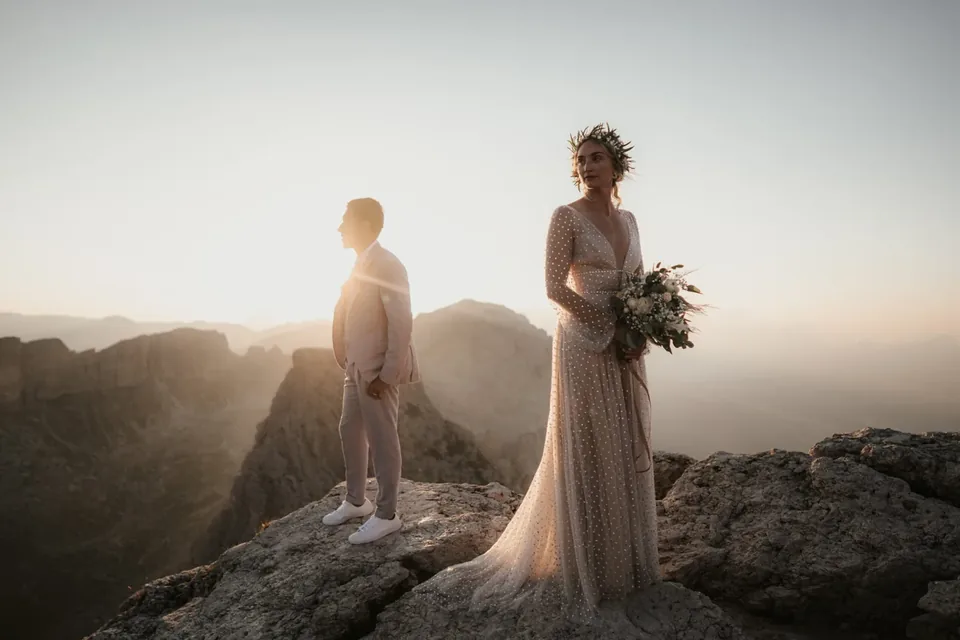
The big decisions — where, when, what it costs — are the easy part. It is the small, unglamorous details that quietly make or break a mountain wedding day, and no checklist ever mentions them. After years of eloping couples in the Alps, in rain and wind and three-in-the-morning darkness, these are the things we wish someone had told us first. None of it is scary. All of it is the difference between a day you endure and a day you never stop talking about.
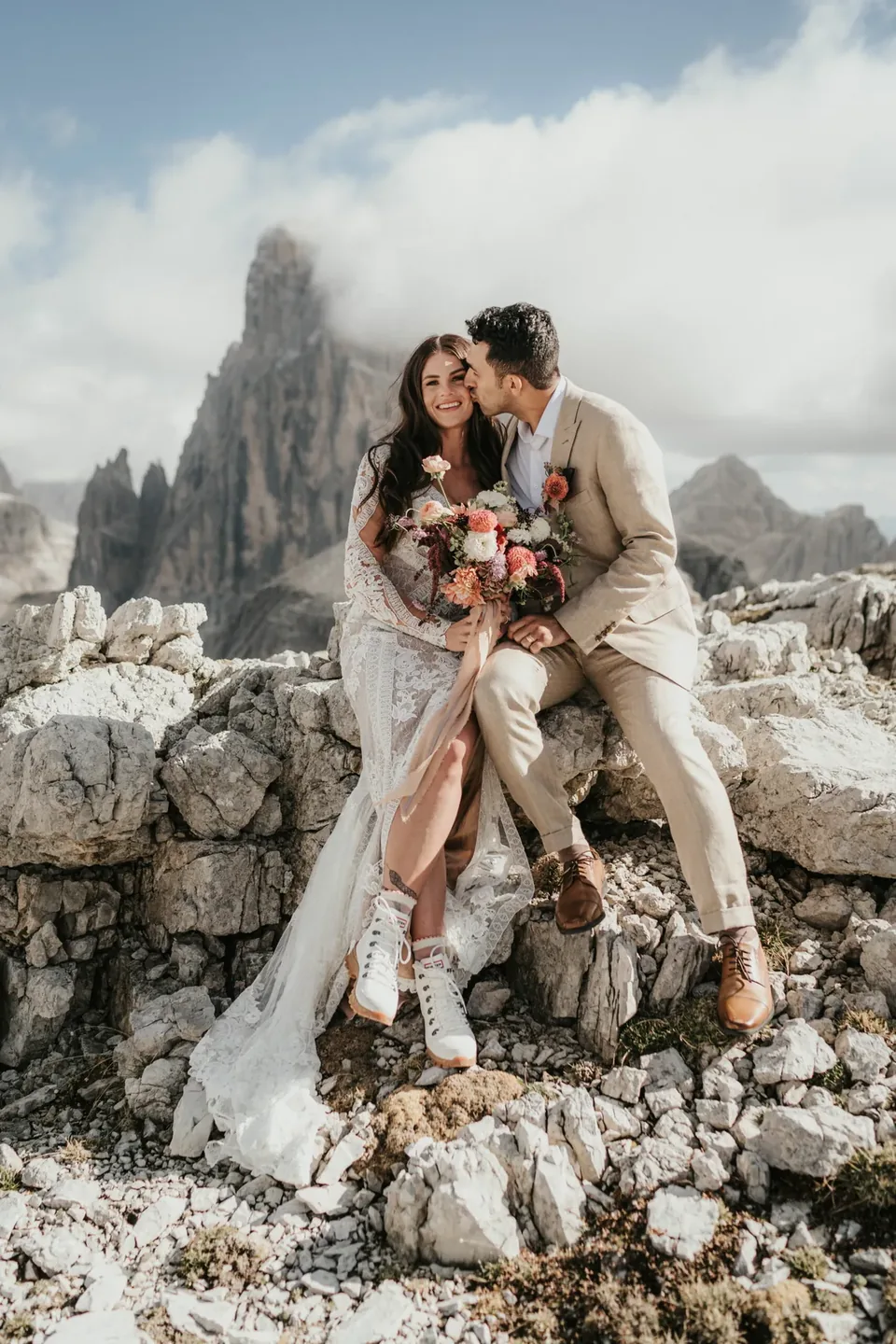
If you take one thing from this whole guide, take this: cold, blisters and hunger always show in the photographs. Not in an obvious way — in the set of a jaw, a hunched shoulder, a smile that does not quite reach the eyes. The couples who look luminous all day are almost always the ones who packed a second pair of real shoes for the walk, warm layers to hide under a coat, water, a snack and hand warmers. The pretty shoes go in a bag and come out for the vows. Nobody ever regretted being warm and fed on their wedding day.
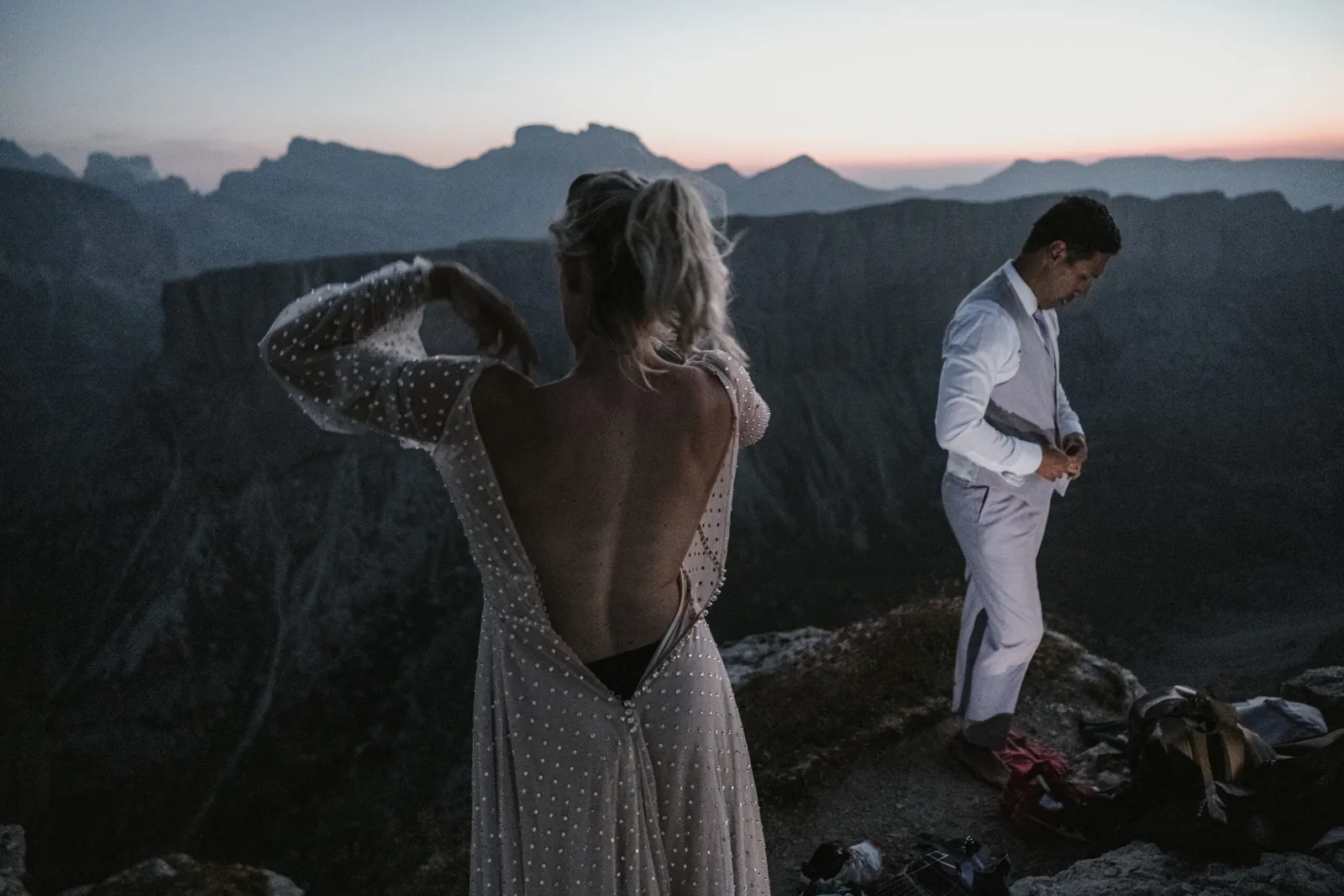
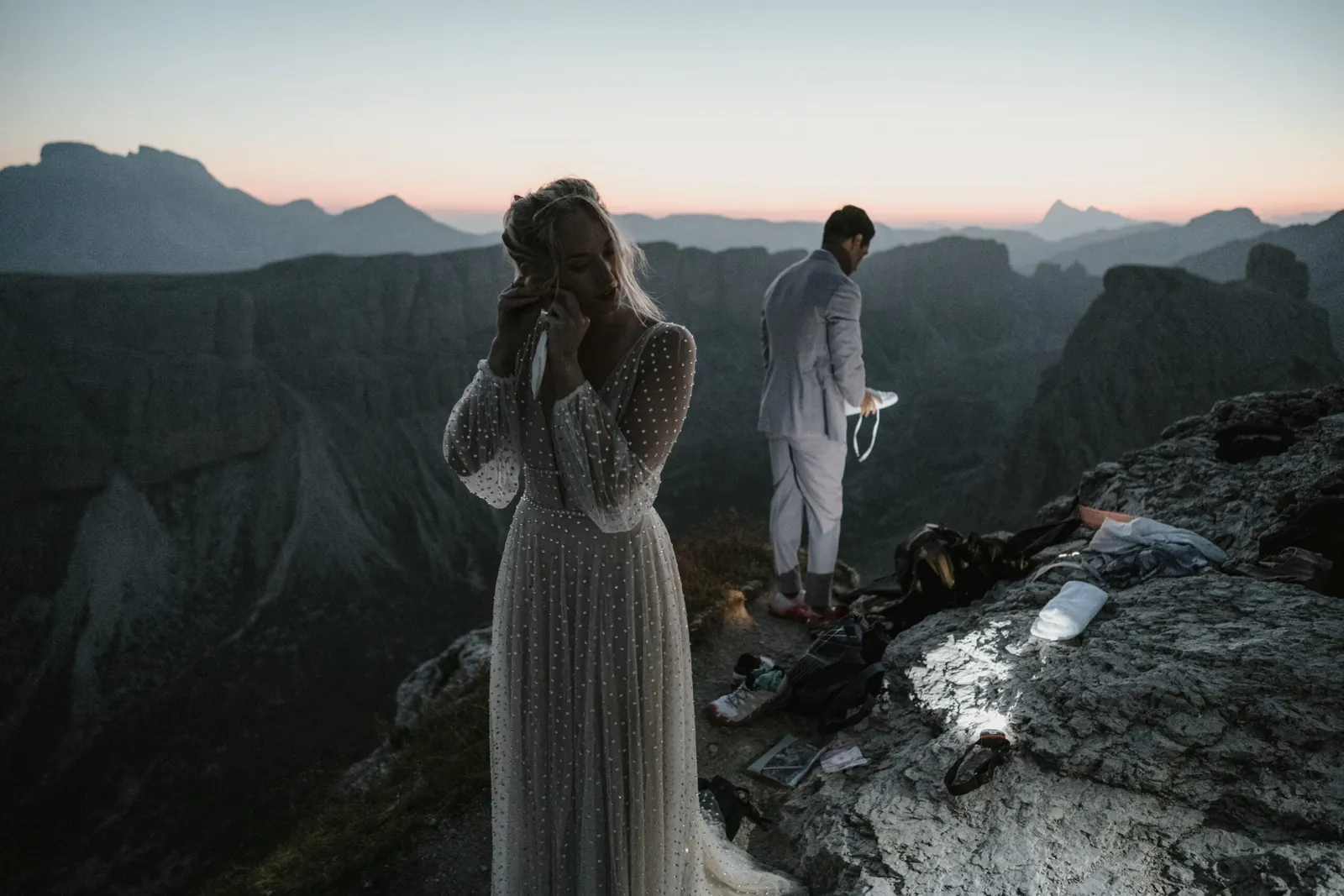
This is also why we never rush you up a mountain. We scout the route in advance, carry the heavy things, and pace the walk so you arrive with breath to spare rather than red-faced and shaking. A little planning — the right shoes, a warm layer, a hut with a kitchen at the top — means the walk becomes part of the adventure instead of the thing you were dreading. And when you are comfortable, you forget the camera, and that is when the real pictures happen.
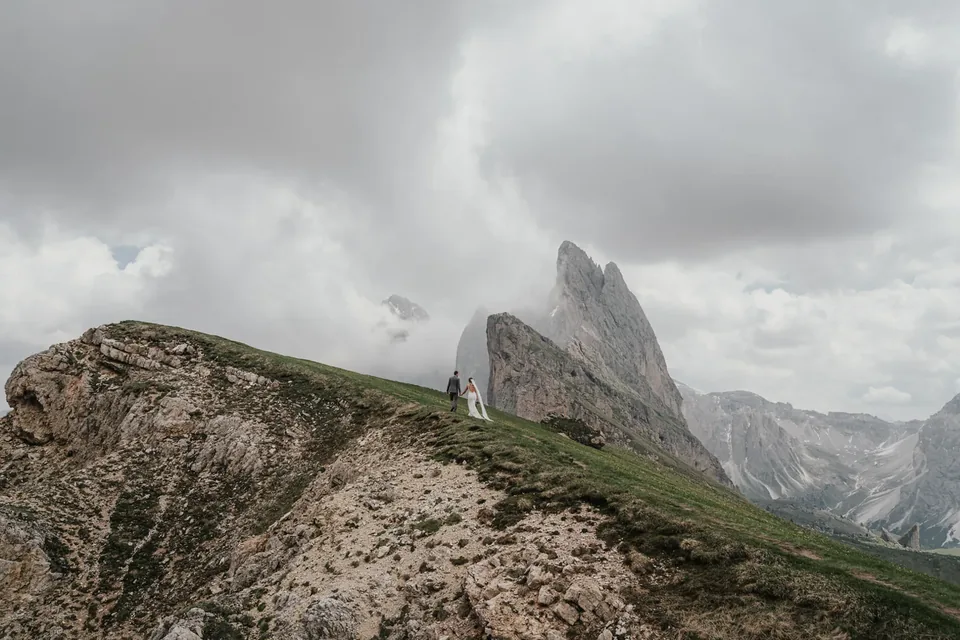
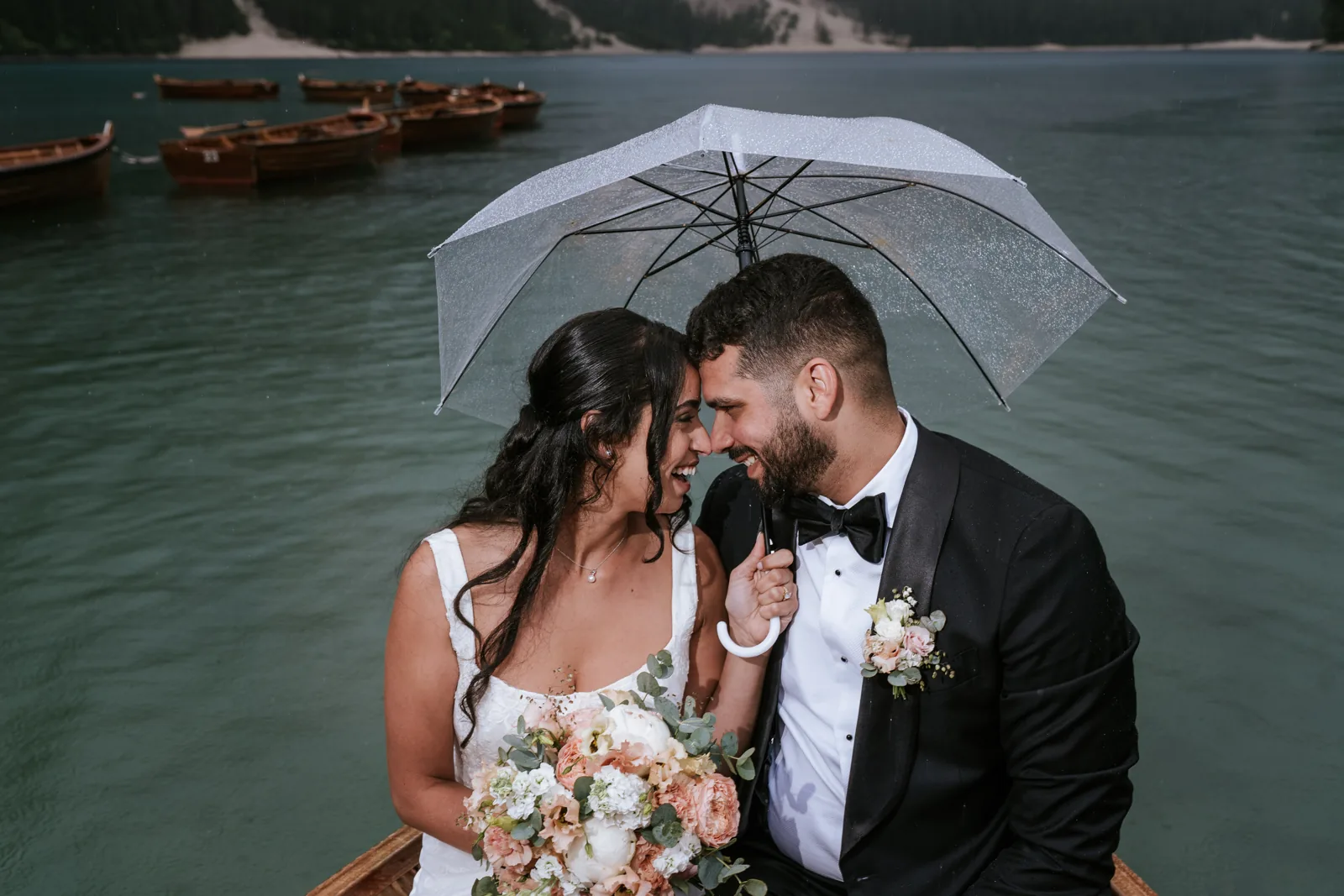
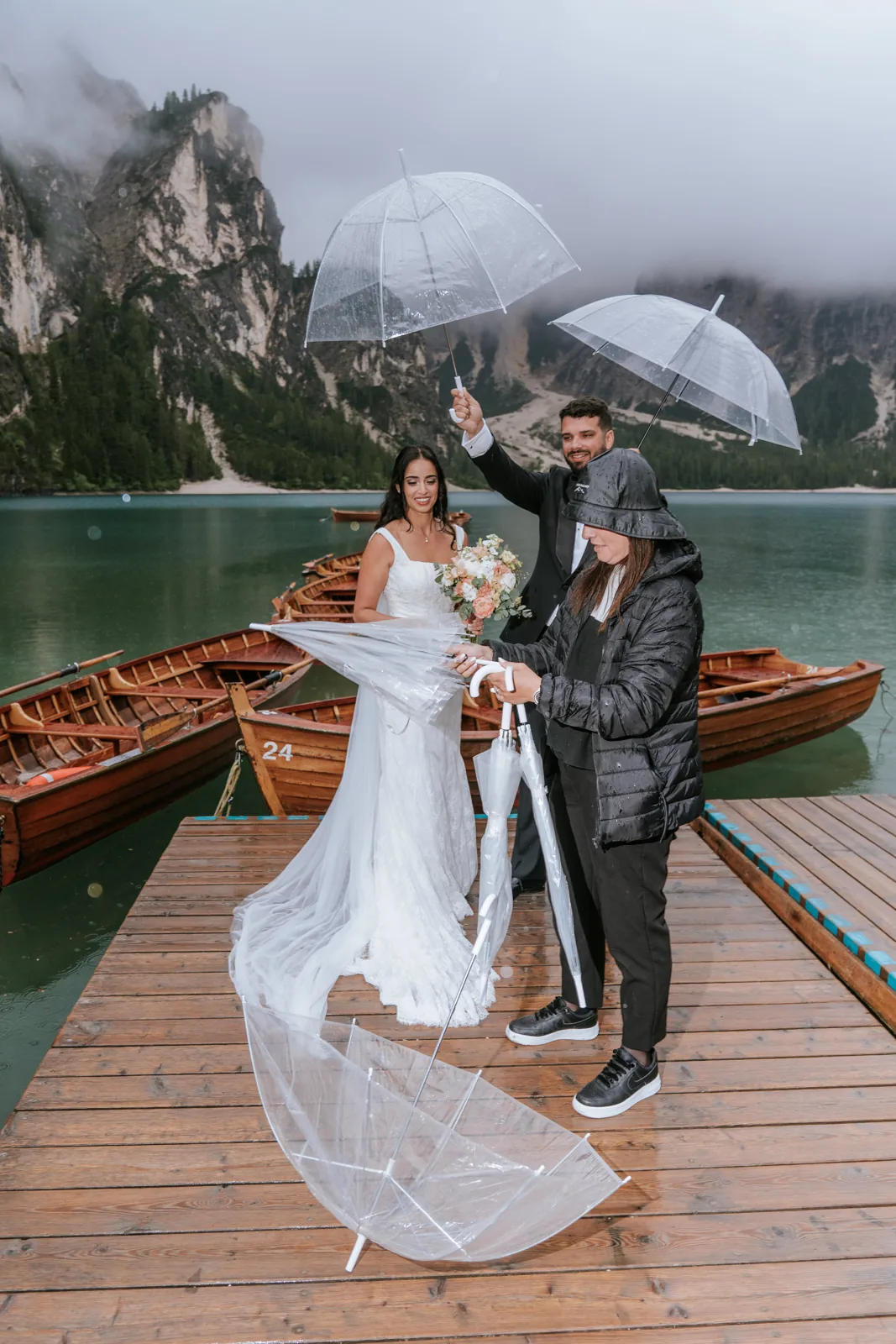
Everyone plans for sunshine and dreads the grey. We would gently turn that around. Some of the most beautiful, most emotional pictures we have ever taken came out of rain, mist and wind — cloud pouring over a ridge, a veil caught mid-gust, two people laughing under a shared umbrella because there is nothing else to do. Bad weather strips a day down to what actually matters: the two of you, close, a little defiant, entirely present. We come prepared with clear umbrellas and dry cloths, and we are not afraid of a moody sky. Neither should you be.
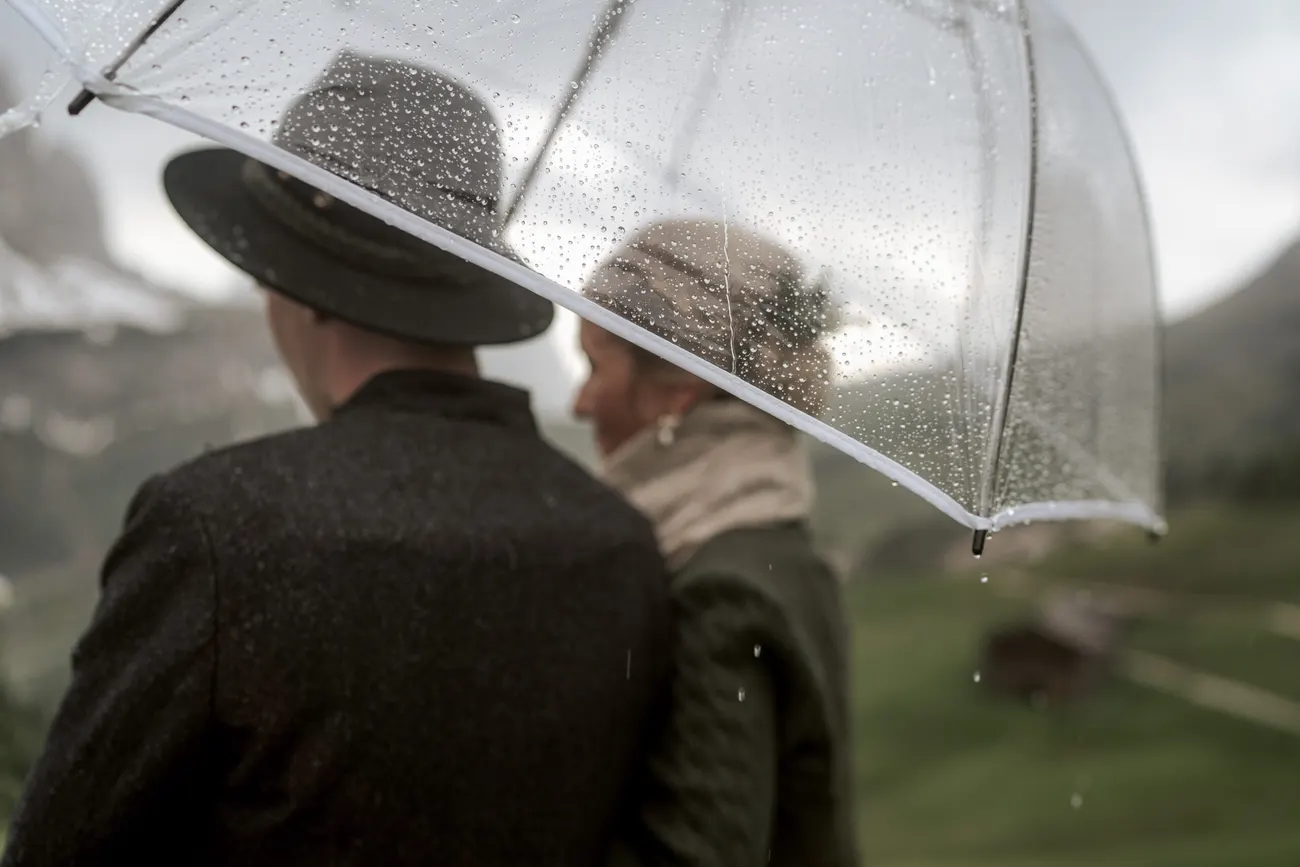
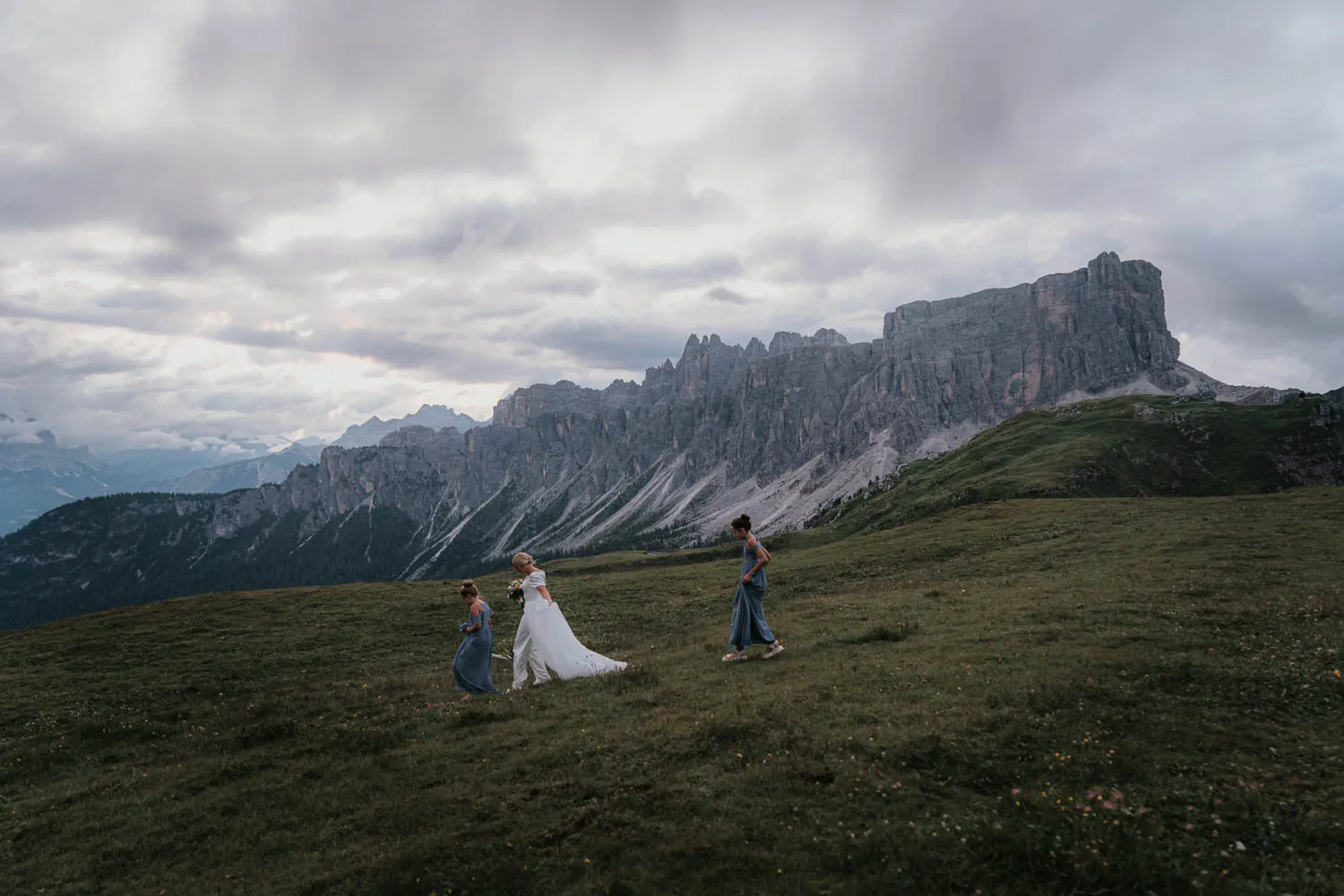
Wind is its own character. It lifts a veil and a dress into something alive, and a meadow in a stiff breeze photographs like a painting — but it is cold, and it steals words, so we pick sheltered spots for the vows and let the exposed ridges be for the portraits. The honest rule is this: we never cancel for weather, we move around it. A backup day, built into the bigger packages, means we can wait out a storm or chase a clearing. The forecast is a suggestion, not a verdict, and the mountain rarely reads it anyway.
Nobody warns you quite how early a sunrise elopement begins. Hair and make-up can start at three or four in the morning; the walk up is often in the dark, by headlamp, with the valley asleep below you. It sounds punishing, and for about twenty minutes it is. Then the sky starts to move, you reach the spot, and the whole world is yours alone — no day-trippers, no queue at the viewpoint, just the first light climbing the rock while you say your words. By the time everyone else arrives, you are already coming down for breakfast, married.
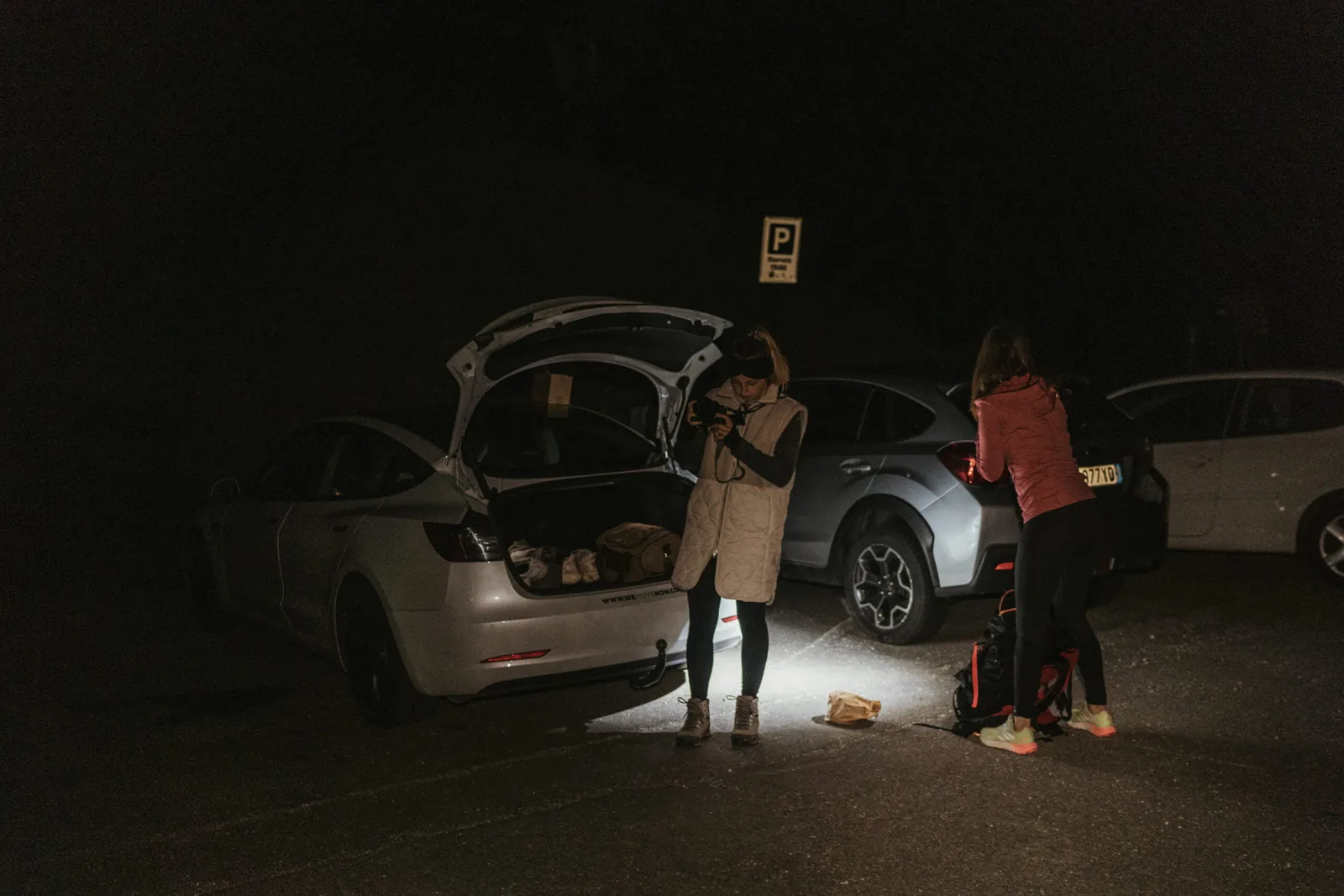
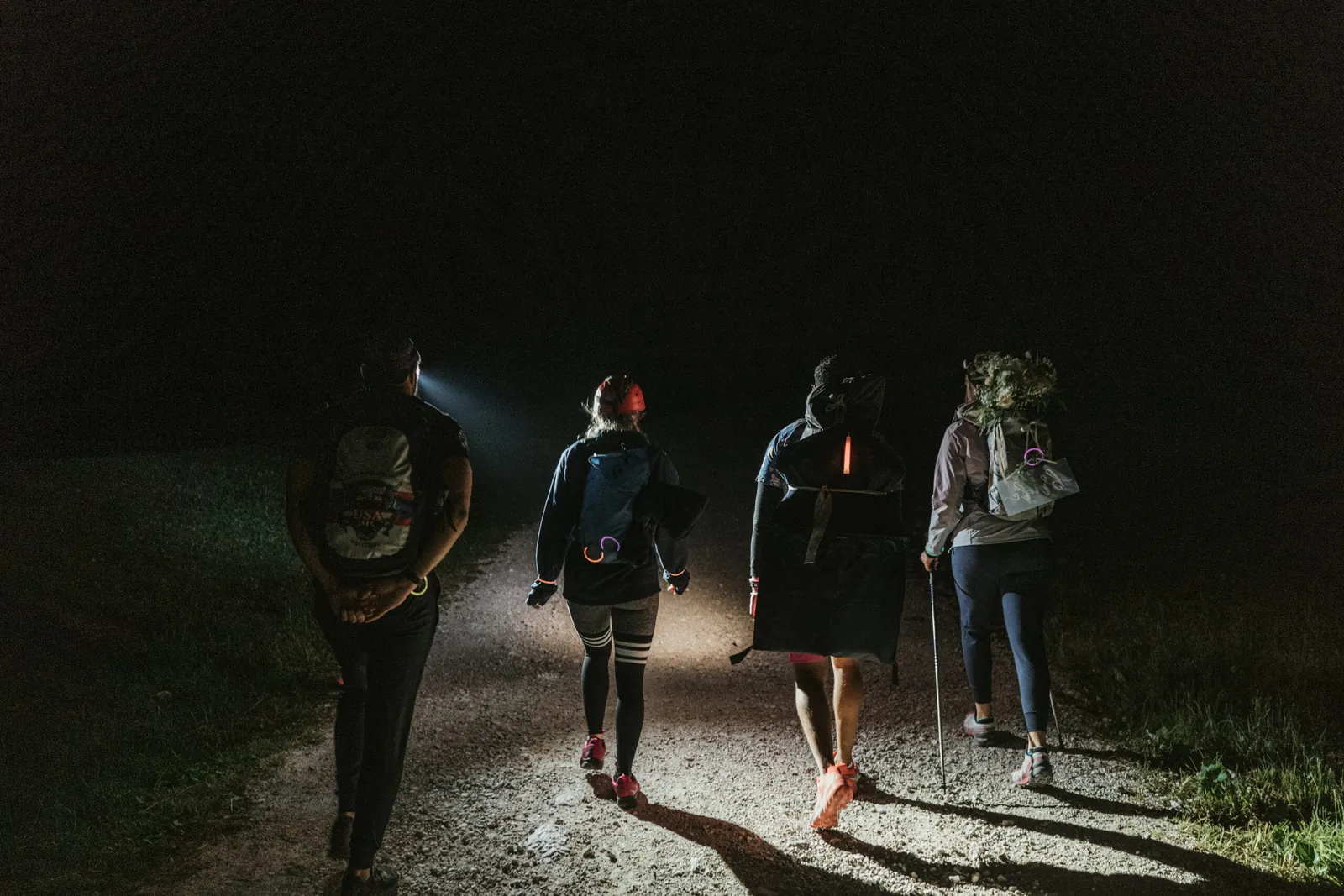
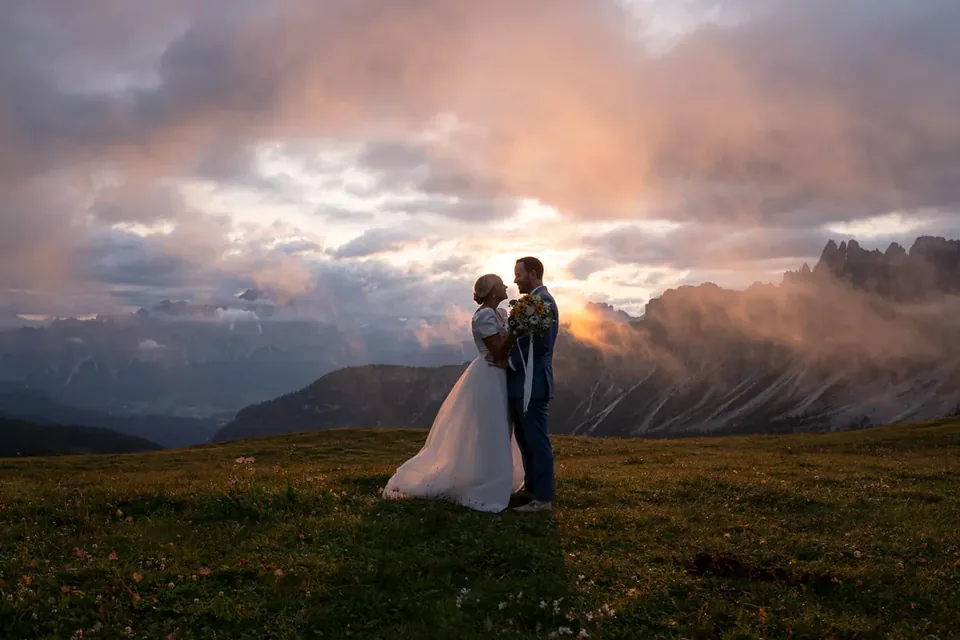
We carry the whole logistics of it so you do not have to think: the wake-up call, the timing worked backwards from the sunrise minute, the route we have already walked in daylight, spare layers for the cold hour before the sun. All you do is trust the alarm and turn up sleepy. And if none of that appeals — if you would rather a long lie-in and a glass of something at golden hour — a sunset elopement gives you the same empty, glowing light at a far more civilised time of day. There is no wrong answer, only the one that fits you.
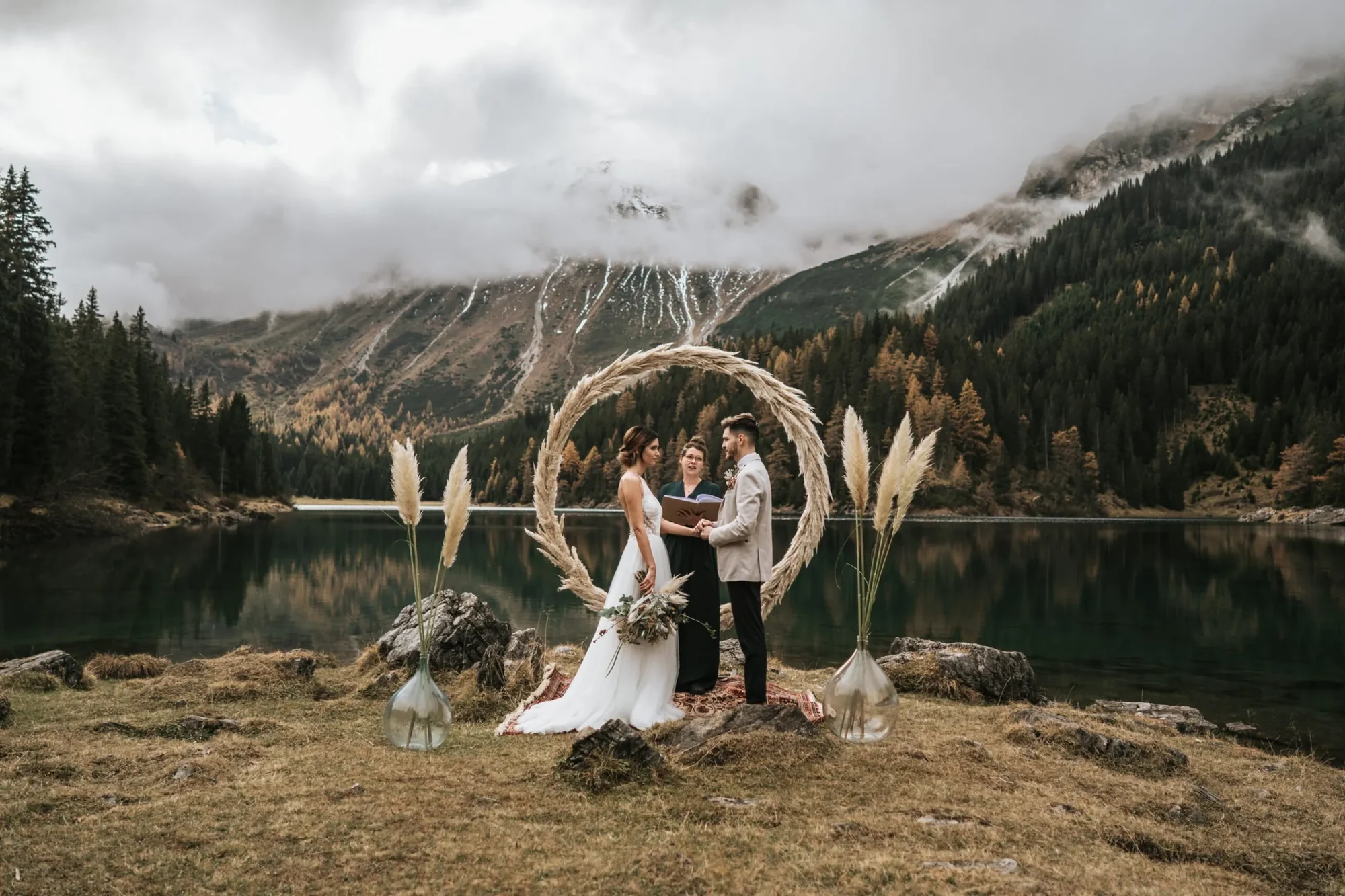
Here is a small one that matters more than it sounds: write your vows in advance, and bring a printed copy. Phone screens die in the cold at exactly the wrong moment, and reading from paper you can actually hold, with shaking happy hands, is part of the memory anyway. Then guard the day a little. Do not post the exact location or the plan; silence the phones for the ceremony; ask any guests to stay present rather than filming. The fewer things pulling at your attention, the more the day belongs to you.
The other half of protecting the moment is time. So many days feel rushed not because there was too little of it, but because nobody left any margin. We plan generous buffers into every hour — time to breathe on the ridge, time to fix a windblown strand of hair, time to just stand there and realise it happened. When a schedule has slack in it, the small disasters stop being disasters: a late cable car, a wrong turn, a sudden shower become footnotes instead of catastrophes. Space in the plan is the quiet luxury nobody tells you to ask for.
A handful of unglamorous facts that save real headaches. Carry some cash — a few of the toll roads and car parks, the Tre Cime road and the Braies parking among them, are smoother with it, and some hut kitchens still prefer it. Check the last cable car down before you commit to a sunset up high, because being stranded at altitude in the dark is a story you do not want. Remember that Lago di Braies closes to traffic from mid-morning in summer, so we shoot it before or after that window. And pack one warm layer even in August: a summit at first light is genuinely cold, whatever the valley thermometer says.
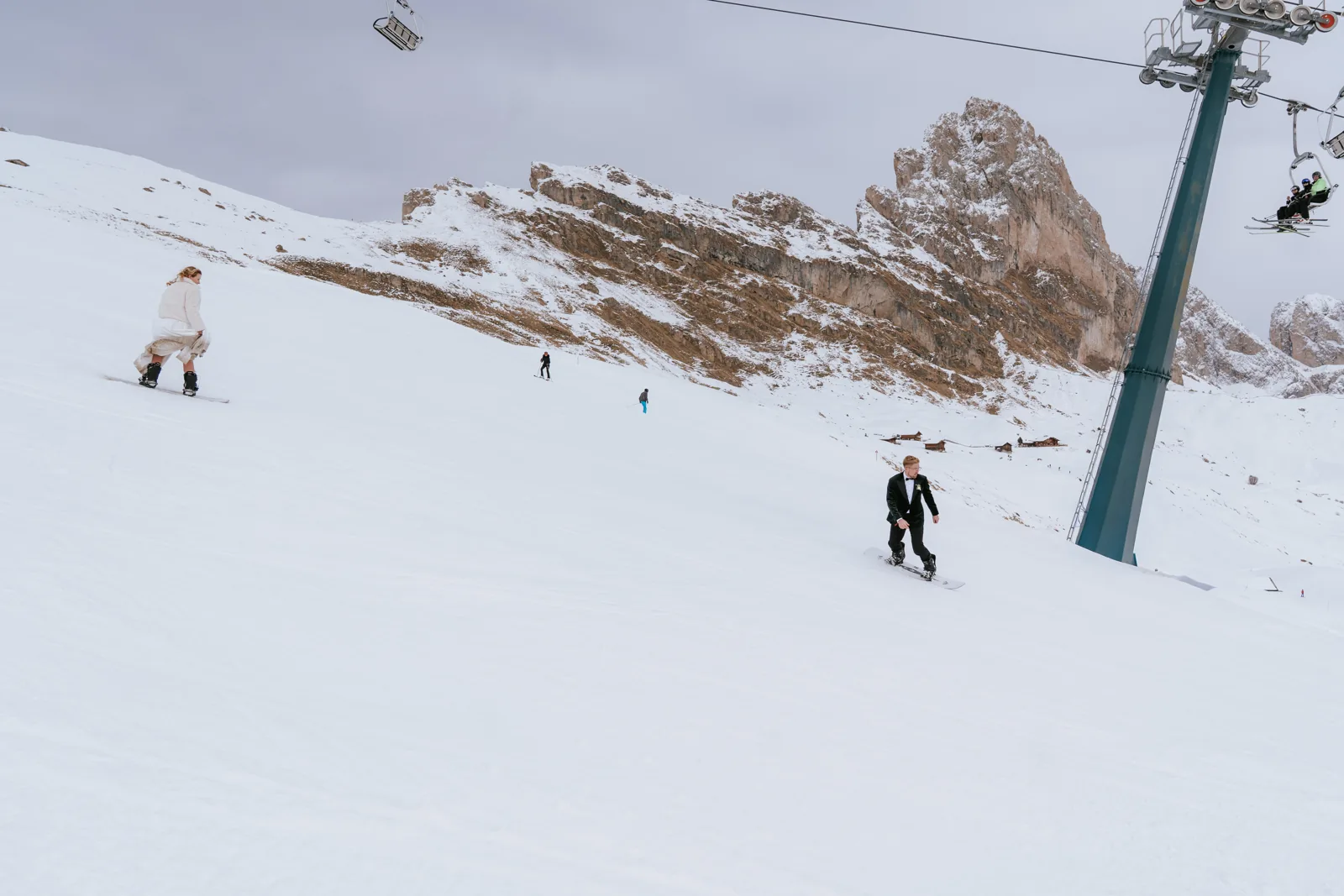
And here is one nobody mentions at all: you are rarely the only people on the mountain. A hiker will wander through the background, a skier will cross the slope behind you, a cable car will hum overhead. It is not a problem — it is honest, and we know how to work with it: the right angle, the right minute, the quiet corner five steps off the main path. Part of what you are paying for is someone who knows exactly when the viewpoint empties and how to give you privacy in a public place. The mountain is shared; your moment does not have to feel like it.
A few early decisions quietly lower the bill. Book the mountain hut and, if you are marrying legally in Austria, the registrar months ahead — both are limited in summer and both get more expensive the later you leave them. Consider the shoulder season: late May and October are cheaper, far quieter and often more beautiful than high summer, with golden larches or a dusting of fresh snow on the peaks. And you rarely need both a toll road and a cable car on the same day — picking one keeps the budget and the schedule simple. We map all of this out with you so the money goes where it matters.
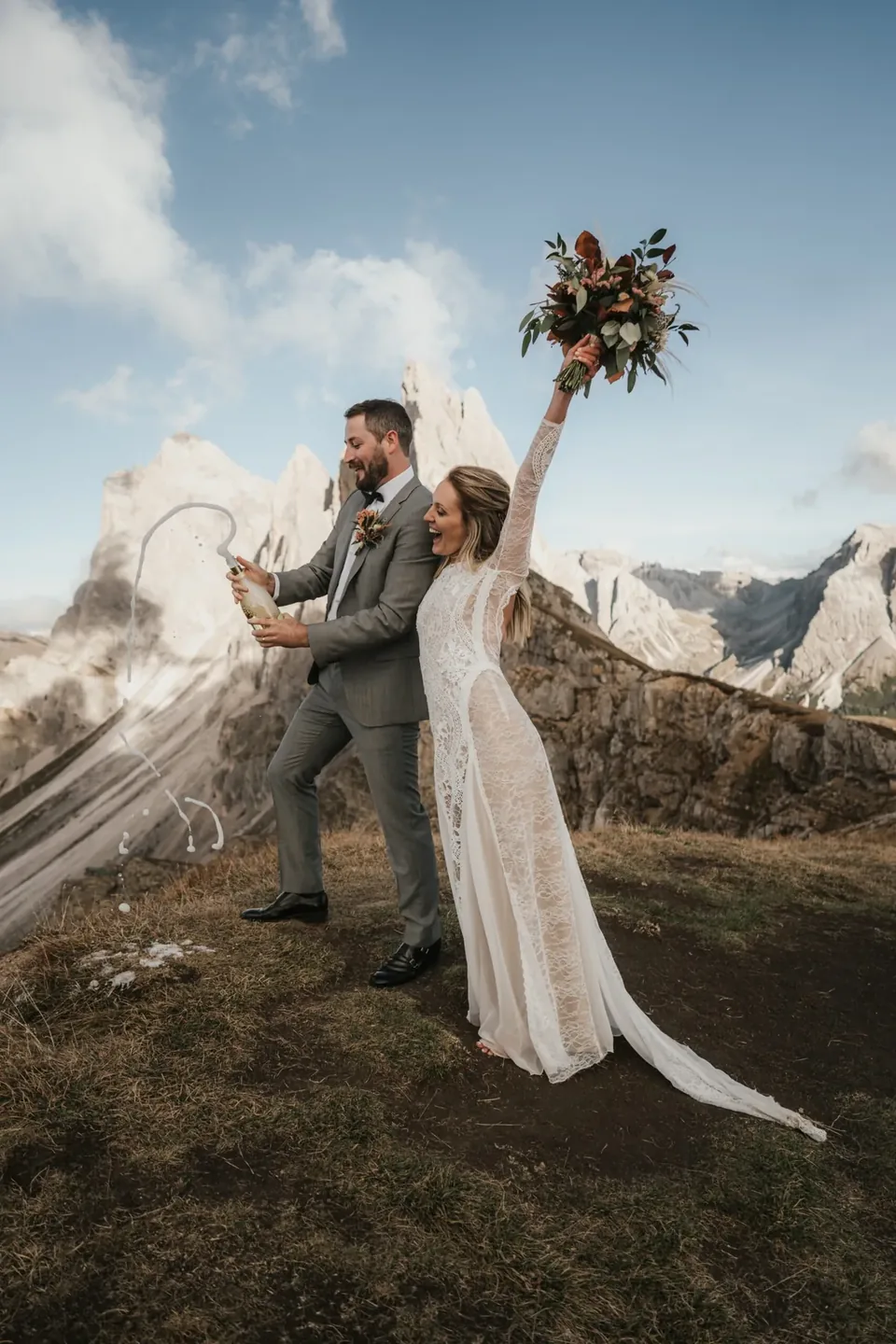
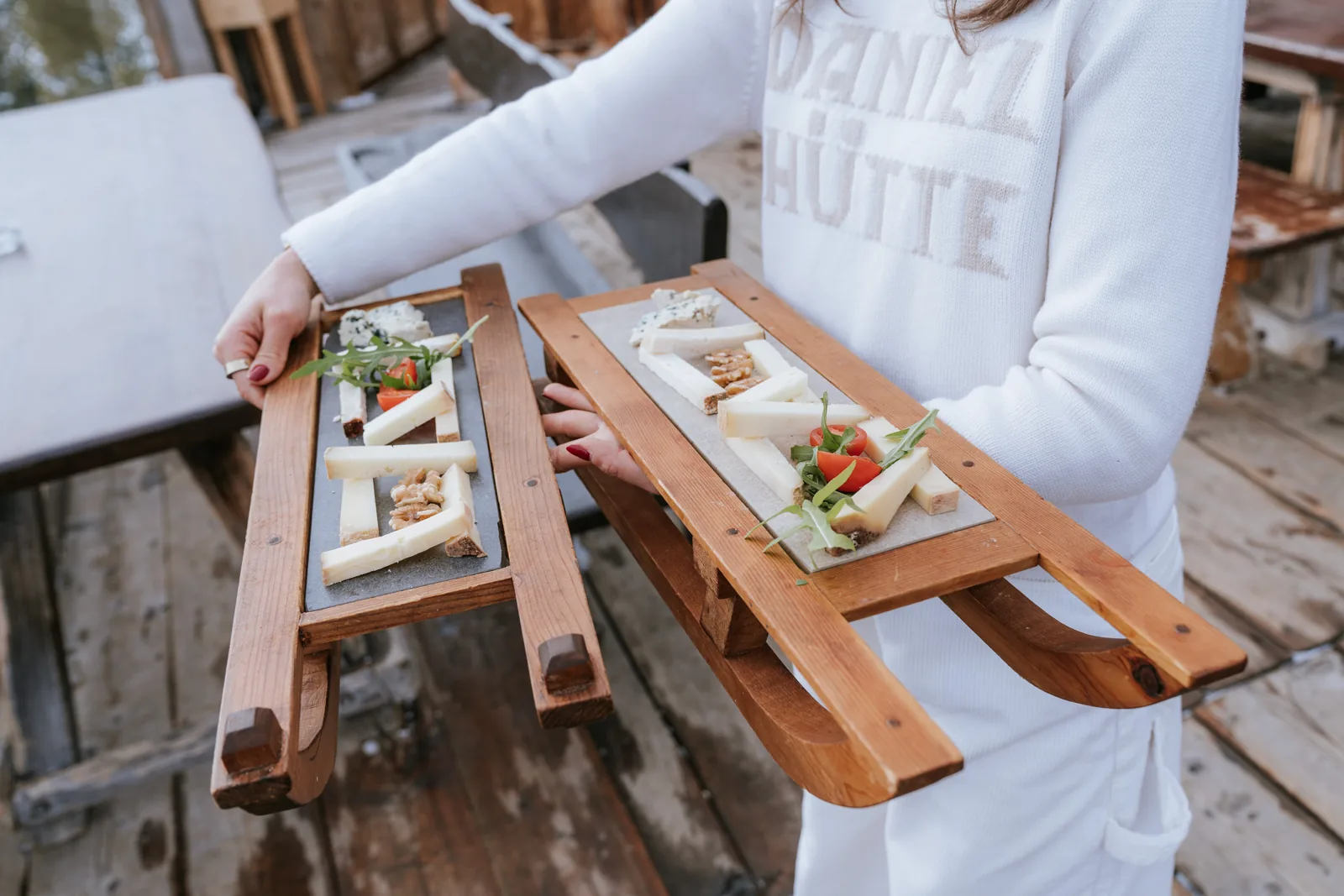
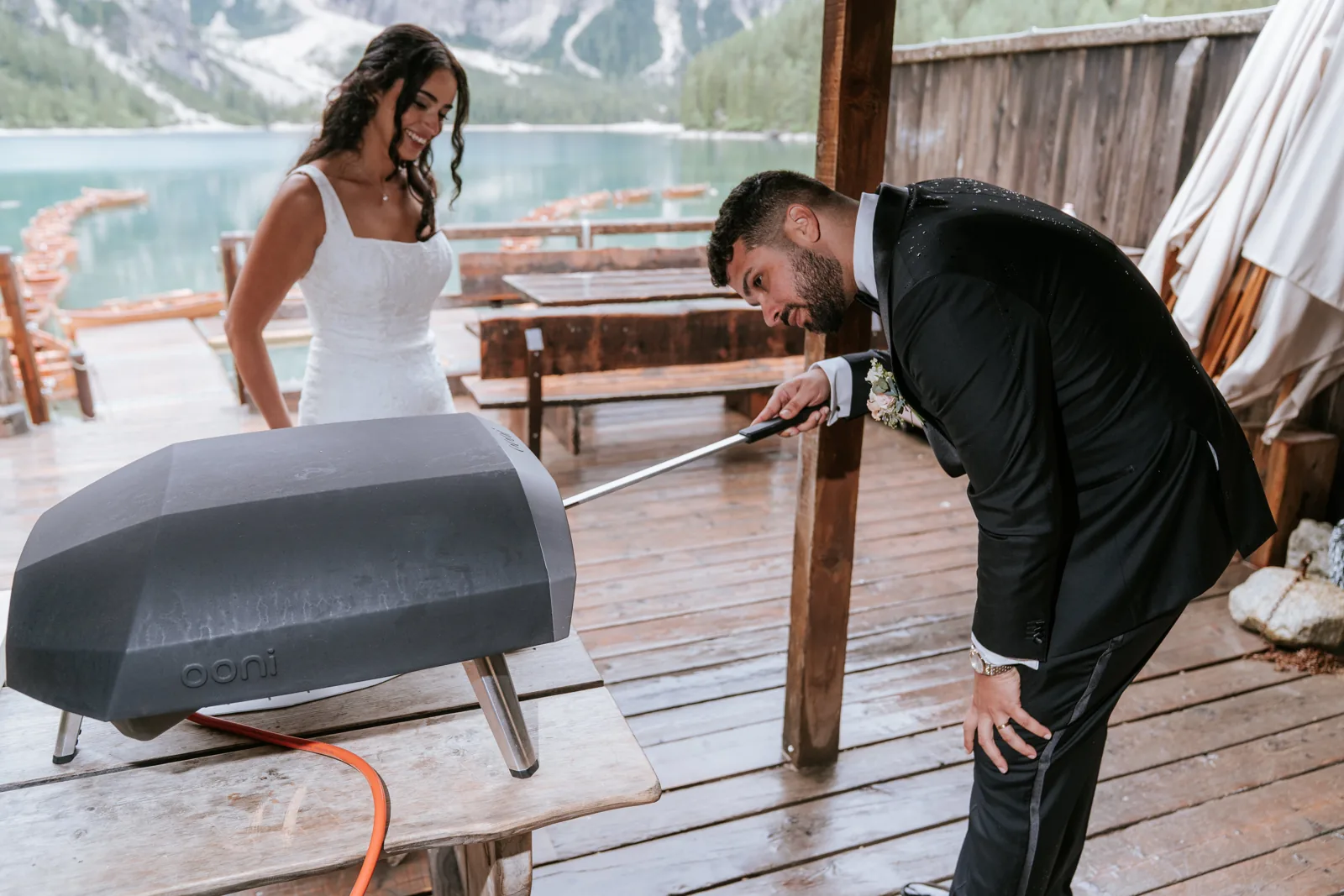
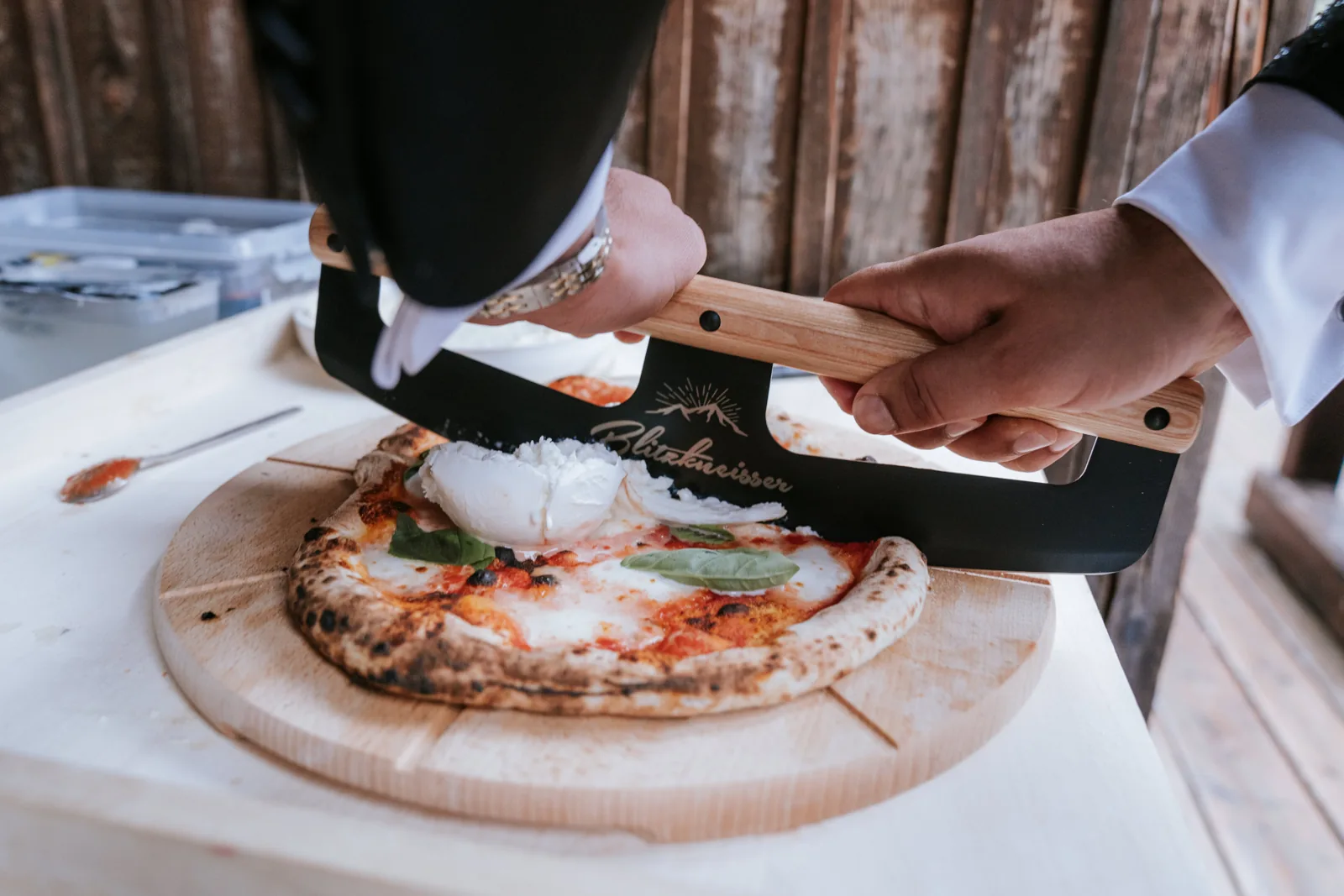
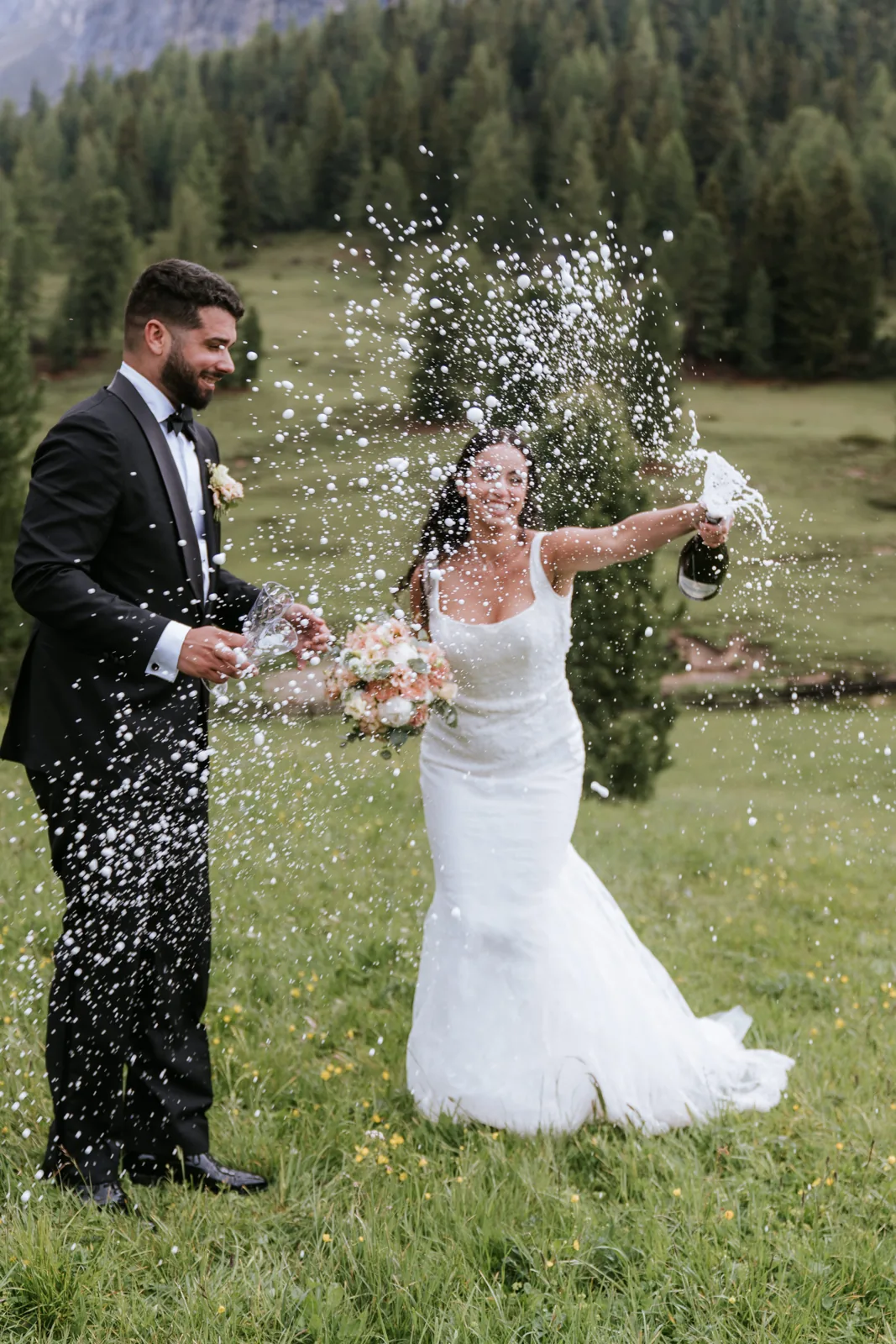
An elopement is not a wedding with the joy removed — it is a wedding with the noise removed. So give the day something to celebrate with. Some of our favourite afternoons have ended with a portable pizza oven fired up on a mountain meadow, a bottle of something cold and shaken loose, a hut table groaning with local food. The vows are the heart of it, but the hours after are where the day loosens and becomes yours: the toast, the laughter, the meal with the peaks going pink. Plan for it. A celebration of two people is still a celebration.
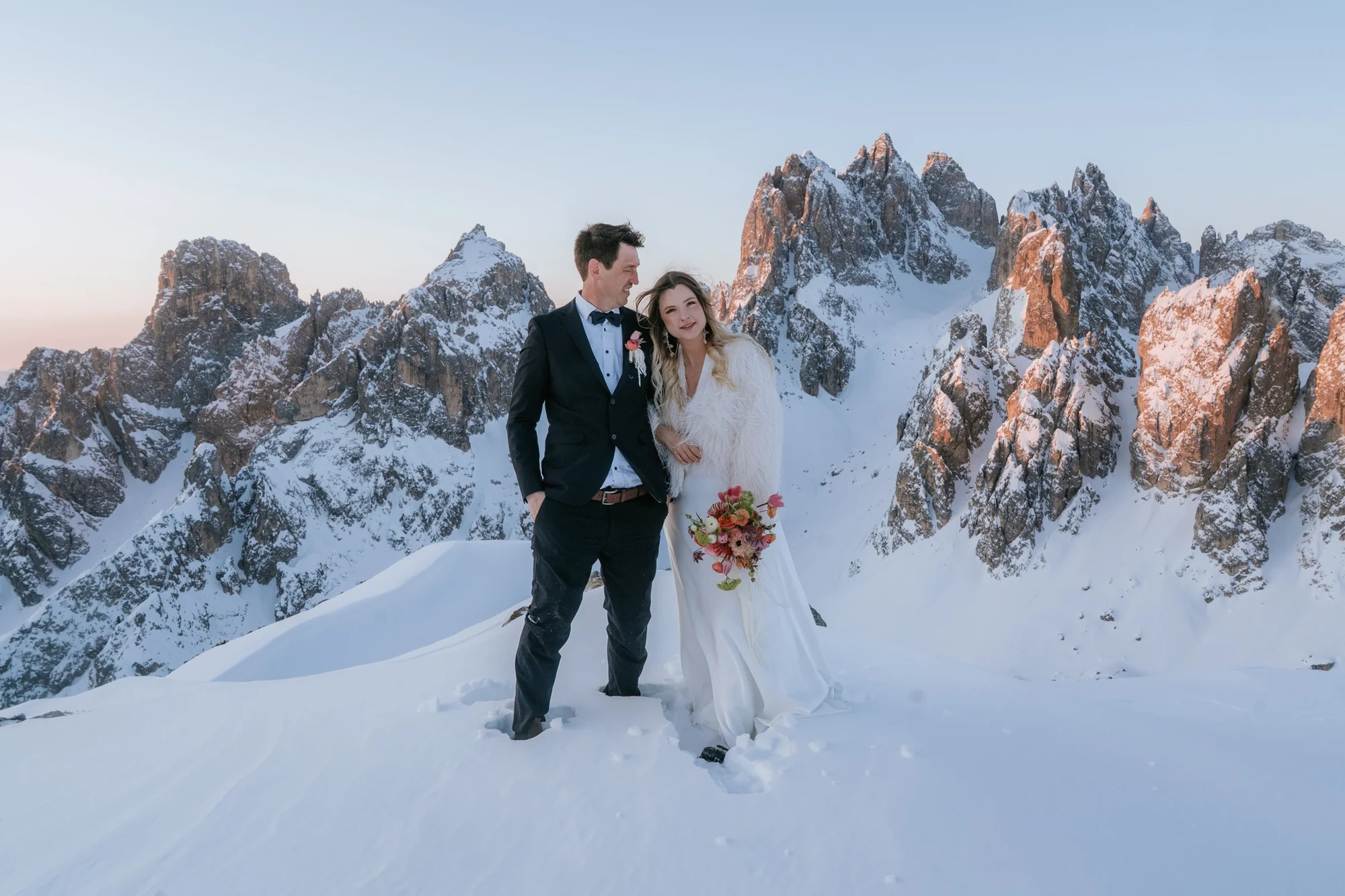
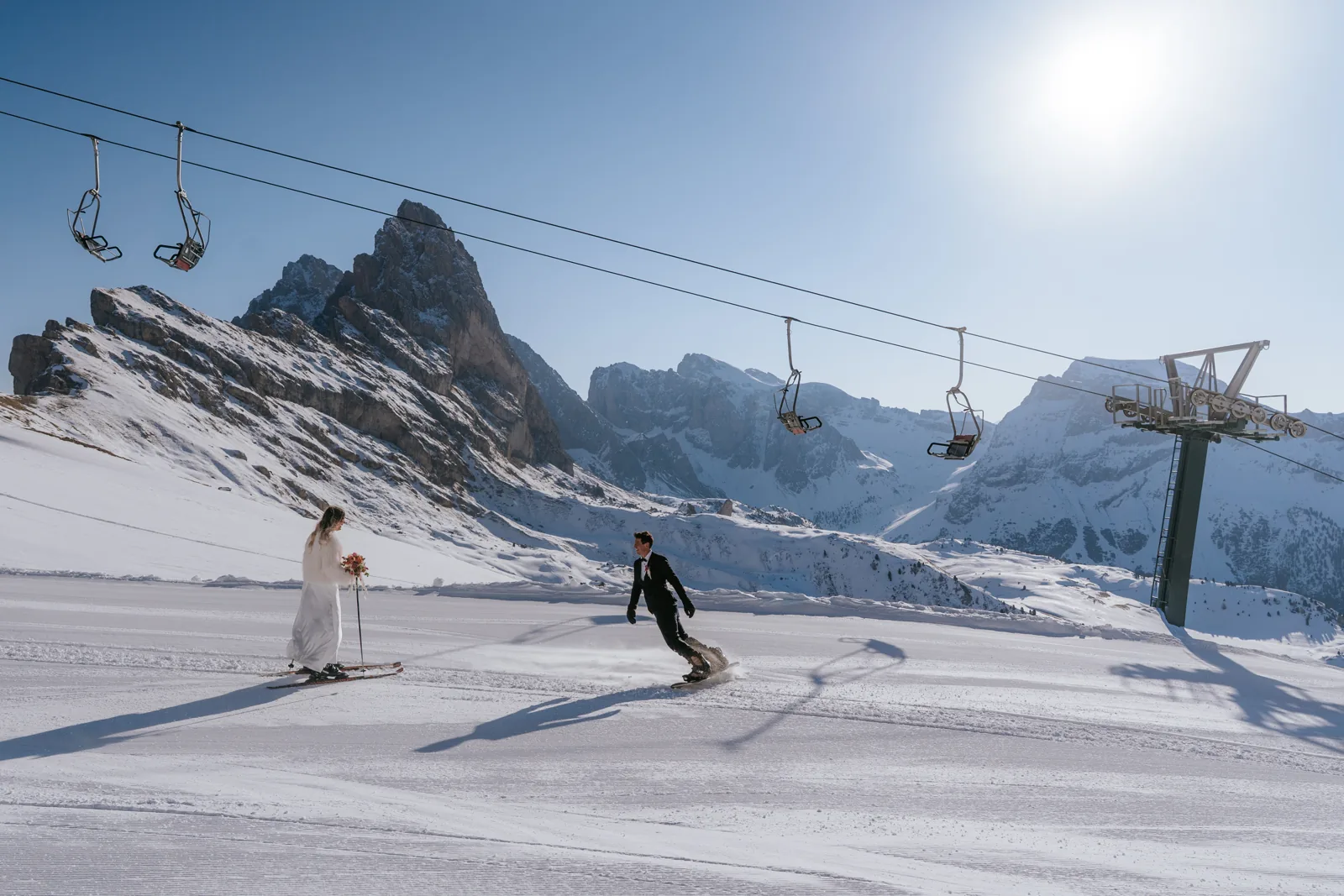
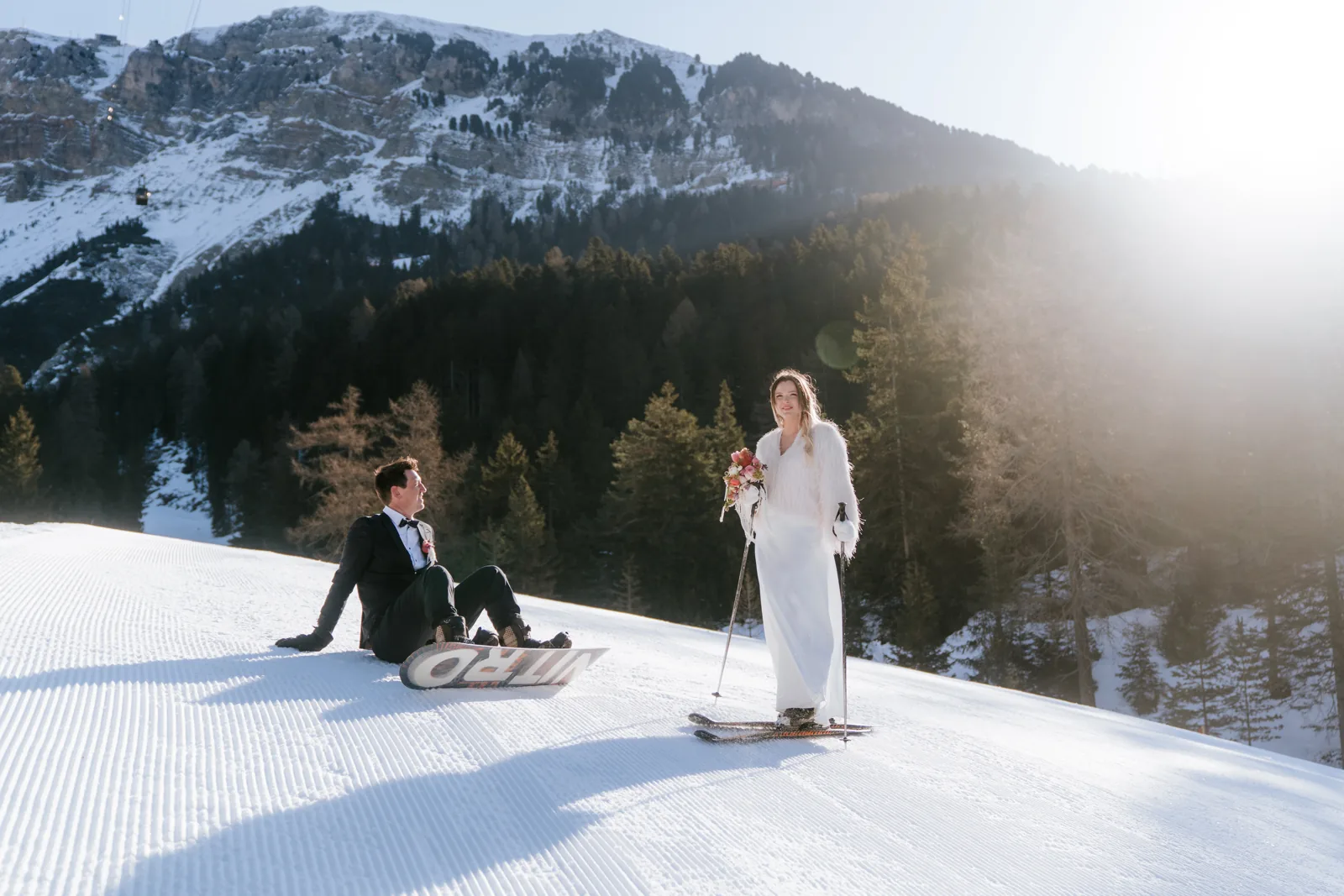
The pictures couples treasure most are almost never the safe ones. They are the bride clicking into skis in her wedding dress, the groom sledging down a slope in his suit, the pair wading into a cold lake because the light was too good to resist. If you have a slightly ridiculous idea — a thing you have always secretly wanted to do — tell us. Nine times out of ten we can make it safe and make it happen, and it becomes the frame you hang on the wall and the story you tell for the rest of your lives. The mountain gives you permission to be a little wild.
If you forget everything else on this page, keep this. It is your day, not a photo shoot. Every tip here — the snacks, the buffer time, the printed vows, the backup day — exists for one reason: to clear the small worries out of the way so you can simply be together. The best images we have ever made came in the moments the couple forgot we were there at all: a private joke on a ridge, a held breath before the vows, a quiet hand on a cold cheek. Plan well, then let go. We will take care of the rest.
Honestly? It might be the best thing that happens. Some of our favourite photographs come from grey skies and rain — mist pouring off the ridges, a shared umbrella, drops on a veil, colours gone deep and moody. We come prepared with clear umbrellas and dry cloths, and we build in a buffer, usually a whole backup day on the bigger packages, so weather never forces the day. We watch the forecast hour by hour and move you to the window that works. A mountain that disappears into cloud is not a ruined day; it is a different, quieter, often more beautiful one.
Yes — and it is worth every minute. A true dawn ceremony can mean hair and make-up at three or four in the morning and walking up in the dark by headlamp. It sounds brutal and feels like magic: you have the most famous places entirely to yourselves, the first light is unrepeatable, and by the time the day-trippers arrive you are already having breakfast. We handle the logistics — the wake-up, the timing, the route in the dark — so all you have to do is show up sleepy and leave astonished. Not a morning person? We plan a sunset instead.
Less glamour, more comfort than you would think. Print your vows — phone screens die in the cold at the worst moment. Pack warm layers you can hide under a coat, a second pair of real shoes for the walk with the pretty ones in a bag, snacks, water, and hand warmers. Bring a little cash: some toll roads, car parks and even hut kitchens are easier with it. Cold, blisters and hunger always show in the photographs and in how you feel — the small, unglamorous kit is what keeps the day soft.
A few small ones, and we handle them all for you. Some locations need a photography or ceremony permit; the Tre Cime toll road runs about €30–45 per car; Lago di Braies has paid parking and a summer access window; cable-car tickets and a night in a mountain hut add up too. None of it is expensive on its own — it just needs someone to plan it so nothing surprises you on the day. That is our job: the reservations, the timings, the tickets and the cash you will want in your pocket, all sorted in advance.
Anywhere from nobody to a small handful — usually zero to twenty. The whole point of eloping is intimacy, so most of our couples come as just the two of them, sometimes with parents or a witness or two. The more people you add, the more logistics a mountain day needs — footing, pace, timing, someone minding the shoes at the bottom — so we keep it small on purpose. If you want a handful of the people you love most on the mountain with you, that works beautifully; we simply plan the walk and the timing around them.
That is the thing we work hardest to avoid. It is your wedding, not a shoot — and the best images, every time, come from the moments you forget we are there at all. We stay light, keep our distance when it matters, and direct only enough to keep you comfortable. Most of the day you are simply together: reading your vows, catching your breath on a ridge, laughing at the wind, sharing a hut lunch. We plan everything else around that one goal, so what you remember is the marriage, not the camera.
We use cookies for anonymous statistics (Google Analytics via Google Tag Manager) to improve this site. Analytics runs only with your consent. Privacy Policy