The Alps are not one landscape but a dozen, and the right elopement spot is the one that matches the day in your head. We shoot across the range — the pale towers of the Dolomites, the emerald lakes below Germany’s highest peak, the quiet meadows and mirror lakes of Tyrol — and each corner has its own character, its own light and its own rules. This is our honest field guide to the places we return to again and again, and how to choose the one that is yours.
Start with the feeling, not the pin. Do you want the postcard drama of the Dolomites, the alpine calm of a Tyrolean lake, or a summit you can stand on above everything? Effort, access, season and — importantly — where you can legally marry all pull on the choice. Below we walk through the corners of the Alps we love most, what each does best, and who each one suits. You do not have to know the place before you know the mood; that is our job.
A few honest questions shorten the whole search. How far are you happy to walk? Do you need to be legally married on the day, or is a symbolic ceremony with the paperwork at home fine? Warm and green, or cold and white? Just the two of you, or a few guests who need an easy path? Your answers rule half the map out in minutes — and what is left is almost always a place you did not know to ask for.
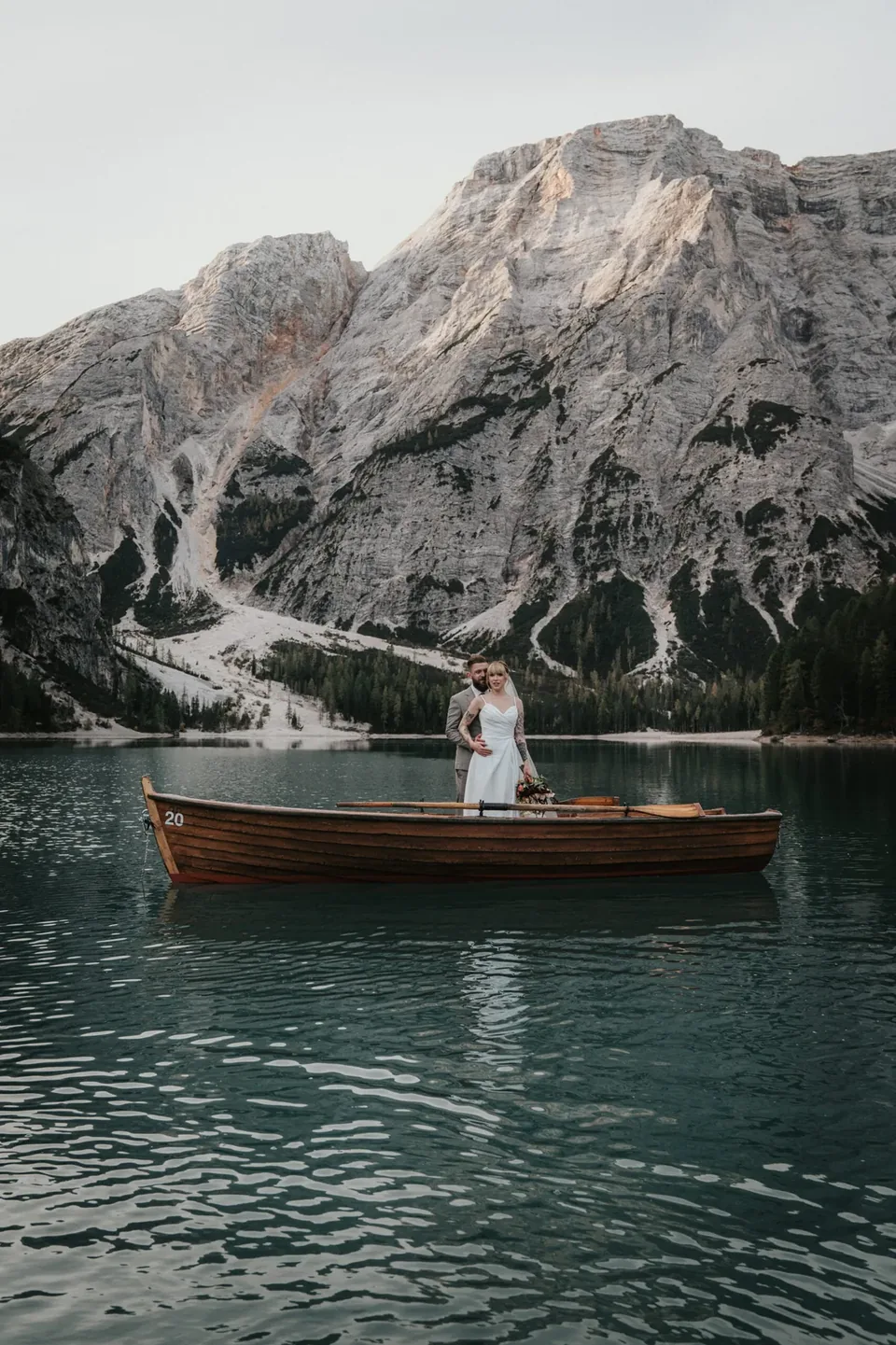
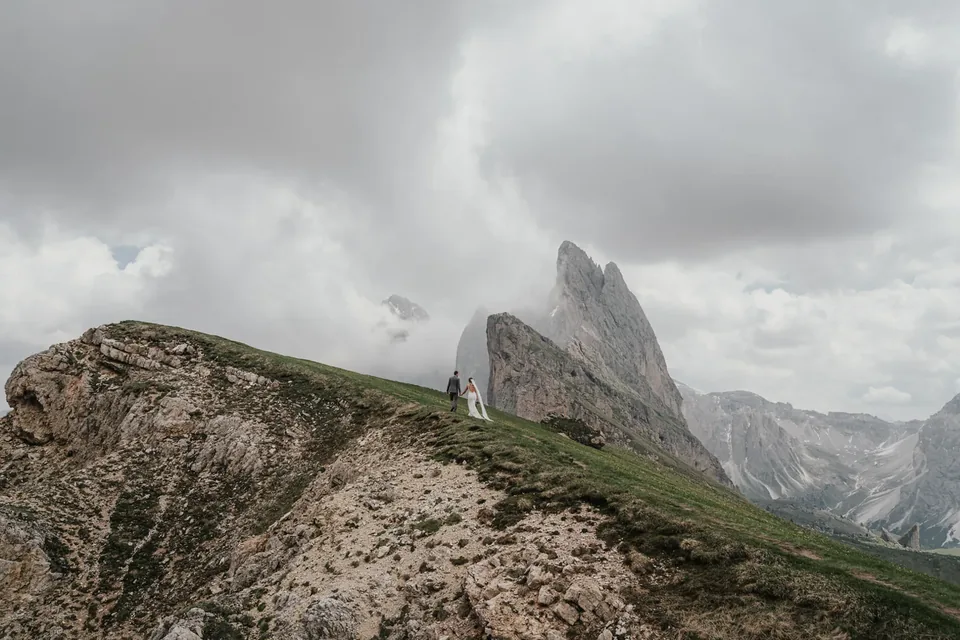
The Dolomites are where most couples start dreaming, and for good reason: pale limestone towers that blush pink at dusk, turquoise lakes, tiny chapels on green passes. It is the most dramatic, most recognisable scenery in the Alps — Lago di Braies, the Tre Cime, the Seceda ridge, Passo Giau. The catch is fame: the icons fill up, so we plan around first light and quieter twins. If the Dolomites are calling, we have a whole separate guide to their most beautiful spots — but here is the short version of why they are worth it.
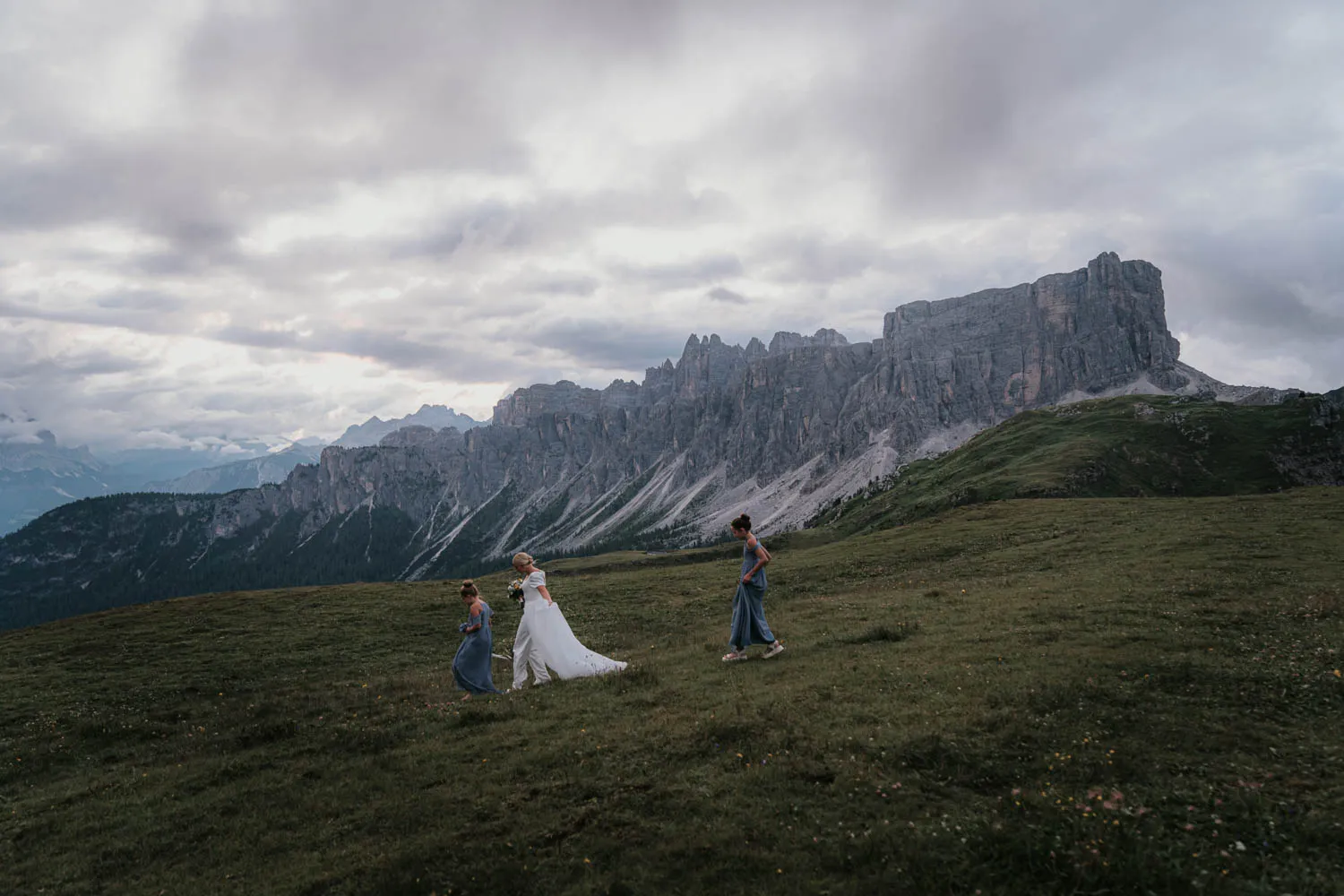
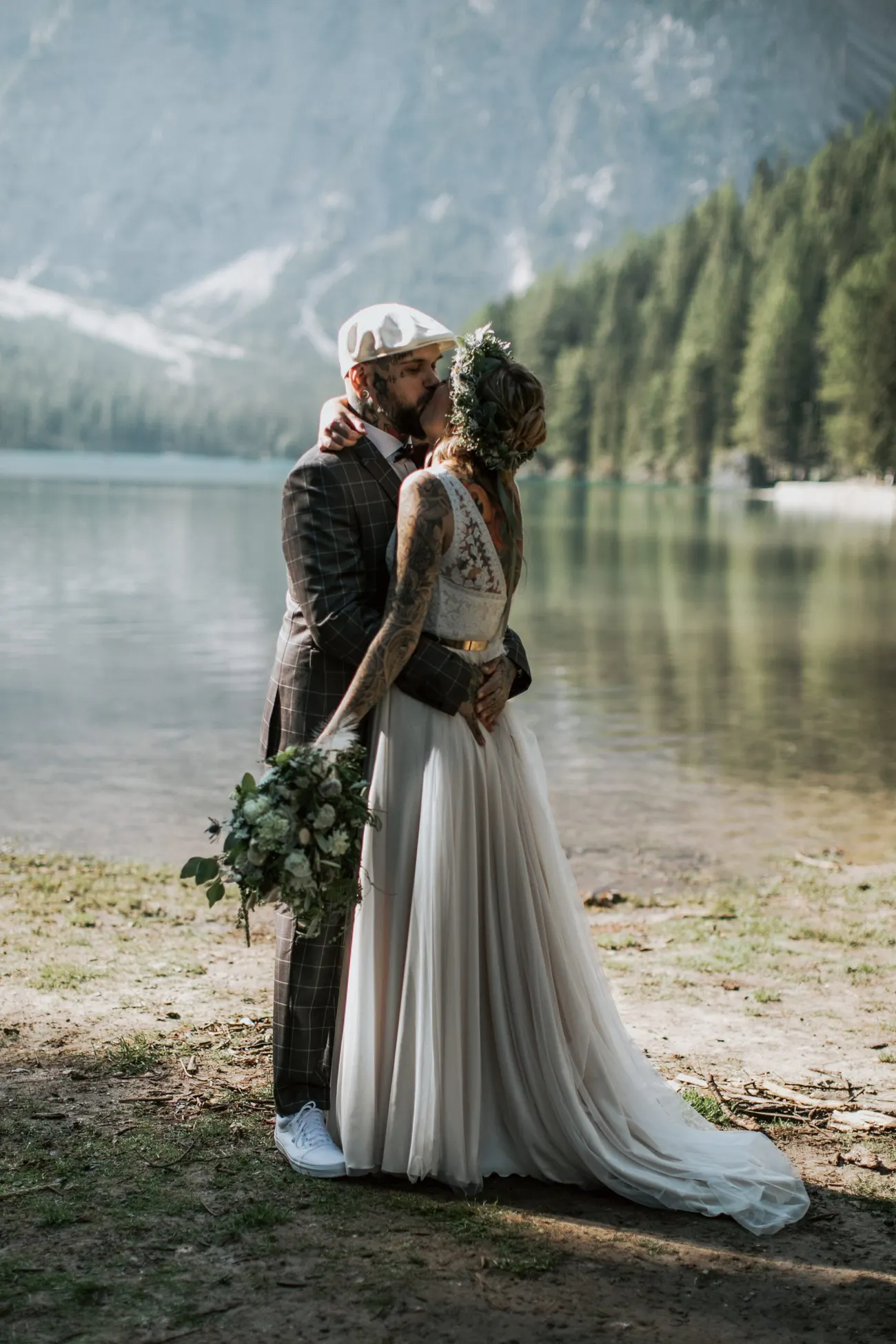
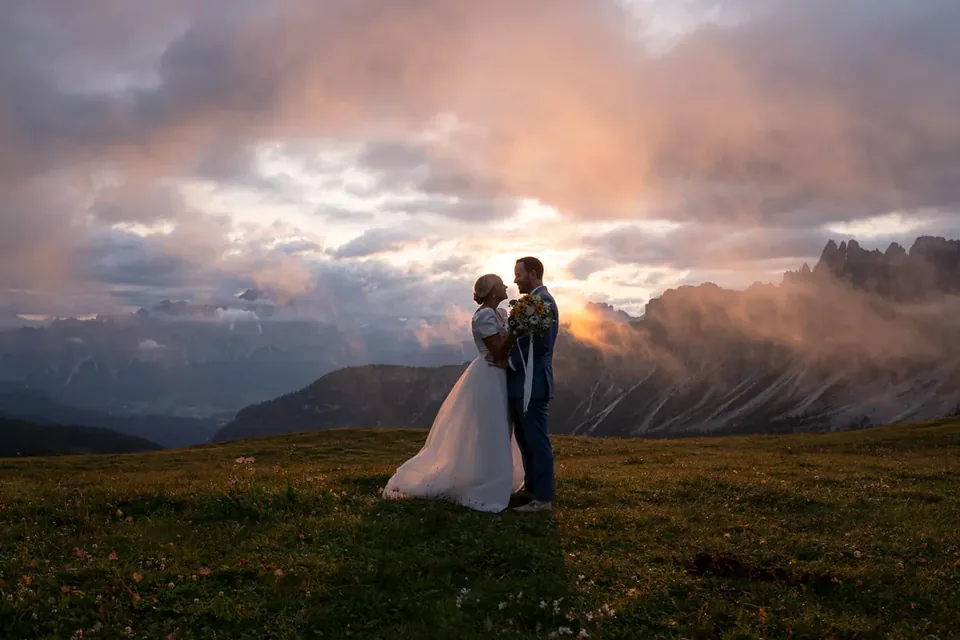
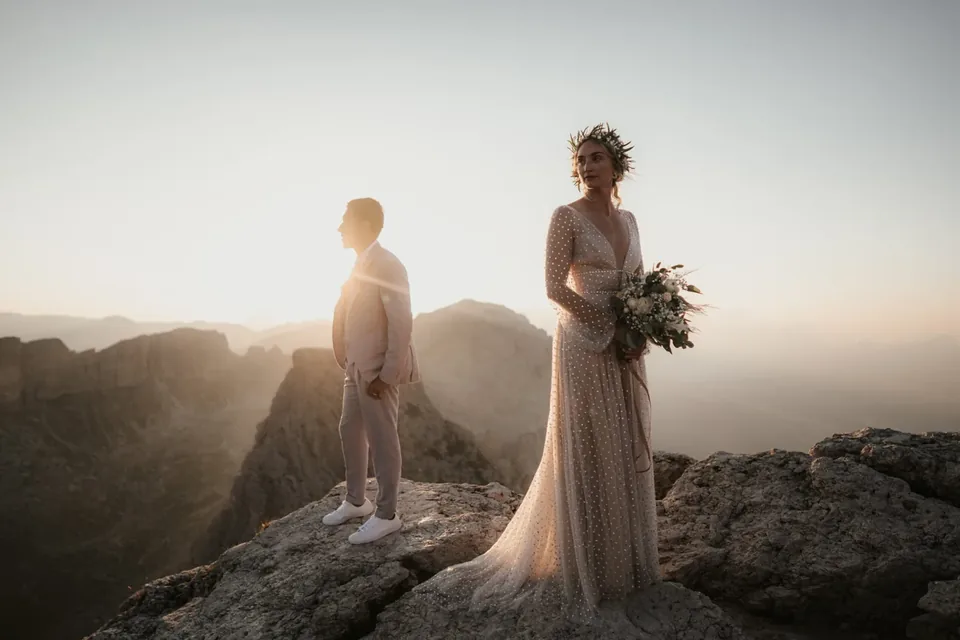
What makes the Dolomites unlike other mountains is the colour. At dusk the pale limestone catches the last light and glows ember-red for a few unrepeatable minutes — the locals call it enrosadira, and no photograph quite prepares you for it in person. Pair that with water the colour of a swimming pool and meadows full of cotton grass, and you understand why this is where the dreaming starts. We simply make sure you are standing in the right spot when the rock catches fire.
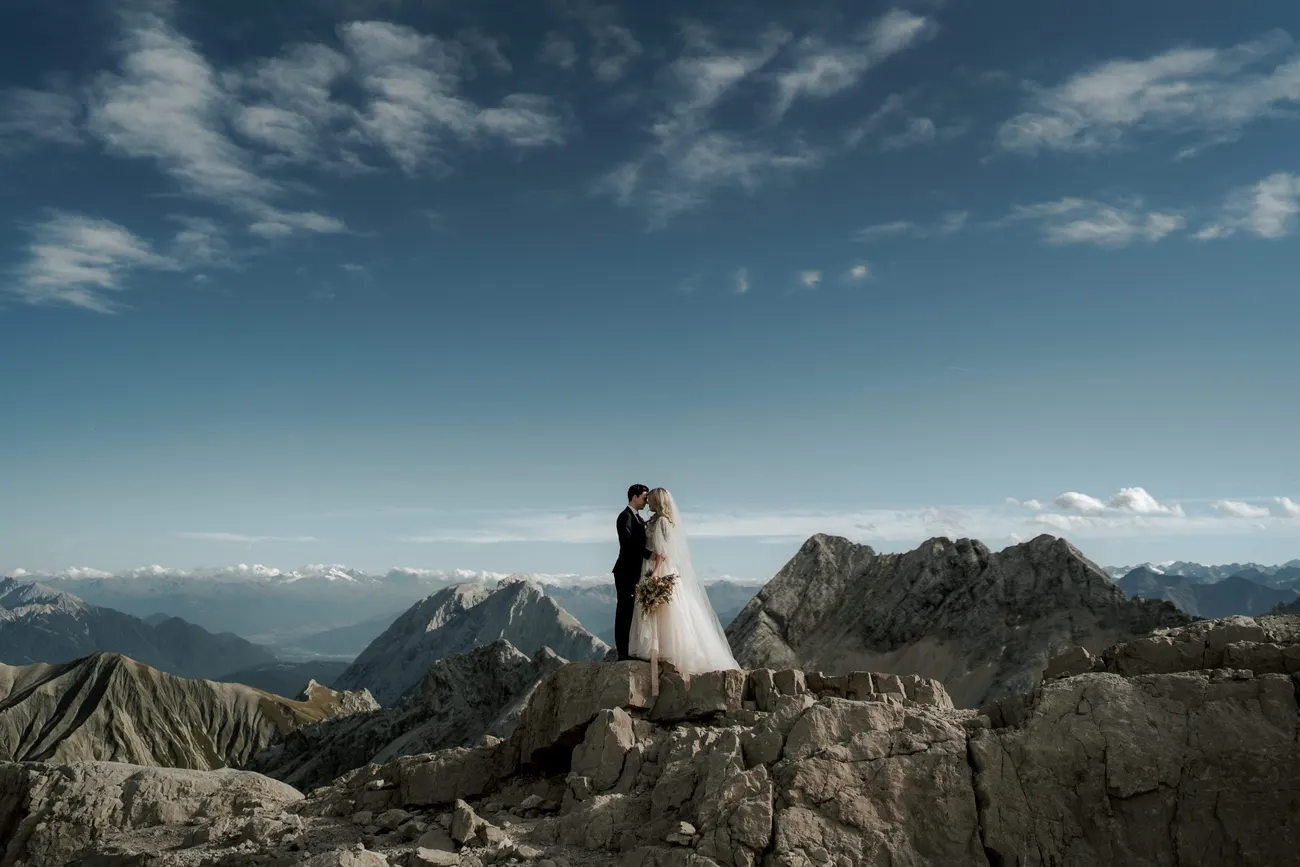
On the German–Austrian border stands the Zugspitze, the highest peak in Germany, and standing on its ridges feels like standing on the roof of the country — a sea of summits in every direction. A cable car carries you most of the way, so the drama comes without a two-day climb, and the rock up here is raw and cinematic, especially in the bare light of morning. It is a favourite for couples who want the feeling of real altitude with an easy path to it.
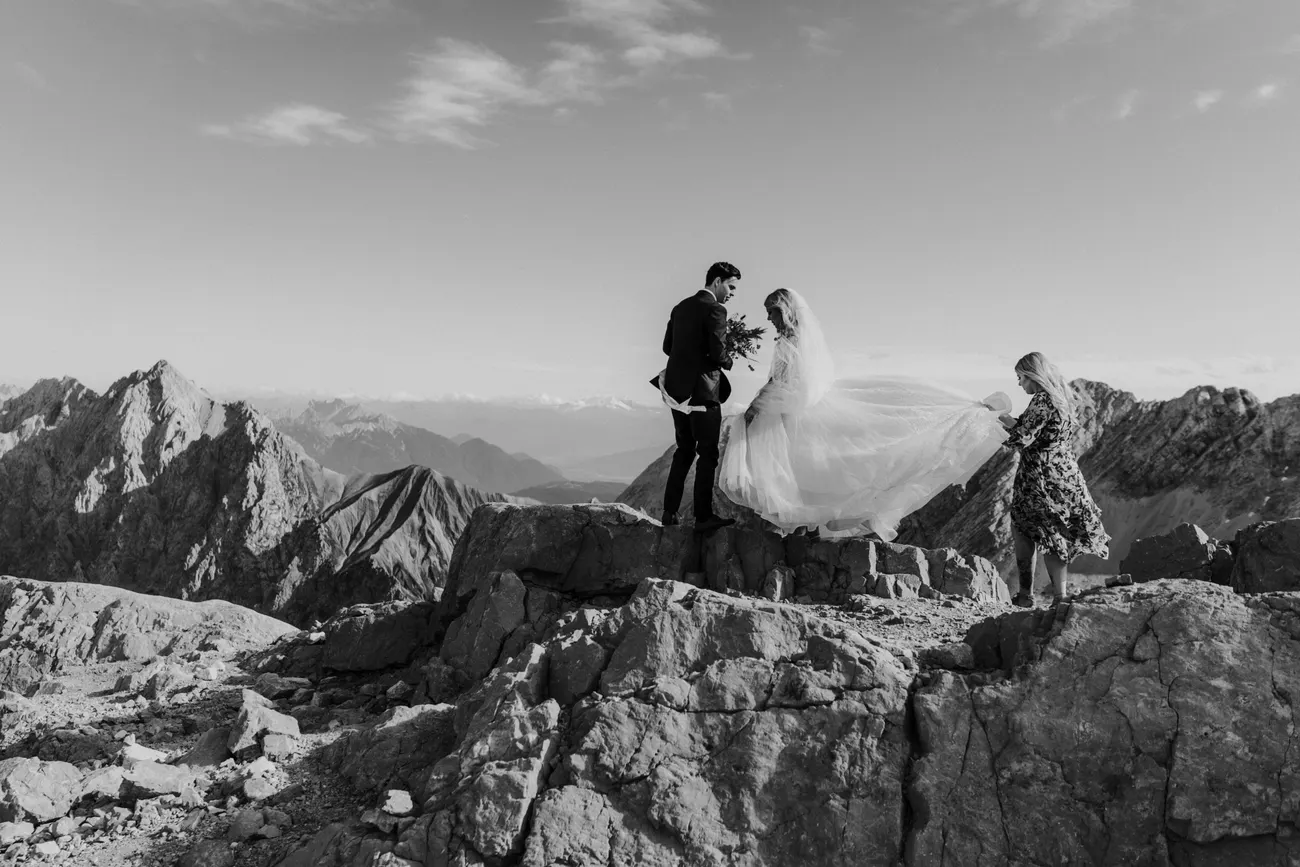
There is something quietly moving about marrying at the top of a whole country. The Zugspitze straddles the border, so on a clear morning you look out over both Germany and Austria at once, ridge after ridge fading into haze. It is exposed and wild up here, so we time it for calm light and keep the ceremony nimble — but the reward is a sense of scale and height that a valley simply cannot give, reached by a cable car rather than a rope.
There is a rare bonus up here, too: you can actually marry on the Zugspitze summit officially and legally, through the registry office in Garmisch-Partenkirchen. The catch is demand — the summit slots are hugely popular and go quickly, and dates can only be requested about six months ahead, so this one rewards early, decisive planning. We help you time the request.
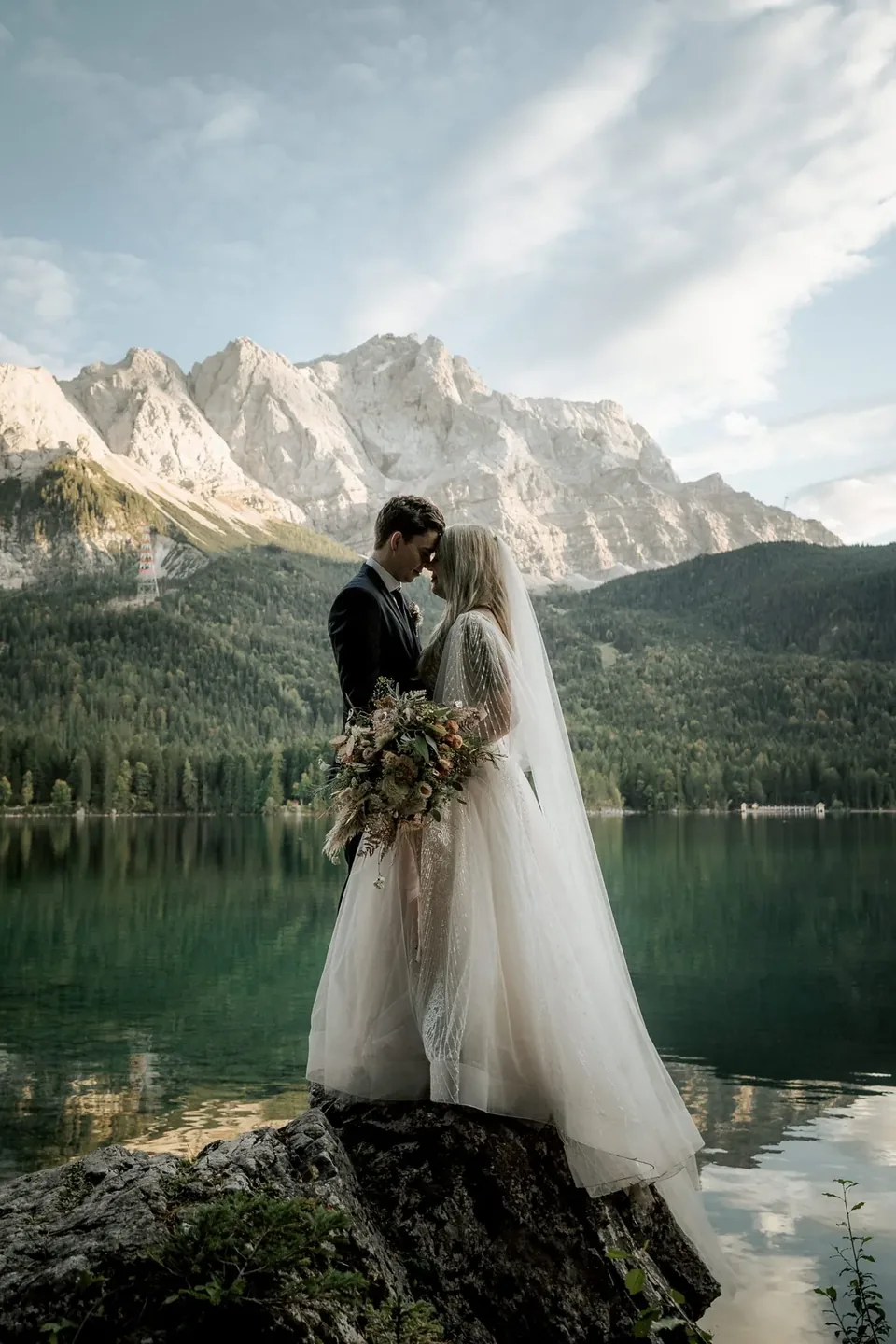
At the foot of the Zugspitze lies the Eibsee, one of the most beautiful lakes in the Bavarian Alps — a startling emerald green, ringed by dark forest with the great mountain rising straight behind. It is roadside and easy, gentle for a dress and a small ceremony, and a real alternative to the busier Dolomite lakes for couples who want water and a giant peak without the crowds. First light on still water here is pure calm.
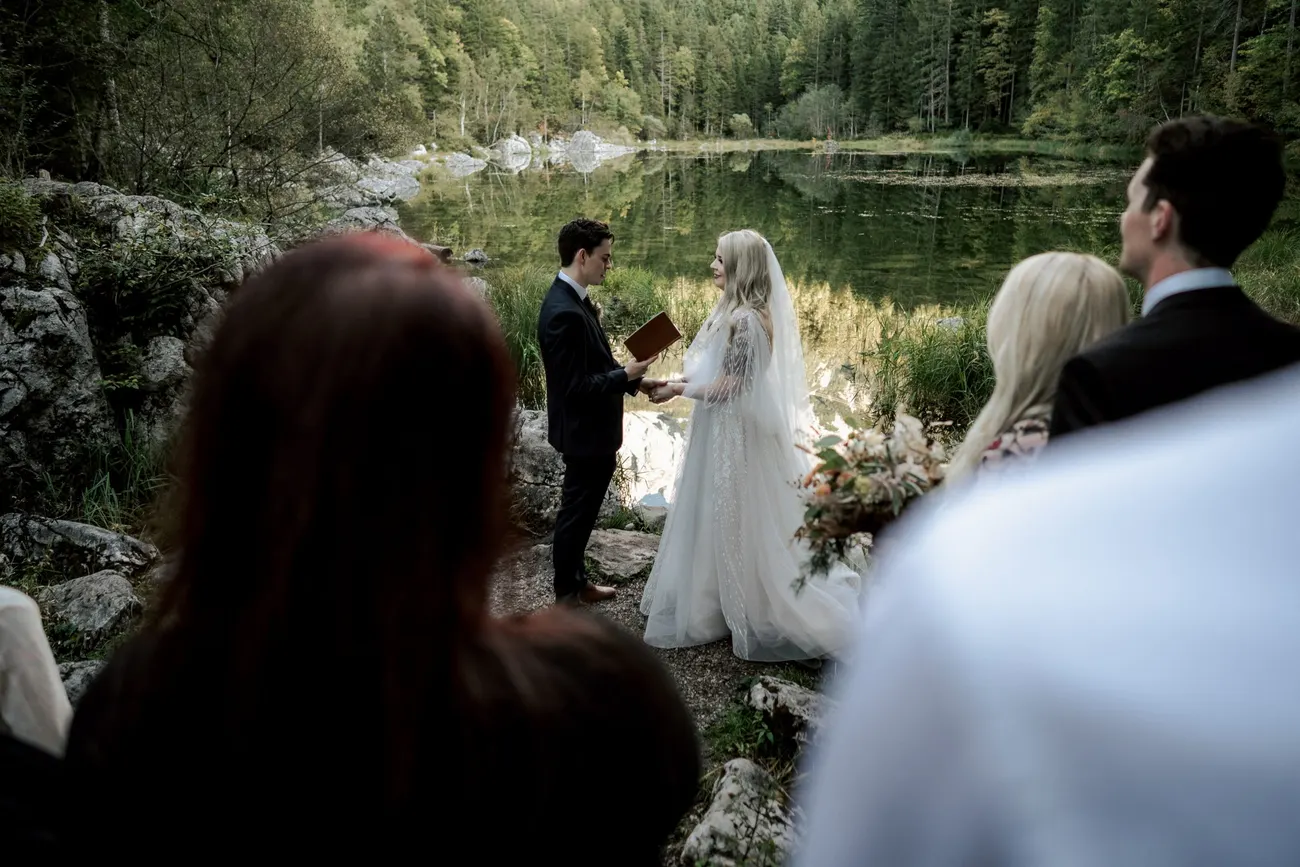
The Eibsee also makes a gentle base for the whole trip. It is minutes from Garmisch-Partenkirchen, easy to reach, and it pairs a lake morning with a summit afternoon on the same mountain — water and altitude in one day, without a long drive between them. For couples who want the calm of a forest lake first and the drama of a high ridge second, it is one of the neatest days the Alps offer.
One honest note on the legal side: a free, symbolic ceremony at the Eibsee is straightforward and needs no special permit — but it is not legally binding, so the marriage itself is signed at a registry, either at home or beforehand. If you want the legal act on the mountain in Bavaria, the Zugspitze summit above is the route; otherwise the Eibsee is a beautiful place to say your own words and keep the paperwork simple.
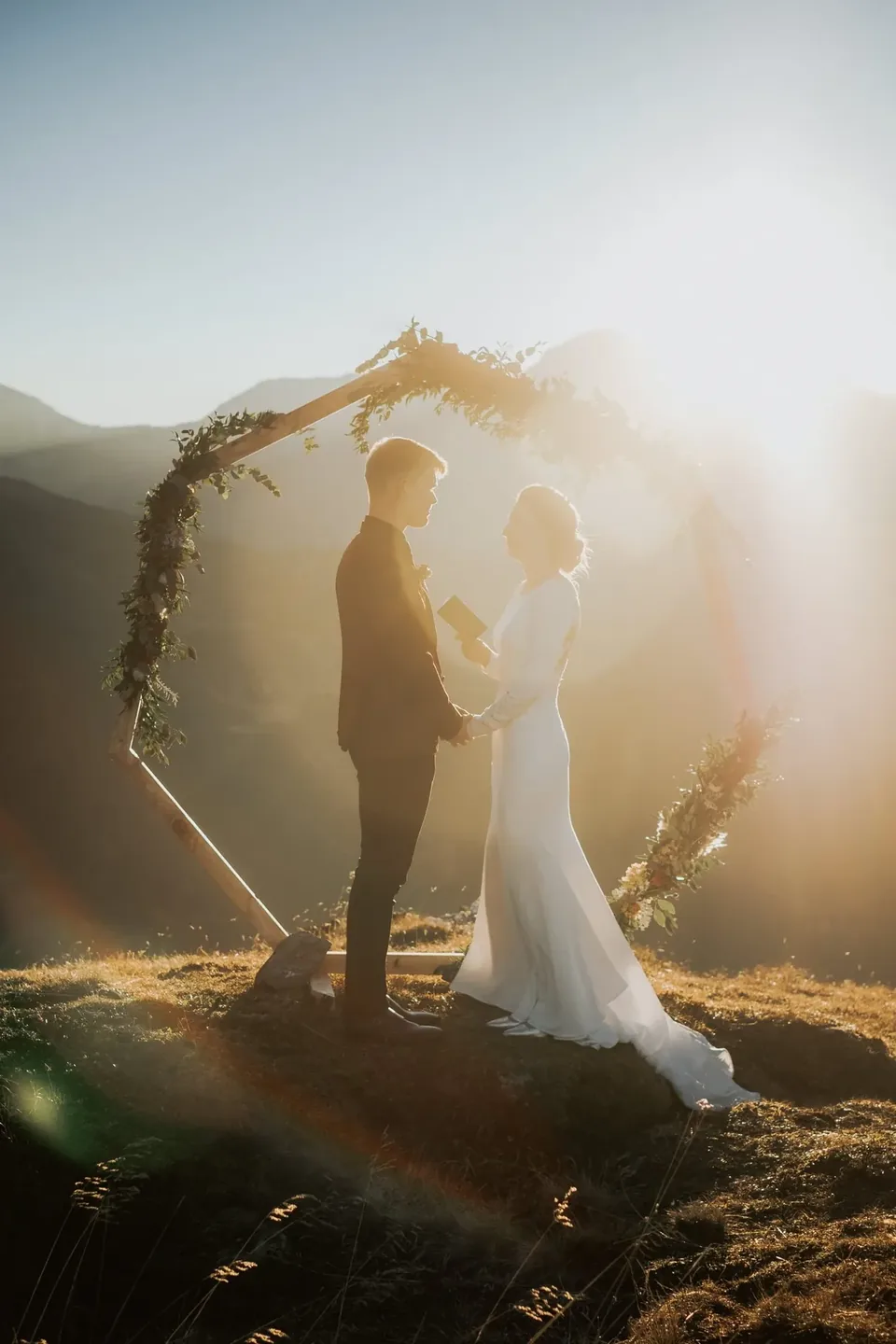
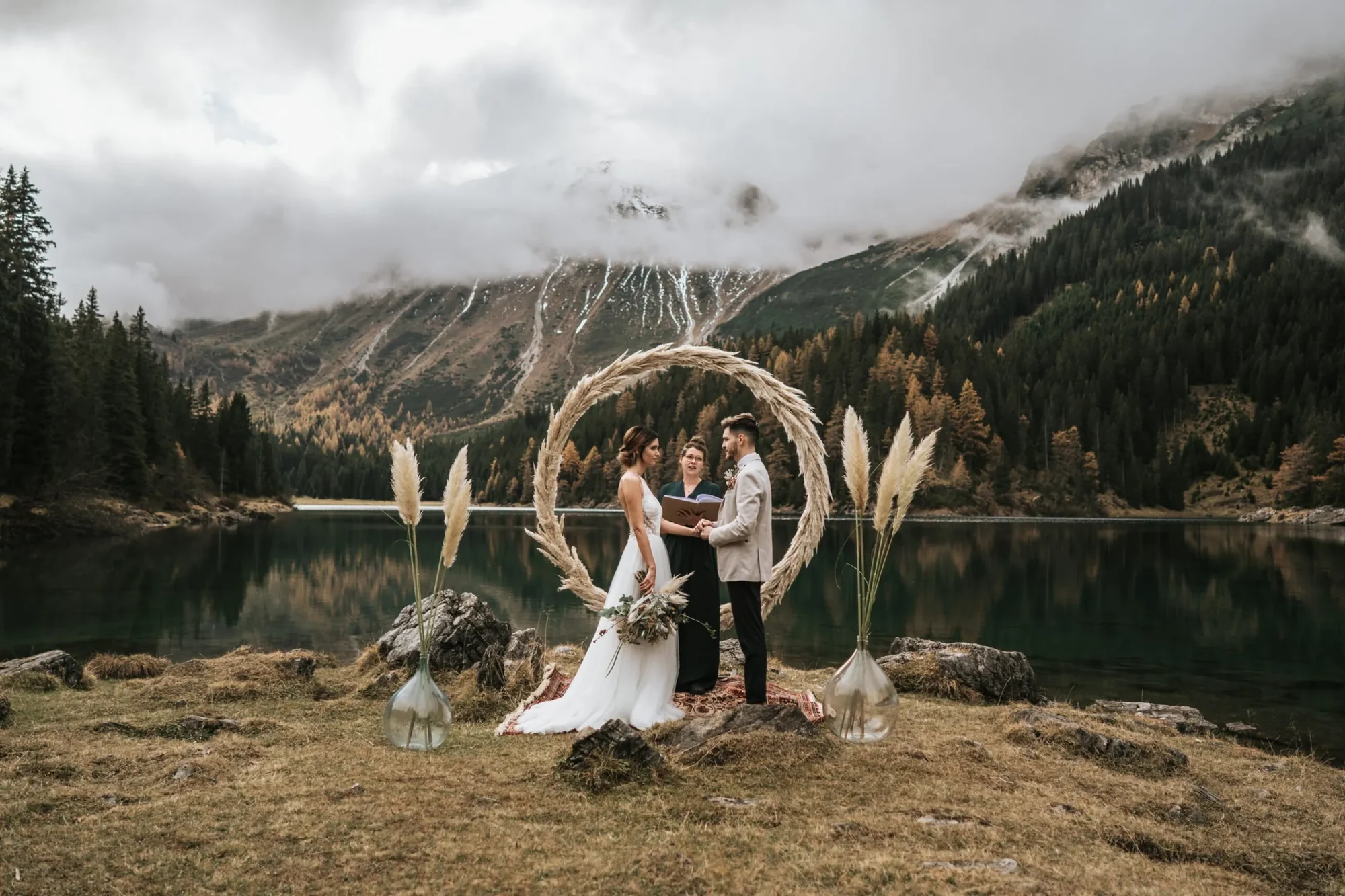
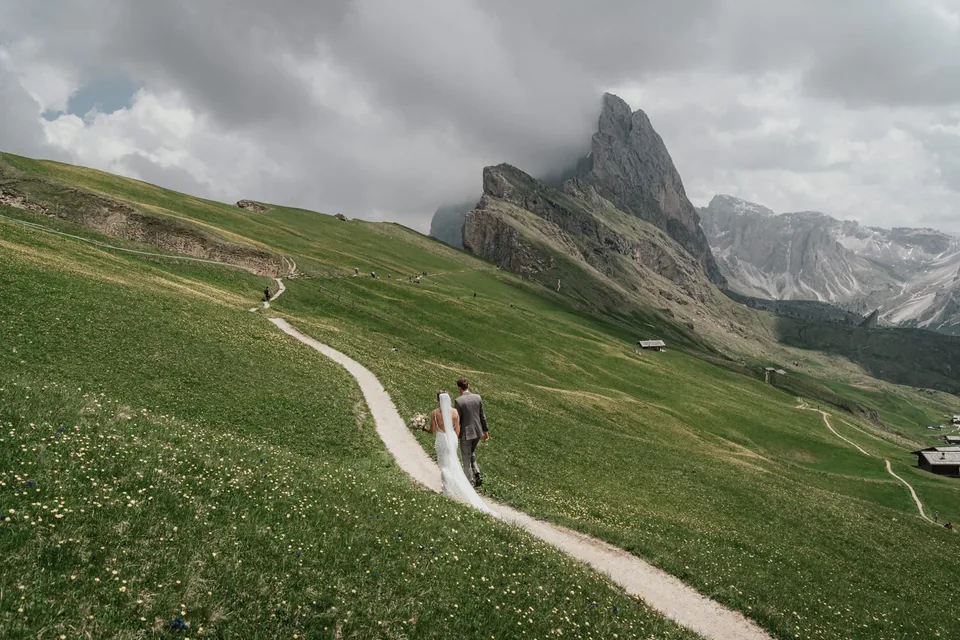
Tyrol is our quiet secret: hidden mountain lakes, rolling green meadows under snow-streaked peaks, and villages an easy drive from Innsbruck. It rarely has the crowds of the famous Dolomite icons, and it has one big practical advantage — in Austria you can marry legally, and in some regions even at an approved outdoor spot. For couples who want the legal act on the mountain rather than a symbolic one, Tyrol is often the answer, and it is every bit as beautiful.
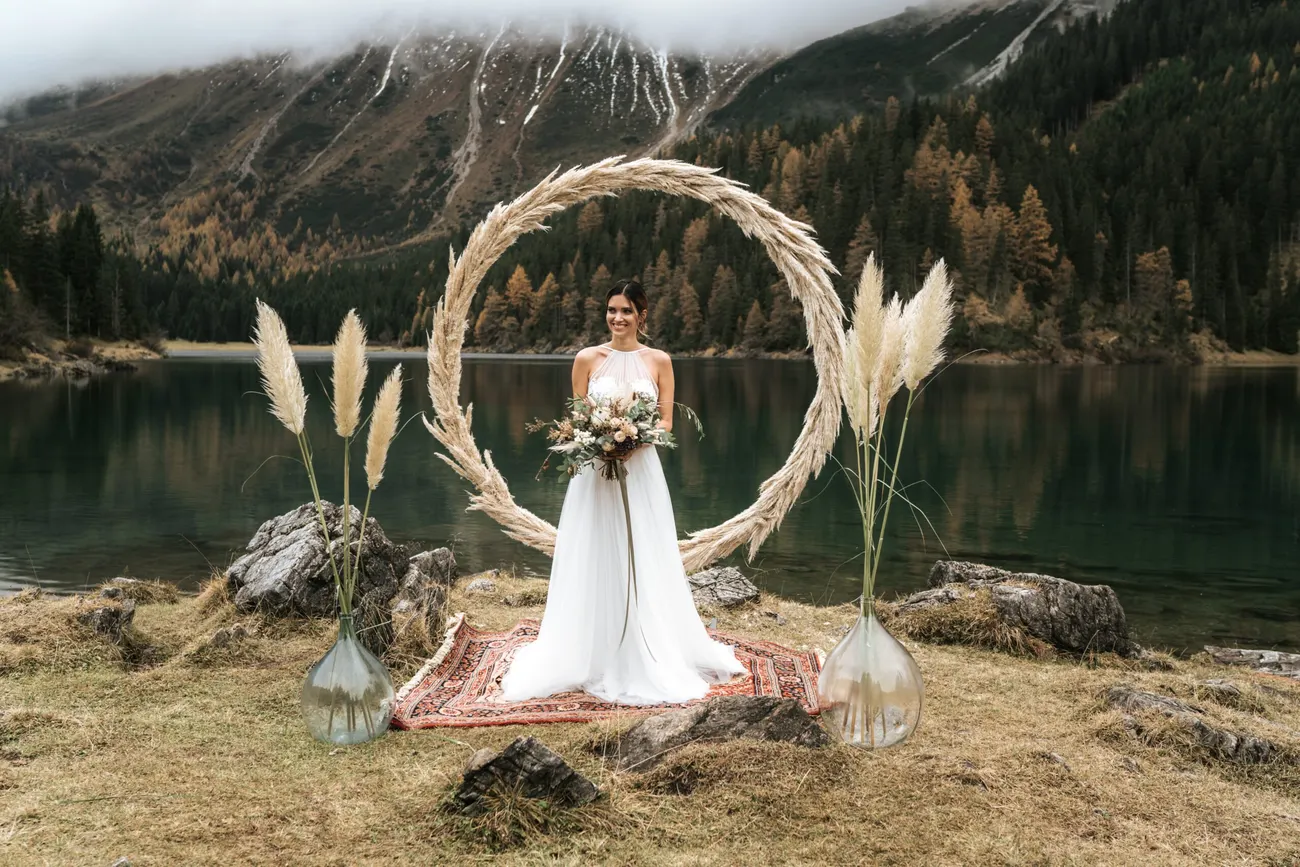
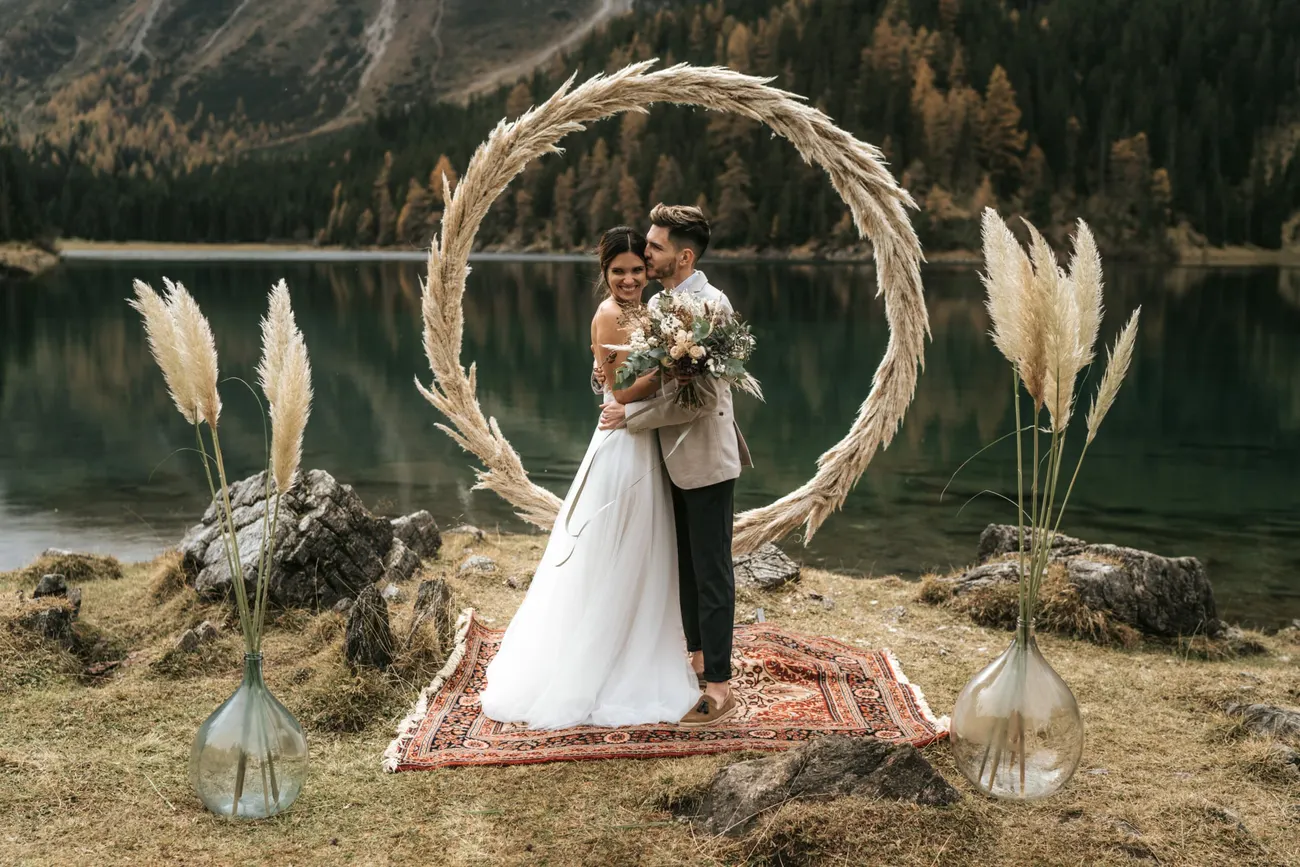
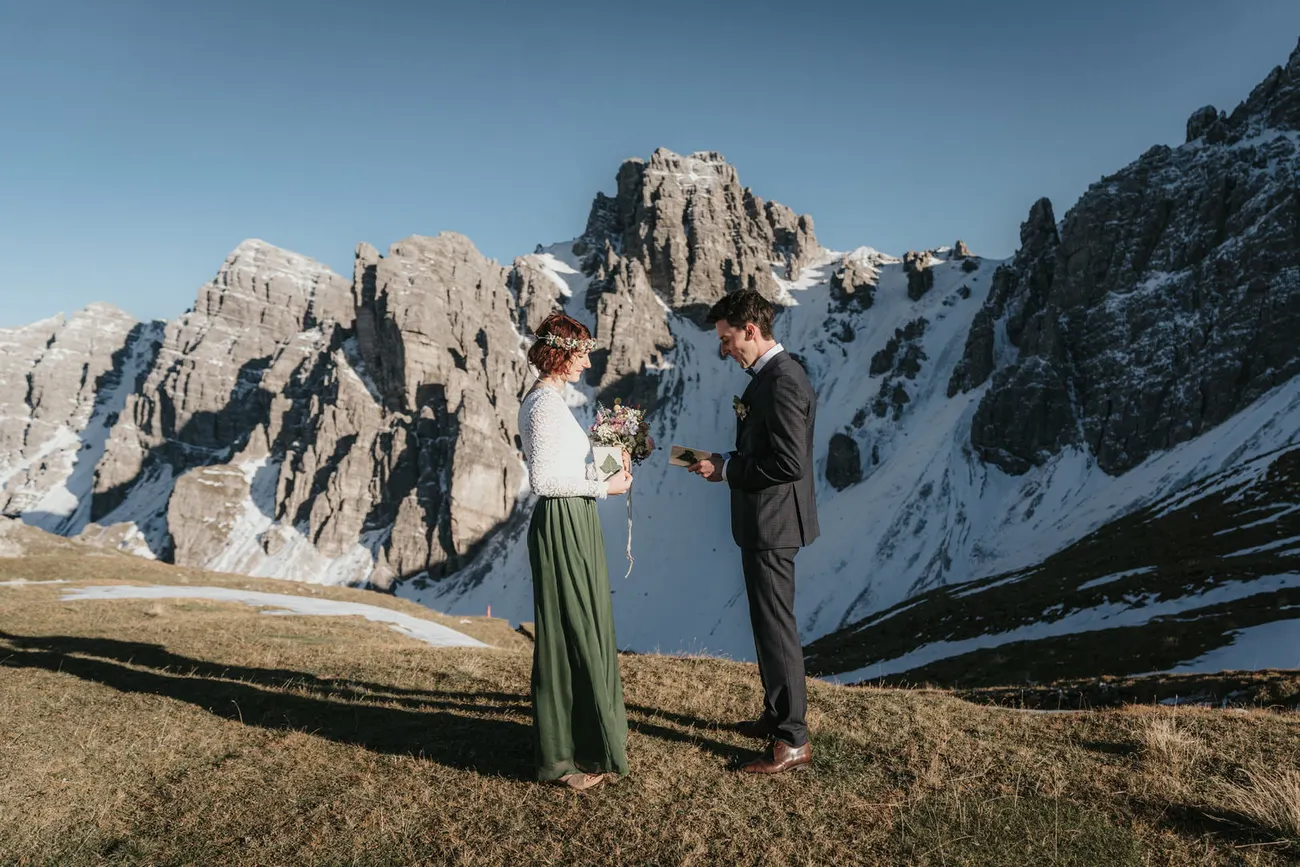
Tyrol also rewards the couple who want a little Alpine culture around the day. Timber villages with onion-domed churches, mountain huts serving long lunches, cable cars that open the high pastures — it feels lived-in and warm rather than remote. Innsbruck itself, with its old town under the Nordkette, makes a beautiful and practical base, an hour or less from lakes, meadows and the ridges above the city.
The high passes that link the valleys — Passo Giau, Passo Gardena, Passo Sella — are the easy secret of the range: you drive to over 2,000 metres and step straight onto alpine meadow with the giants all around, no climb required. Giau in particular, with its little pointed chapel under the shark-fin peak of Ra Gusela, gives you drama and a touch of storybook without a hike, and the evening light there is some of the best anywhere. Perfect for couples who want the high-mountain feeling with family in tow.
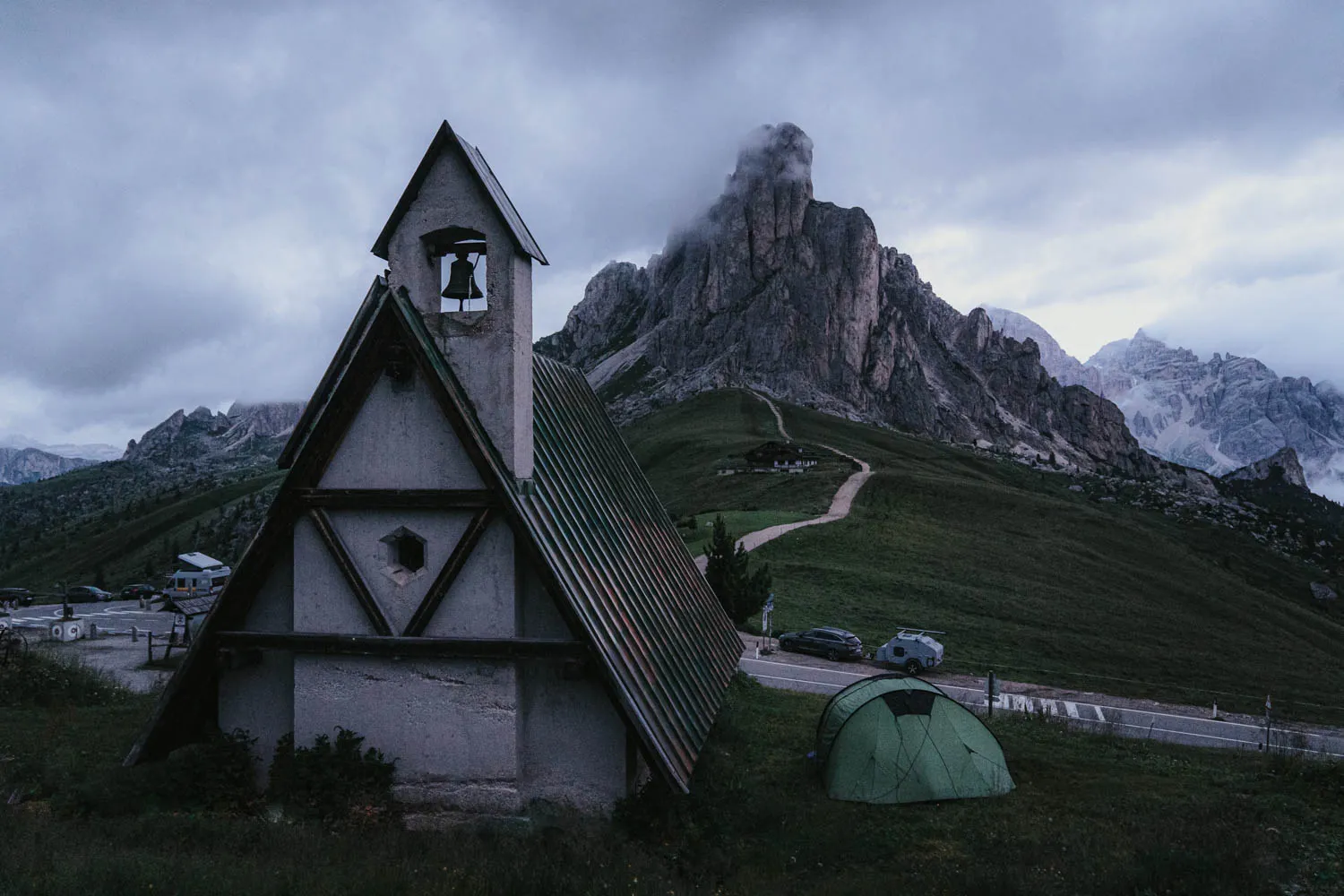
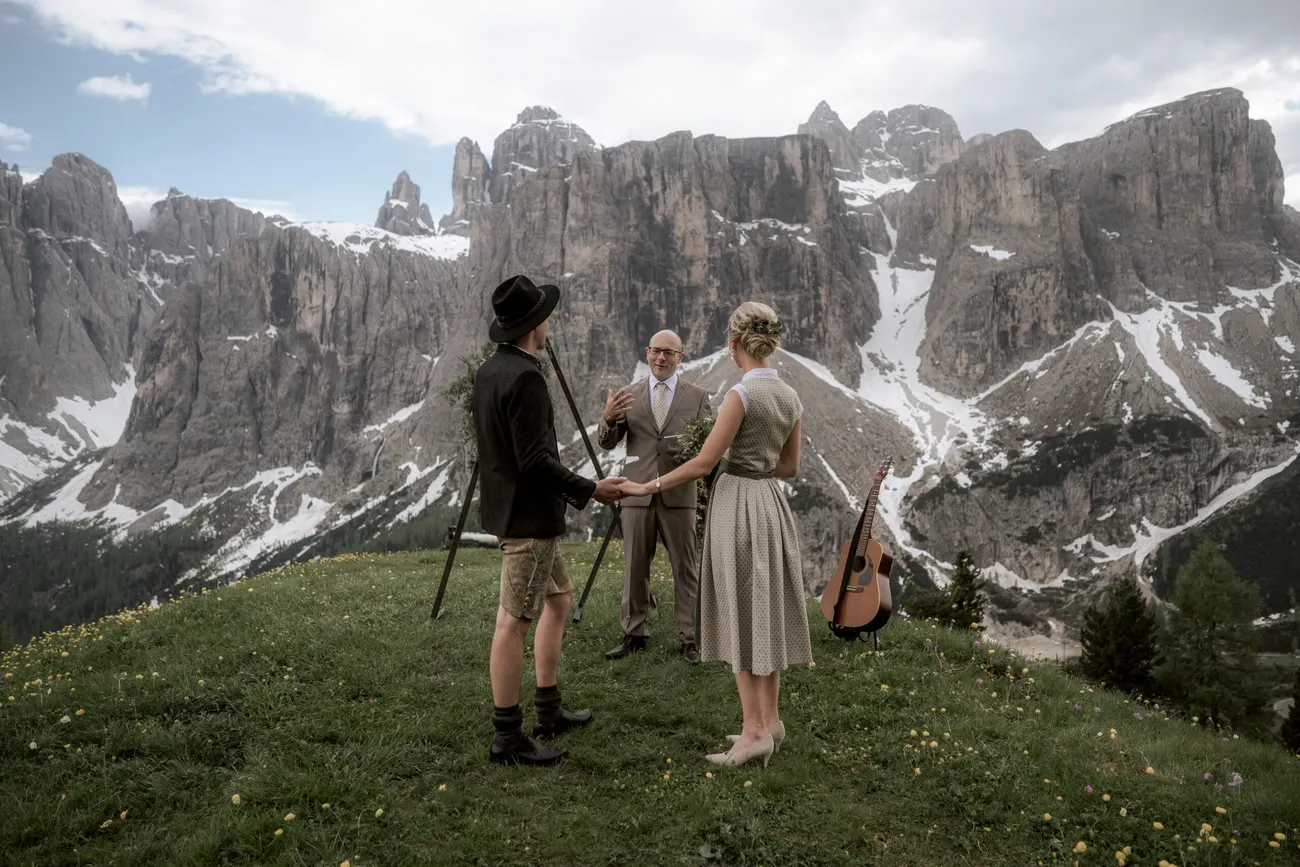
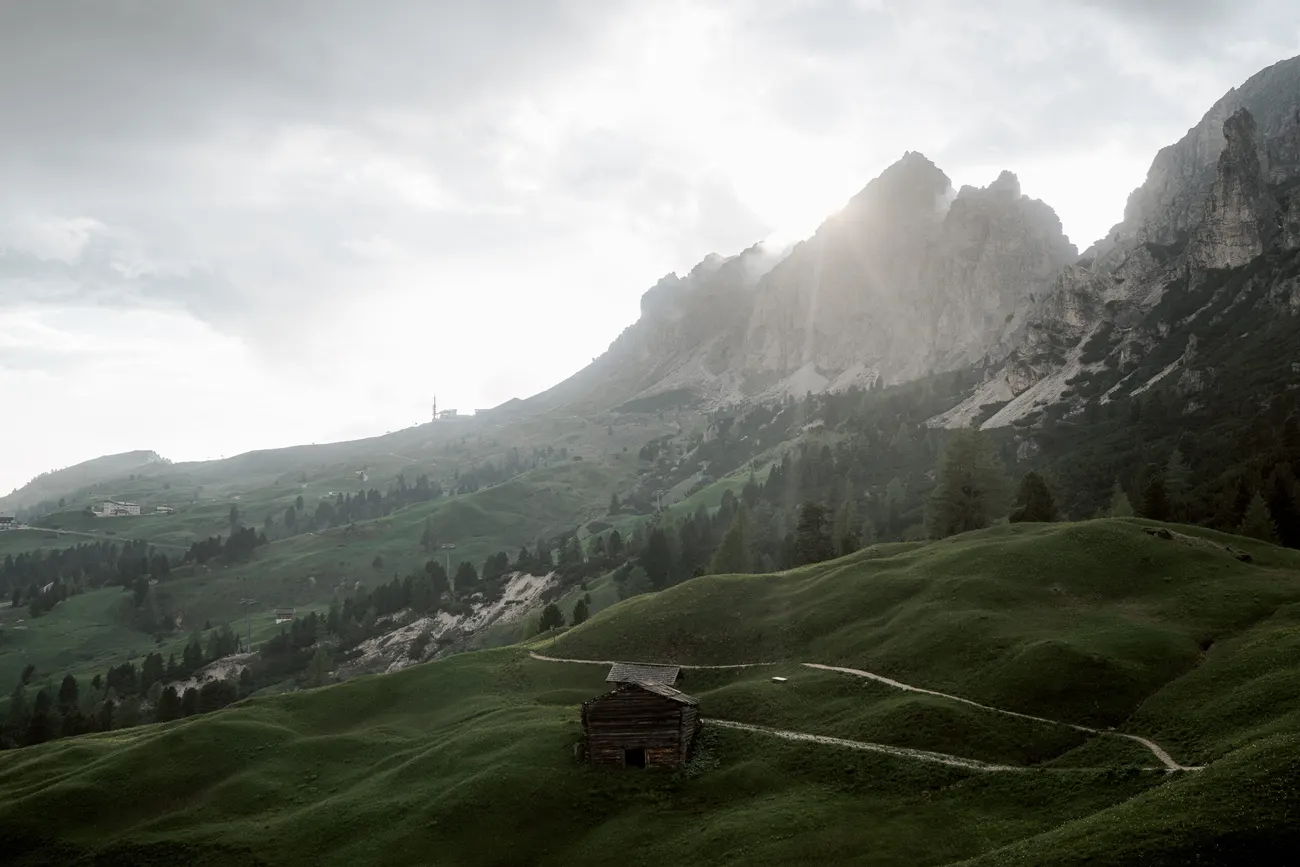
The other gift of the passes is the light. Because they sit high and open, with nothing between you and the horizon, they catch sunrise and sunset in full — and Giau in particular faces the evening so well that we often plan it for golden hour and enrosadira rather than dawn. Park, walk a minute onto the meadow, and let the sky do the rest; you can be back down to a valley dinner within the hour.
If you want the day to feel earned, the Alps reward the effort like nowhere else. A ridge reached on foot or by a short climb from a lift gives you exposure, a 360-degree horizon and a scale that stops the breath — you standing tiny against a thousand metres of rock. These are the boldest frames we take, and the most private: five more minutes past where most people turn around, and the mountain is yours. We match the walk to your fitness and never oversell what a spot costs to reach.
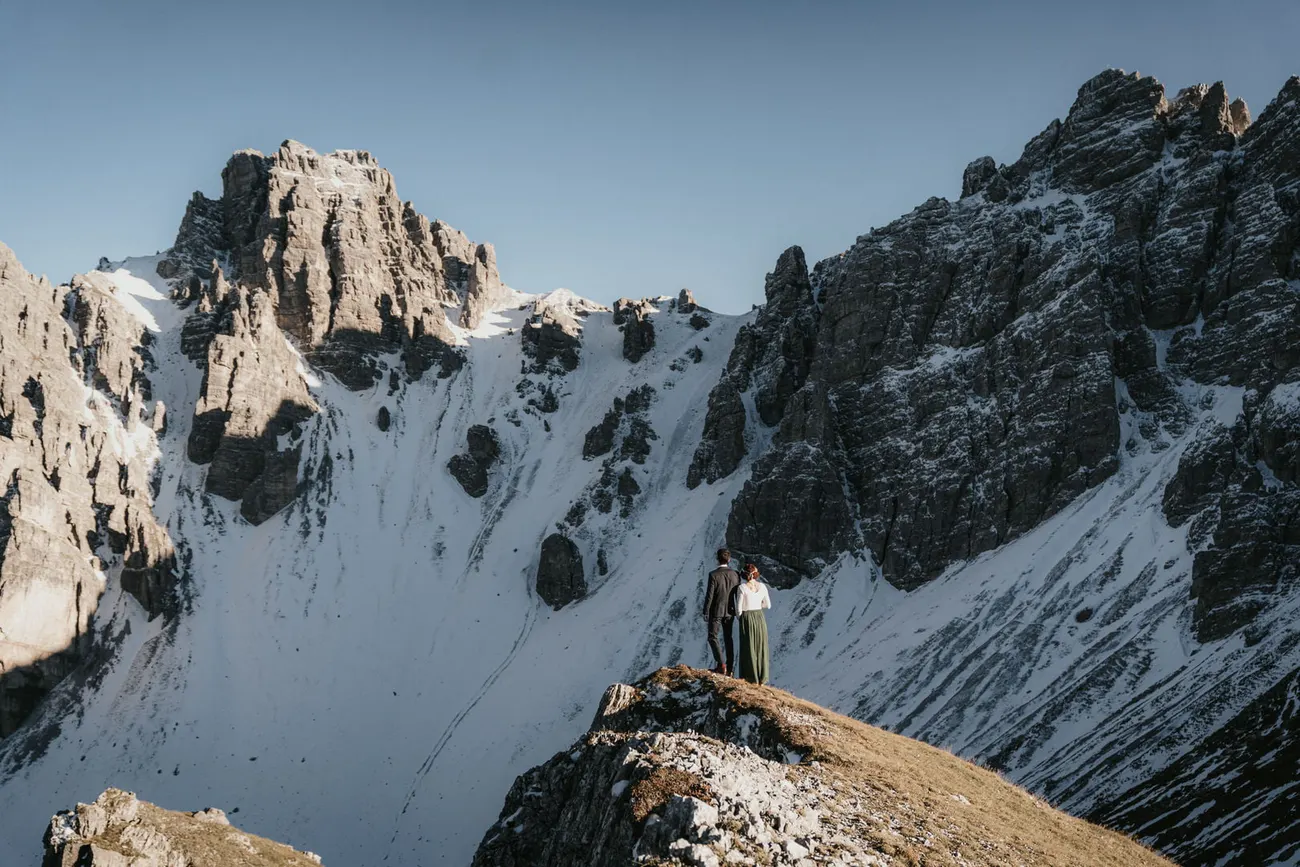
None of this has to mean a mountaineering epic. Many of our most dramatic ridge frames sit only a short, safe walk from a cable-car station — enough to leave the crowds behind, not enough to need ropes or a guide. We scout every route in advance, carry the plan and the spare layers, and pace it so the walk feels like part of the adventure rather than a chore. If you can manage an hour on a trail, we can put you somewhere that looks impossible.
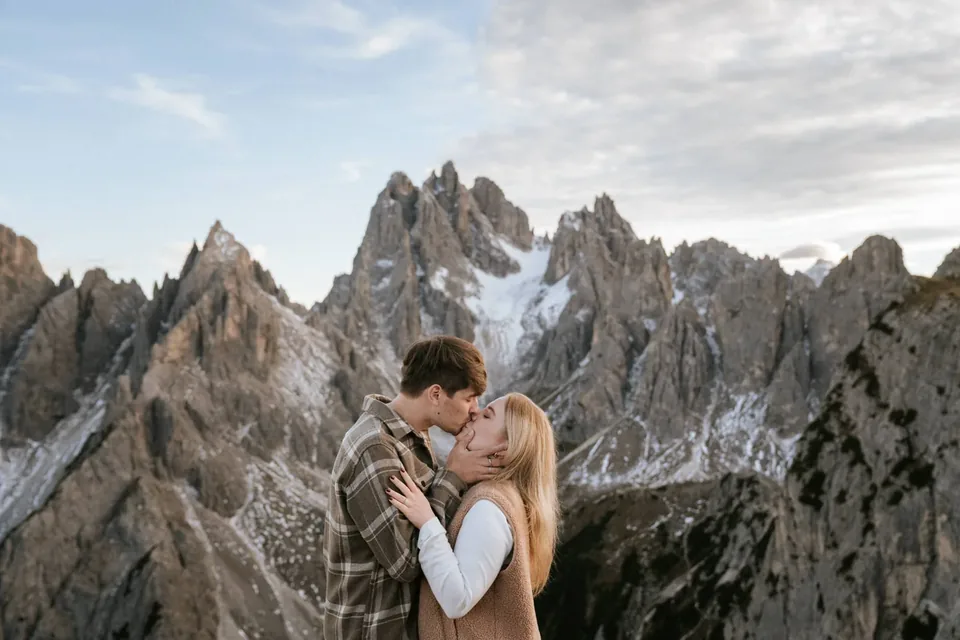
Winter turns the whole range monochrome and almost unearthly — snow to the horizon, the peaks stripped to black and white, and, best of all, near-total solitude. The Tre Cime and the high snow ridges are unforgettable in this light, and a ceremony up here feels like standing inside a snow globe. It asks for more — warm layers, sure footing, and a close eye on which toll roads and lifts are open, because winter schedules are reduced. When it lines up, it is the most spectacular version of the Alps we photograph all year.
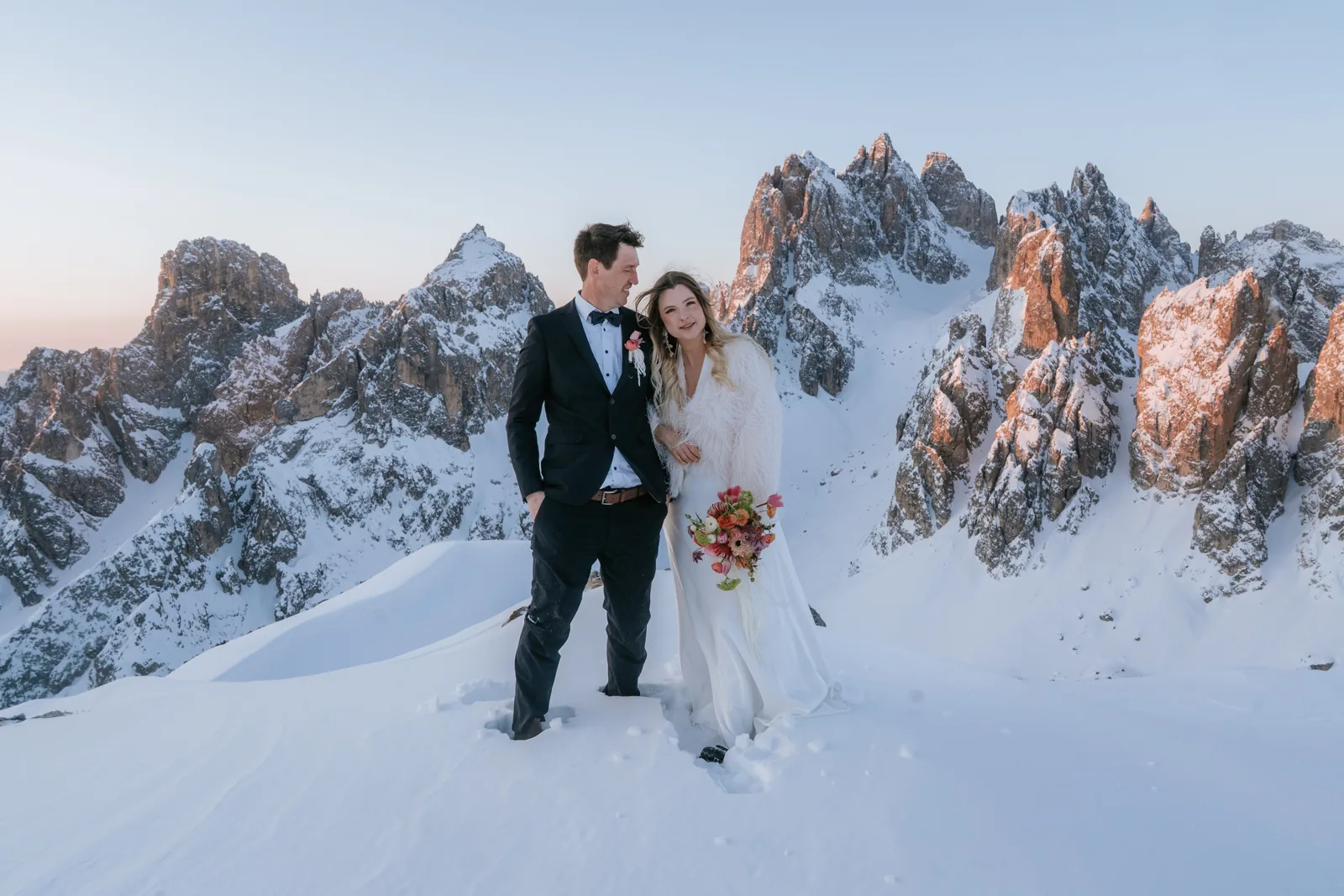
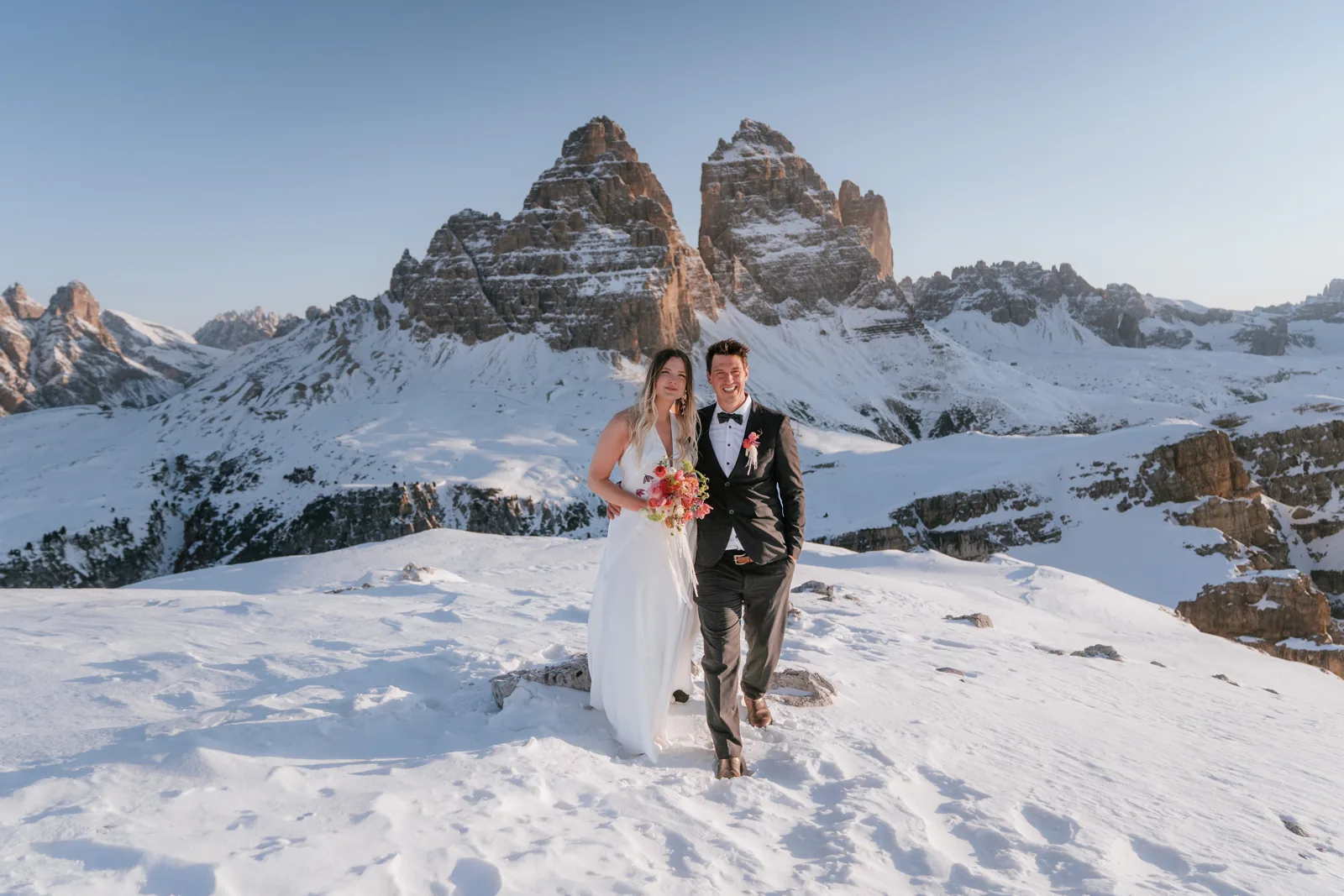
Winter also thins the calendar in your favour. The couples who brave the cold have the most famous places almost entirely to themselves, and the low sun sits soft and golden for hours instead of minutes. Dress for it — warm layers under the coat, real boots to the spot, the pretty shoes in a bag — and a grey, snowing sky is not a setback but a gift, giving some of the most atmospheric mountain photographs we ever take.
So how to choose? Go to the Dolomites for maximum drama and the icons at their quietest. Go to Tyrol or Bavaria for calmer lakes, gentler effort and the easy legal route. Choose a lake if you want stillness and reflection, a pass if you want big mountains with no hike, a summit if you want to earn the view, and winter if you want solitude and drama over warmth. When couples truly cannot decide, we split it across a couple of days — a lake at dawn, a pass at dusk. Tell us the feeling and we will name the place.
And you are not locked into one answer. Some of our favourite trips mix two worlds across a few days — a quiet Tyrolean lake at sunrise, an easy legal ceremony, then a drive south for a Dolomite sunset the next evening. The ranges sit close enough that a single trip can hold both the calm and the drama. Tell us the two feelings you cannot choose between, and we will often find a way to give you both.
The range is easier to reach than the drama suggests. Most couples fly into Venice, Verona, Innsbruck or Munich and drive in — the Dolomites are two to three hours from Venice, the Zugspitze and Eibsee sit right on the Bavarian border near Garmisch, and Tyrol spreads out around Innsbruck. Crossing between Italy and Austria is a simple drive with no fuss. From a single valley base you can often reach several of these spots, and we build the route around the light — which place at dawn, which at dusk — and handle the reservations, timings and driving so your mornings stay calm.
Where you base yourself shapes the trip as much as where you shoot. Cortina d’Ampezzo and the Alta Badia put you in the heart of the Dolomites; Garmisch sits right under the Zugspitze; Innsbruck opens up Tyrol in every direction. We help you pick the base that keeps your chosen spots within an easy dawn drive, book the huts where an overnight makes a sunrise possible, and hand you a simple plan so the only thing you have to think about on the day is each other.
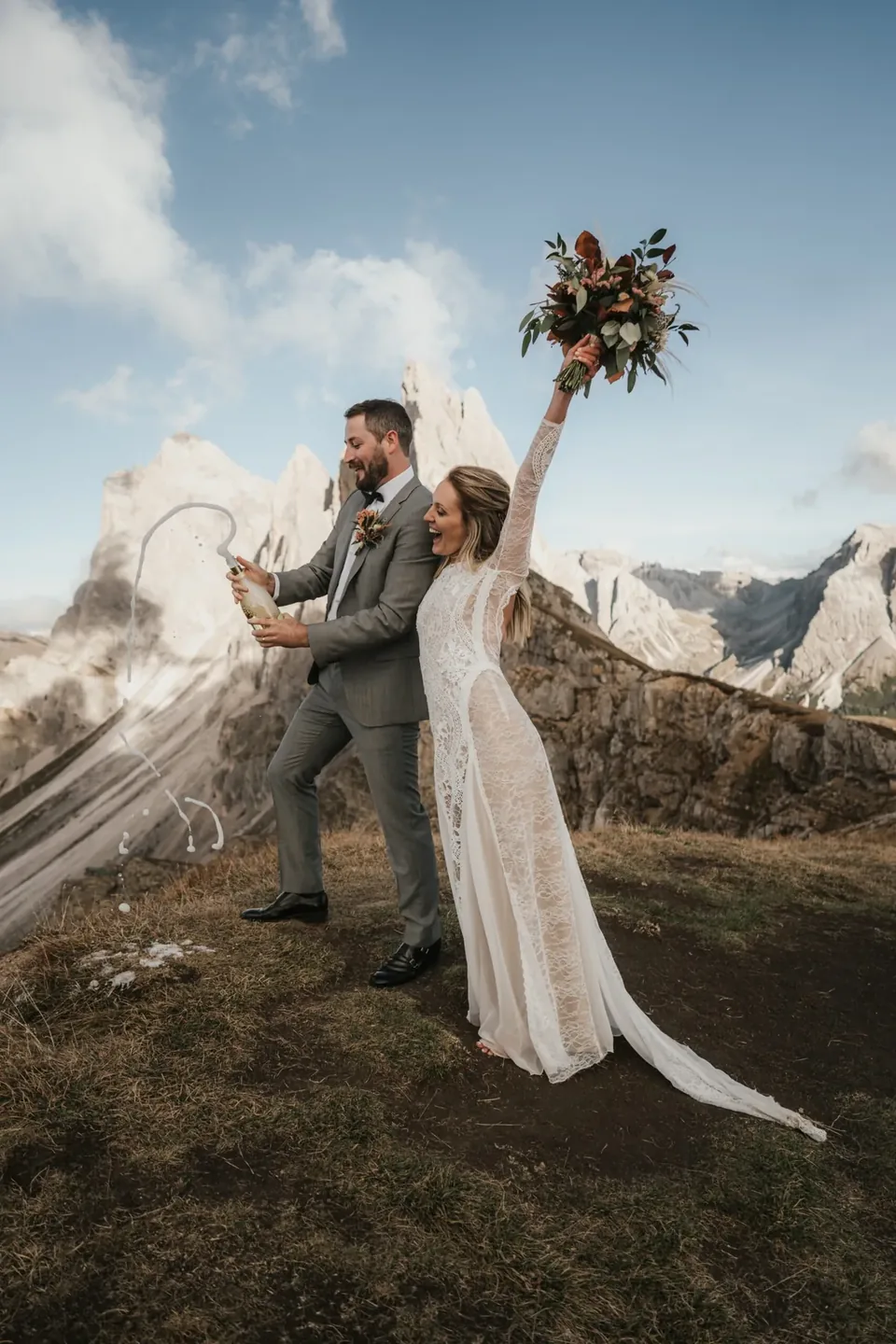
Wherever you land in the Alps, the light is the thing — and the day is not over when the sun drops. Sunrise gives you empty icons and soft colour; golden hour warms the rock and slides into the fireshow of enrosadira on the Dolomite walls; and blue hour, the cool quiet window after, is the one most people miss by packing up too soon. We never do. Then the celebration to match — a hut dinner, a swim, a toast on the mountain — because the best locations deserve more than a single frame.
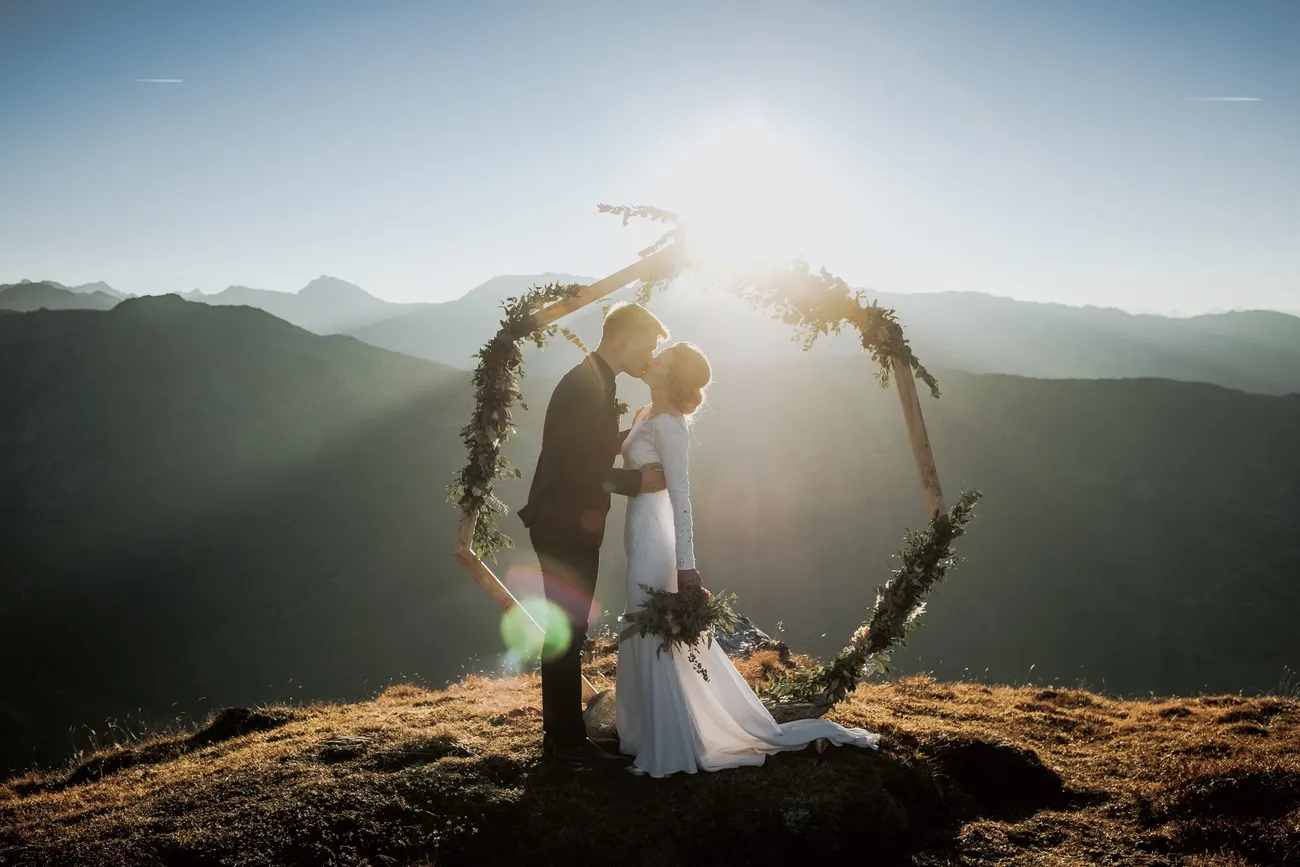
Both are extraordinary; they just feel different. The Dolomites give you the most dramatic, iconic scenery — pale towers, turquoise lakes, the photos everyone recognises. Tyrol and the Bavarian border give you quieter lakes and meadows, a gentler feel, and the easiest route to a legally binding ceremony. We help you match the range to the mood and the paperwork you want.
In Austria, yes — a civil ceremony is possible, and in some Tyrolean regions even at an approved outdoor spot, which is why couples who want the legal act on the mountain often choose Tyrol. In Italy the legal marriage happens only at a registry office, so a Dolomite ceremony stays symbolic with the paperwork signed at home. We point you to the right country and path for you.
It is a real mix, and that is the point — there is something for every level. Lago di Braies, the Eibsee, Passo Giau and the high passes are essentially roadside; the Zugspitze and other ridges come by cable car; a handful of the quieter lakes and summits want a walk. Tell us how far you like to move and we build the day to fit.
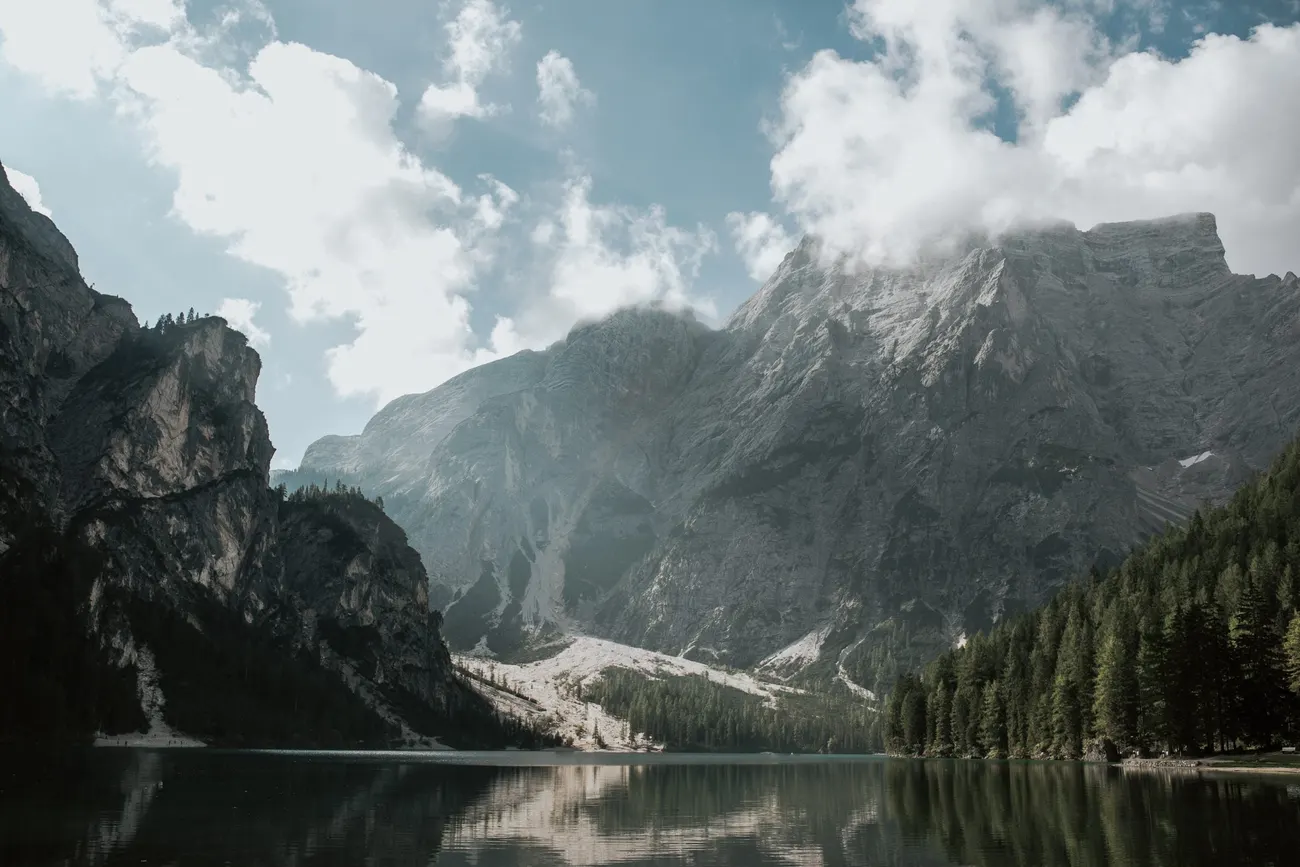
You are spoilt for choice. Lago di Braies is the turquoise icon; the Eibsee below the Zugspitze is emerald green and framed by forest; and the quieter Tyrolean mountain lakes give you the same mirror water with almost no one around. All of them are best at first light, before the day arrives.
The high, jagged places are unforgettable under snow — the Tre Cime and the snow ridges turn monochrome and dramatic, and you may have them entirely to yourselves. The trade-off is access: some toll roads and lifts run reduced or close, and it asks for warm layers and sure footing. We plan around what is actually open and safe.
Fewer than you might think, and on purpose. Chasing five spots means seeing none of them properly; we usually plan one hero location for the best light and perhaps an easier second nearby. Over a few days across the range we can string together a proper tour — a lake at dawn, a pass in the evening, a summit the next morning.
We use cookies for anonymous statistics (Google Analytics via Google Tag Manager) to improve this site. Analytics runs only with your consent. Privacy Policy